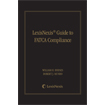
William Byrnes' Tax, Wealth, and Risk Intelligence

William Byrnes (Texas A&M) tax & compliance articles

Archive for the ‘FATCA’ Category

Streamlined Filing Compliance Procedures for Non-Resident, Non-Filer U.S. Taxpayers

Posted by William Byrnes on February 8, 2014


Now that FATCA and its IGAs has attracted the attention of dual citizens (and “Green Card” holders) of the United States and other countries like Canada, Israel, Mexico, United Kingdom, Ireland, Caribbean Island, among many other citizens, I thought I ought remind the dual nationals of the streamlined compliance opportunity for filing delinquent United States tax returns.  This information is excerpted from the IRS website with relevant direct links thereto included.

In 2012 the IRS established new streamlined filing compliance procedures for non-resident U.S. taxpayers that went into effect Sept. 1, 2012.  These procedures were implemented in recognition that some U.S. taxpayers living abroad have failed to timely file U.S. federal income tax returns or Reports of Foreign Bank and Financial Accounts (FBARs), but become aware of their filing obligations and seek to come into compliance with the law. These procedures are for non-residents including, but not limited to, dual citizens who have not filed U.S. income tax and information returns.

Description of the Streamlined Procedure

This streamlined procedure is designed for taxpayers that present a low compliance risk. All submissions will be reviewed, but, as discussed below, the intensity of review will vary according to the level of compliance risk presented by the submission. For those taxpayers presenting low compliance risk, the review will be expedited and the IRS will not assert penalties or pursue follow-up actions.  Submissions that present higher compliance risk are not eligible for the streamlined processing procedures and will be subject to a more thorough review and possibly a full examination, which in some cases may include more than three years, in a manner similar to opting out of the Offshore Voluntary Disclosure Program.

Taxpayers utilizing this procedure will be required to file delinquent tax returns, with appropriate related information returns (e.g. Form 3520 or 5471), for the past three years and to file delinquent FBARs for the past six years. Payment for the tax and interest, if applicable, must be remitted along with delinquent tax returns. For a summary of information about federal income tax return and FBAR filing requirements and potential penalties, see IRS Fact Sheet FS-2011-13. (December 2011).

In addition, retroactive relief for failure to timely elect income deferral on certain retirement and savings plans where deferral is permitted by relevant treaty is available through this process. The proper deferral elections with respect to such arrangements must be made with the submission. See instructions below.

Eligibility

This procedure is available for non-resident U.S. taxpayers who have resided outside of the U.S. since January 1, 2009, and who have not filed a U.S. tax return during the same period. These taxpayers must present a low level of compliance risk as described below

Amended returns submitted through this program will be treated as high risk returns and subject to examination, except for those filed for the sole purpose of submitting late-filed Forms 8891 to seek relief for failure to timely elect deferral of income from certain retirement or savings plans where deferral is permitted by relevant treaty. It should be noted that this relief is also available under the Offshore Voluntary Disclosure Program.  See below for the information required to be submitted with such requests. (If you need to file an amended return to correct previously reported or unreported income, deductions, credits, tax etc, you should not use this streamlined procedure. Depending on your circumstances, you may want to consider participating in the Offshore Voluntary Disclosure Program.)

All tax returns submitted under this procedure must have a valid Taxpayer Identification Number (TIN). For U.S. citizens, a TIN is a Social Security Number (SSN). For individuals that are not eligible for an SSN, an Individual Taxpayer Identification Number (ITIN) is a valid TIN. Tax returns filed without a valid SSN or ITIN will not be processed. For those who are ineligible for an SSN, but who do not have an ITIN, a submission may be made through this program if accompanied by a complete ITIN application. For information on obtaining an SSN, see http://www.ssa.gov. For information on obtaining an ITIN, see the ITIN page.

Compliance Risk Determination

The IRS will determine the level of compliance risk presented by the submission based on information provided on the returns filed and based on additional information provided in response to a Questionnaire required as part of the submission. Low risk will be predicated on simple returns with little or no U.S. tax due. Absent any high risk factors, if the submitted returns and application show less than $1,500 in tax due in each of the years, they will be treated as low risk and processed in a streamlined manner.

The risk level may rise if any of the following are present:

  • If any of the returns submitted through this program claim a refund;
  • If there is material economic activity in the United States;
  • If the taxpayer has not declared all of his/her income in his/her country of residence;
  • If the taxpayer is under audit or investigation by the IRS;
  • If FBAR penalties have been previously assessed against the taxpayer or if the taxpayer has previously received an FBAR warning letter;
  • If the taxpayer has a financial interest or authority over a financial account(s) located outside his/her country of residence;
  • If the taxpayer has a financial interest in an entity or entities located outside his/her country of residence;
  • If there is U.S. source income; or
  • If there are indications of sophisticated tax planning or avoidance.

For additional information about what information will be requested to evaluate risk, please see the Questionnaire.

Instructions for Using This Procedure

Taxpayers wishing to use these streamlined procedures must:

1. Submit complete and accurate delinquent tax returns, with appropriate related information returns, for the last three years for which a U.S. tax return is due.

  • Please note that all delinquent information returns being filed under this procedure should be sent to the address below with the rest of the submission.

2. Include at the top of the first page of each tax return “Streamlined” to indicate that the returns are being submitted under this procedure. This is very important to ensure that your returns get processed through these procedures.

3. Submit payment of all tax due and owing as reflected on the returns and statutory interest due and owing.

  • For returns determined to be high risk, failure to file and failure to pay penalties may be imposed in accordance with U.S. federal tax laws and FBAR penalties may be imposed in accordance with U.S. law. Reasonable cause statements may be requested during review or examination of the returns determined to be high risk. For a summary of information about federal income tax return and FBAR filing requirements and potential penalties, see IRS Fact Sheet FS-2011-13(December 2011).

4. Submit copies of filed FBARs for the last six years for which an FBAR is due. (You should file delinquent FBARs according to the FBAR instructions and include a statement explaining that the FBARs are being filed as part of the Streamlined Filing Compliance Procedures for Non-Resident, Non-Filer U.S. Taxpayers. Through June 30, 2013, you may file electronically (http://bsaefiling.fincen.treas.gov) or by sending paper forms to Department of Treasury, Post Office Box 32621, Detroit, MI 48232-0621. After June 30, 2013, you must file electronically (http://bsaefiling.fincen.treas.gov.)) If you are unable to file electronically, you may contact FinCEN’s Regulatory Helpline at 1-800-949-2732 or (if calling from outside the United States) 1-703-905-3975 to determine possible alternatives for timely reporting.

NOTE: Taxpayers filing FBARs electronically do not currently have the technological ability to include a statement explaining that the FBARs are being filed as part of the Streamlined Filing Compliance Procedures for Non-Resident, Non-Filer U.S. Taxpayers. Until such time that they have the ability, it is not necessary to include the statement. (July 18, 2013)

5. Submit a complete, accurate and signed Questionnaire.

6. If the taxpayer must apply for an ITIN in order to file delinquent returns under this procedure, the application and other documents required for applying for an ITIN must be attached to the the required forms, information and documentation required under this streamlined procedure. See the ITIN page for more.

7. Any taxpayer seeking relief for failure to timely elect deferral of income from certain retirement or savings plans where deferral is permitted by relevant treaty will be required to submit:

  • a statement requesting an extension of time to make an election to defer income tax and identifying the pertinent treaty provision;
  • for relevant Canadian plans, a Form 8891 for each tax year and each plan and a description of the type of plan covered by the submission; and
  • a dated statement signed by the taxpayer under penalties of perjury describing:
    • the events that led to the failure to make the election,
    • the events that led to the discovery of the failure, and
    • if the taxpayer relied on a professional advisor, the nature of the advisor’s engagement and responsibilities.

8. This program has been established for non-resident non-filers. Generally, amended returns will not be accepted in this program. The only amended returns accepted through this program are those being filed for the sole purpose of submitting late-filed Forms 8891 to seek relief for failure to timely elect deferral of income from certain retirement or savings plans where deferral is permitted by relevant treaty. Non-resident taxpayers who have previously filed returns but wish to request deferral provisions will be required to submit:

  • an amended return reflecting no adjustments to income deductions, or credits; and
  • all documents required in item 7 above.

9. The documents listed above must be sent to:

Internal Revenue Service
3651 South I-H 35
Stop 6063 AUSC
Attn: Streamlined
Austin, TX 78741

Other Considerations

Taxpayers who are concerned about the risk of criminal prosecution should be advised that this new procedure does not provide protection from criminal prosecution if the IRS and Department of Justice determine that the taxpayer’s particular circumstances warrant such prosecution. Taxpayers concerned about criminal prosecution because of their particular circumstances should be aware of and consult their legal advisers about the Offshore Voluntary Disclosure Program (OVDP), announced on Jan. 9, 2012, which offers another means by which taxpayers with undisclosed offshore accounts may become compliant. For additional information go to the OVDP page. It should be noted, however, that once a taxpayer makes a submission under the new procedure described in this document, OVDP is no longer available. It should also be noted that taxpayers who are ineligible to use OVDP are also ineligible to participate in this procedure.

Posted in Compliance, FATCA | 1 Comment »

FATCA USA-Canada IGA Q&A

Posted by William Byrnes on February 7, 2014


The Canadian Department of Finance has addressed various aspects and concerns of its newly signed FATCA intergovernmental agreement (IGA) between Canada and the United States.   The Department stated that Draft legislation to implement the agreement will be released for comment shortly.

Contributing author Jean Richard to the LexisNexis Guide to FATCA Compliance will be providing the 2nd edition purchasers a Canadian chapter update via LexisNexis.  Meanwhile, I excerpt below from the series of questions and answers of Canadian Revenue for the immediate benefit of the Lexis FATCA subscribers.

Reporting and Privacy?

Canadian financial institutions will report information on their U.S. clients directly to the Canada Revenue Agency (CRA), which will ensure that the collection and use of the information is consistent with Canadian privacy laws. In addition, exchanged information will be protected by the provisions of the Canada-U.S. Tax Convention.

Does the IGA respect the privacy rights of Canadians?

FATCA has raised a number of concerns in Canada – among both dual Canada-U.S. citizens and Canadian financial institutions. One key concern was that the reporting requirements would force financial institutions to report accountholder information directly to the IRS, which would raise concerns about consistency with Canadian privacy laws.

Under the IGA, financial institutions in Canada will not report any information directly to the IRS. Rather, relevant information on U.S. residents and U.S. citizens will be reported to the CRA, similar to existing tax reporting by financial institutions to the CRA on their clients. The exchange of tax information between Canada and the U.S., including on an automatic basis, is already a longstanding practice, is authorized under Article XXVII of the Canada-U.S. tax treaty, and includes safeguards with respect to the use of the exchanged information. The information on U.S. accountholders obtained by the CRA will be exchanged with the IRS through these existing provisions, an approach that is consistent with Canadian privacy laws.

Limits on Reporting?

The IGA exempts key Canadian savings vehicles from being reviewed and reported on, including most federally registered accounts such as:

  • Registered Retirement Savings Plans
  • Registered Retirement Income Funds
  • Pooled Registered Pension Plans
  • Registered Pension Plans
  • Tax-Free Savings Accounts
  • Registered Disability Savings Plans
  • Registered Education Savings Plans
  • Deferred Profit Sharing Plans

Smaller deposit-taking institutions, such as credit unions, with assets of less than $175 million will be exempt.

Reciprocity?

The IGA is reciprocal, meaning that information will flow both ways between the tax administrations of the two countries to assist each in administering its own domestic tax laws. The information exchanged will provide tax authorities with greater information on accounts held by their taxpayers in the other country.

U.S. Tax Filing Obligations?

Since 1913, U.S. persons in Canada, including dual citizens, have been required under U.S. tax law to file an annual U.S. federal income tax return with the U.S. Internal Revenue Service (IRS). In addition, since 1972, these persons have been obliged to file an annual Foreign Bank Account Reporting (FBAR) form with the U.S. Department of the Treasury.

The IRS has a streamlined process to recognize that some U.S. persons living abroad have not filed timely U.S. federal income tax returns or FBAR forms. Information on this process can be found on the IRS website.

I am a U.S. citizen living in Canada and was not aware that the U.S. wants me to file tax returns. Will the IGA mean that I now have to pay U.S. taxes?

The IGA is strictly an information sharing agreement and does not involve the imposition by the U.S. of any new or higher taxes.

Unlike Canada, the U.S. taxes its citizens who reside in other countries on their worldwide income. The U.S. citizenship-based taxation regime has been in place since 1913, and is not altered by the enactment of FATCA, or the signing of any IGAs. For U.S. citizens resident in Canada, their U.S. tax obligations exist independently of their awareness of these obligations.

Canada respects the sovereign right of the U.S. to use citizenship as a basis for taxation. At the same time, citizenship-based taxation is a departure from the residence-based approach generally followed by Canada and most of the rest of the world, and creates unique challenges for U.S. citizens who reside in other countries. U.S. taxation of its non-resident citizens on their worldwide income, when these individuals are also subject to taxation on their worldwide income by their country of residence, can result in significant compliance burden on these individuals, even when they owe no U.S. tax.

What is the Government doing to protect dual citizens living in Canada against claims by the IRS?

While the Canada-U.S. tax treaty contains a provision that allows a country to collect the taxes imposed by the other country, the treaty does not apply to penalties under laws that impose only a reporting requirement. For example, the CRA will not assist in the collection of U.S. penalties associated with the Report on Foreign Bank and Financial Accounts (commonly known as the FBAR), which is a non-tax form required by the U.S. Treasury under the U.S. Bank Secrecy Act that requires the person filing the form to provide details of assets held at non-U.S. financial institutions.

Furthermore, the CRA will not collect the U.S. tax liability of a Canadian citizen if the individual was a Canadian citizen at the time the liability arose (whether or not the individual was also a U.S. citizen at that time).

U.S. Taxes and Penalties?

The IGA will not impose any new U.S. taxes or penalties for non-compliance with U.S. tax laws on U.S. persons holding accounts at Canadian financial institutions, or provide for additional assistance in collection beyond that already permitted by the Canada-U.S. Tax Convention. The IGA is strictly an information-sharing agreement.

The IGA also protects Canadians and Canadian financial institutions from the tax withholding provisions in FATCA.

Does the IGA mean that Canada will be enforcing U.S. tax laws?

Legislation to give effect to the provisions of the IGA will be proposed to Parliament in order to ensure that financial institutions can rely on Canadian law when implementing their procedures for complying with the IGA. The CRA, rather than the U.S., will be responsible for administering the IGA. Canadian financial institutions will report information to the CRA.

What are the benefits to Canada of the IGA?

Under the IGA:

  • Canadian financial institutions will not report any information directly to the IRS. Rather, accountholder information on U.S. residents and U.S. citizens will be reported to the Canada Revenue Agency (CRA). The CRA will transfer the information to the IRS under the authority of the existing provisions of, and protected by the confidentiality safeguards under, the Canada-U.S. tax treaty.
  • The 30 percent FATCA withholding tax will not apply to clients of Canadian financial institutions, and can apply to a Canadian financial institution only if the financial institution is in significant and long-term non-compliance with its obligations under the IGA.
  • The FATCA requirement that Canadian financial institutions be required to close accounts or refuse to offer services to clients in certain circumstances will be eliminated.
  • A number of accounts will be exempt from FATCA reporting, including Registered Retirement Savings Plans, Registered Retirement Income Funds, Registered Disability Savings Plans, and Tax-Free Savings Accounts.
  • Smaller deposit-taking institutions, such as credit unions, with assets of less than $175 million will be exempt from reporting.
  • The IRS will provide the CRA with enhanced and increased information on certain accounts of Canadian residents held at U.S. financial institutions.

Will Canada be signing similar agreements with other countries?

The IGA is consistent with the Government’s support for recent G-8 and G-20 commitments to multilateral automatic exchange of information for tax purposes. In September 2013, G-20 Leaders committed to automatic exchange of information as the new global standard and endorsed an OECD proposal to develop a global model for automatic exchange of information. The model being developed is based on due diligence and reporting procedures similar to those in the Canada-U.S. IGA.

Canada is actively participating in the work of the OECD to develop the new multilateral standard.

LexisNexis FATCA Compliance Manual

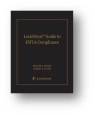
book coverFifty contributing authors from the professional and financial industry provide 600 pages of expert analysis within the LexisNexis® Guide to FATCA Compliance (2nd Edition): many perspectives – one voice crafted by the primary author William Byrnes.

The LexisNexis® Guide to FATCA Compliance (2nd Edition) comprises 34 Chapters grouped in three parts: compliance program (Chapters 1–4), analysis of FATCA regulations (Chapters 5–16) and analysis of FATCA’s application for certain trading partners of the U.S. (Chapters 17–34), including intergovernmental agreements as well as the OECD’s TRACE initiative for global automatic information exchange protocols and systems. The 34 chapters include many practical examples to assist a compliance officer contextualize the regulations, IGA provisions, and national rules enacted pursuant to an IGA.  Chapters include by example an in-depth analysis of the categorization of trusts pursuant to the Regulations and IGAs, operational specificity of the mechanisms of information capture, management and exchange by firms and between countries, insights as to the application of FATCA and the IGAs within new BRIC and European country chapters.

Posted in FATCA | 1 Comment »

FATCA IGA USA-Canada signed ! (Mauritius, Italy and Hungary announced as well)

Posted by William Byrnes on February 6, 2014


An Intergovernmental Agreement (IGA) between the Government of Canada and the Government of the United States for the enhanced exchange of tax information under the Canada-United States Tax Convention was signed on February 5, 2014, in Ottawa.  See http://www.fin.gc.ca/treaties-conventions/notices/fatca-eng.asp  The IGA will enter into force once Canada has notified the United States that the procedures required by Canadian law for the bringing into force of the IGA have been completed. It is proposed that the IGA have effect as of July 1, 2014.

FATCA has raised a number of concerns in Canada—among both dual Canada-U.S. citizens and Canadian financial institutions. One key concern was that the reporting obligations in respect of accounts in Canada would compel Canadian financial institutions to report information on account holders who are U.S. residents and U.S. citizens (including U.S. citizens who are residents or citizens of Canada) directly to the IRS, thus potentially violating Canadian privacy laws.  Without an agreement in place, obligations to comply with FATCA would have been unilaterally and automatically imposed on Canadian financial institutions and their clients as of July 1, 2014.

Jean Richard, banking expert and contributing author for the Canadian compliance chapter to the LexisNexis® Guide to FATCA Compliance added:  “Canada’s Finance Minister Jim Flaherty stated that the lengthy negotiations resulted in obtaining significant exemptions and other relief.  Do these exemptions and relief, different from those found in the models IGA and other IGA signed, address the Canadian citizens concerns about the extratoriality affect of the US tax system?  According Canada National Revenue Minister, Kerry-Lynne D. Findlay,  

 “This is strictly a tax information-sharing agreement. This agreement will not impose any U.S. taxes or penalties on U.S. citizens or U.S. residents holding accounts in Canada.The CRA does not collect the U.S. tax liability of a Canadian citizen if the individual was a Canadian citizen at the time the liability arose. This includes dual Canada-U.S. citizens. That will not change under this agreement.”

Jean Richard continued: “There is still much Canadian taxpayer concern about how this sensitive issue of risk of double jeopardy for Canadian Citizens who are also US Citizens or Green Card holders is to be dealt with.  Canada is a country that is said to have over one million Canadian citizen who happen to be  also a US Citizen, perhaps by birth or a parent. Canada and the US tax systems are not perfectly aligned, leading to the potential for double taxation.”  

“The double tax agreement has a US-centric feature known as a “savings clause” that subjects US persons to US tax regardless of the applicability of the treaty.  The inevitable result is an increase in the tax compliance and tax filing costs for Canadians that also have US nationality or a Green Card.   These additional costs must be addressed by the respective authorities and then solutions communicated to the general Canadian population.  These costs are in addition to those borne, estimated at about a billion Canadian dollars, by the Canadian financial industry to design and implement FATCA compliant reporting systems.”

Other IGAs including a new corresponding DTA announced by US Treasury 

“FATCA implementation is critical to combating international tax evasion and promoting transparency,” said Deputy Assistant Secretary for International Tax Affairs Robert B. Stack.  “The agreements announced today clearly demonstrate the considerable international support behind FATCA and we are proud to lead the global charge on this pressing issue.”  The U.S. Department of the Treasury recently announced that the United States has signed intergovernmental agreements (IGAs) with Hungary and Mauritius, the latter of which also signed a new tax information exchange agreement.  Treasury reports that the United States has signed 22 IGAs and has 12 agreements in substance to date.  

Joint Statements and Signed Bilateral Agreements

Canada IGA Quick Facts 

  • Under the agreement, financial institutions in Canada will not report any information directly to the IRS. Rather, relevant information on accounts held by U.S. residents and U.S. citizens (including U.S. citizens who are residents or citizens of Canada) will be reported to the Canada Revenue Agency (CRA). The CRA will then exchange the information with the IRS through the existing provisions and safeguards of the Canada-U.S. Tax Convention. This is consistent with Canada’s privacy laws.
  • The IRS will provide the CRA with enhanced and increased information on certain accounts of Canadian residents held at U.S. financial institutions.
  • Significant exemptions and relief have been obtained. For instance, certain accounts are exempt from FATCA and will not be reportable. These include Registered Retirement Savings Plans, Registered Retirement Income Funds, Registered Disability Savings Plans, Tax-Free Savings Accounts, and others. In addition, smaller deposit-taking institutions, such as credit unions, with assets of less than $175 million will be exempt.
  • The 30 percent FATCA withholding tax will not apply to clients of Canadian financial institutions, and can apply to a Canadian financial institution only if the financial institution is in significant and long-term non-compliance with its obligations under the agreement.
  • The agreement is consistent with Canada’s support for recent G-8 and G-20 commitments intended to fight tax evasion globally and to improve tax fairness. In September 2013, G-20 Leaders committed to automatic exchange of tax information as the new global standard and endorsed a proposal by the Organisation for Economic Co-operation and Development to develop a global model for the automatic exchange of tax information. They also signaled an intention to begin exchanging information automatically on tax matters among G-20 members by the end of 2015.
  • Draft legislation to implement the agreement will be released for comment shortly on the Department of Finance website.

FATCA Compliance Program and Manual

book coverFifty contributing authors from the professional and financial industry provide 600 pages of expert analysis within the LexisNexis® Guide to FATCA Compliance (2nd Edition): many perspectives – one voice crafted by the primary author William Byrnes.

The LexisNexis® Guide to FATCA Compliance (2nd Edition) comprises 34 Chapters grouped in three parts: compliance program (Chapters 1–4), analysis of FATCA regulations (Chapters 5–16) and analysis of FATCA’s application for certain trading partners of the U.S. (Chapters 17–34), including intergovernmental agreements as well as the OECD’s TRACE initiative for global automatic information exchange protocols and systems. The 34 chapters include many practical examples to assist a compliance officer contextualize the regulations, IGA provisions, and national rules enacted pursuant to an IGA.  Chapters include by example an in-depth analysis of the categorization of trusts pursuant to the Regulations and IGAs, operational specificity of the mechanisms of information capture, management and exchange by firms and between countries, insights as to the application of FATCA and the IGAs within new BRIC and European country chapters.

Posted in FATCA | Tagged: , , | Leave a Comment »

106 Swiss Banks seek Non-Prosecution Agreements and Non-Target Letter with the DOJ (but twice that, did not…)

Posted by William Byrnes on January 31, 2014


free chapter download here —> http://papers.ssrn.com/sol3/papers.cfm?abstract_id=2457671   Number of Pages in PDF File: 58

On January 25, Kathryn Keneally, assistant attorney general of the Justice Department’s Tax Division, served as the keynote speaker for the American Bar Association Section of Taxation 2014 Midyear Meeting. to provide agency updates – including on the Switzerland banks non-prosecution agreement program that expired December 31.  

David Voreacos of Bloomberg News reported that Kathryn Keneally, in her keynote remarks, stated that 106 Swiss banks (of approximately 300 total) filed the requisite letter of intent to join the Program for Non-Prosecution Agreements or Non-Target Letters (the “Program“) by the December 31, 2013 deadline.  Renown attorney Jack Townsend reported on his blog on December 31st a list of 47 Swiss banks that had publicly announced the intention to submit the letter of intent, as well as each bank’s category for entry: six announced seeking category 4 status, eight for category 3, thirty-three for category 2.  106 is a large jump from the mid-December report by the international service of the Swiss Broadcasting Corporation (“SwissInfo”) that only a few had filed for non prosecution with the DOJ’s program (e.g. Migros Bank, Bank COOP, Valiant, Berner Kantonalbank and Vontobel). [1]

SwissInfo reported that Migros Bank selected Program Category 2 because “370 of its 825,000 clients, mostly Swiss citizens residing temporarily in the US or clients with dual nationality”, met the criteria of US taxpayer.  Valiant told SwissInfo that “an internal review showed it had never actively sought US clients or visited Americans to drum up business. The bank said less than 0.1% of its clients were American.”   The DOJ reported that in July 2013, Liechtensteinische Landesbank AG, a bank based in Vaduz, Liechtenstein, entered into a non-prosecution agreement and agreed to pay more than $23.8 million stemming from its offshore banking activities, and turned over more than 200 account files of U.S. taxpayers who held undeclared accounts at the bank.

William R. Davis and Lee A. Sheppard of Tax Analysts’ Worldwide Tax Daily reported that “one private practitioner estimated that some 350 banks holding 40,000 accounts have not come in.” (see “ABA Meeting: Keneally Reports Success With Swiss Bank Program”, Jan. 28, 2014, 2014 WTD 18-3.)

Two court orders entered in November 2013 in a New York federal court will further aid the offshore compliance investigations by authorizing the IRS to serve what are known as “John Doe” summonses on five banks to obtain information about possible tax fraud by individuals whose identities are unknown.  The John Doe summonses direct the five banks to produce records identifying U.S. taxpayers holding interests in undisclosed accounts at Zurcher Kantonalbank (ZKB) and its affiliates in Switzerland and at The Bank of N.T. Butterfield & Son Limited (Butterfield) and its affiliates in Switzerland, the Bahamas, Barbados, Cayman Islands, Guernsey, Hong Kong, Malta and the United Kingdom.  The summonses also direct the five banks to produce information identifying foreign banks that used ZKB’s and Butterfield’s correspondent accounts at the five banks to service U.S. clients.

Swiss banks Wegelin ceased operations because of the DOJ investigation and its consequent guilty plea.  Bank Frey followed suit because of the DOJ investigation and costs of future compliance with FATCA (its former head of private banking was indicted, and an > attorney in the same indictment pled guilty to conspiracy to commit tax fraud <).  Frey bank, in a November 28, 2013 statement, defended itself: “In October, the former Bank Frey & Co. AG decided to cease its banking activities and to terminate all of its client relationships. Beforehand, the Bank verified the tax compliance of all its US clients, and an external auditor confirmed so. In addition, the Bank examined all of its other clients to determine whether they had any link to the US. Again, an external auditor checked and confirmed these findings. As a result, it was determined that Bank Frey did not have any clients with potential US tax issues.”

What is the Program for Non-Prosecution Agreements or Non-Target Letters for Swiss Banks?

The Tax Division of the Department of Justice > released a statement on December 12 < strongly encouraging Swiss banks wanting to seek non-prosecution agreements to resolve past cross-border criminal tax violations to submit letters of intent by a Dec. 31, 2013 deadline required by the Program for Non-Prosecution Agreements or Non-Target Letters (the “Program“).  The Program was announced on Aug. 29, 2013, in a > joint statement < signed by Deputy Attorney General James M. Cole and Ambassador Manuel Sager of Switzerland (> See the Swiss government’s explanation of the Program < ).  Switzerland’s Financial Market Supervisory Authority (FINMA) has issued a deadline of Monday, December 16, 2013 for a bank to inform it with its intention to apply for the DOJ’s Program.[2]

The DOJ statement described the framework of the Program for Non-Prosecution Agreements: every Swiss bank not currently under formal criminal investigation concerning offshore activities will be able to provide the cooperation necessary to resolve potential criminal matters with the DOJ.  Currently, the department is actively investigating the Swiss-based activities of 14 banks.  Those banks, referred to as Category 1 banks in the Program, are expressly excluded from the Program.  Category 1 Banks against which the DoJ has initiated a criminal investigation as of 29 August 2013 (date of program publication).

On November 5, 2013 the Tax Division of the DOJ had released > comments about the Program for Non-Prosecution Agreements or Non-Target Letters for Swiss Banks < .

Swiss banks that have committed violations of U.S. tax laws and wished to cooperate and receive a non-prosecution agreement under the Program, known as Category 2 banks, had until Dec. 31, 2013 to submit a letter of intent to join the program, and the category sought. 

To be eligible for a non-prosecution agreement, Category 2 banks must meet several requirements, which include agreeing to pay penalties based on the amount held in undeclared U.S. accounts, fully disclosing their cross-border activities, and providing detailed information on an account-by-account basis for accounts in which U.S. taxpayers have a direct or indirect interest.  Providing detailed information regarding other banks that transferred funds into secret accounts or that accepted funds when secret accounts were closed is also a stipulation for eligibility. The Swiss Federal Department of Finance has released a > model order and guidance note < that will allow Swiss banks to cooperate with the DOJ and fulfill the requirements of the Program.

The DOJ’s November comments responded to such issues as: (a) Bank-specific issues and issues concerning individuals, (b) Choosing which category among 2, 3, or 4, (c) Qualifications of independent examiner (attorney or accountant), (d) Content of independent examiner report, (e) Information required under the Program – no aggregate account data, (f) Penalty calculation – permitted reductions, (g) Category 4 banks – retroactive application of FATCA Annex II, paragraph II.A.1, and (h) Civil penalties.

Regarding which category to file under, the DOJ replied: “Each eligible Swiss bank should carefully analyze whether it is a category 2, 3 or 4 bank. While it may appear more desirable for a bank to attempt to position itself as a category 3 or 4 bank to receive a non-target letter, no non-target letter will be issued to any bank as to which the Department has information of criminal culpability. If the Department learns of criminal conduct by the bank after a non-target letter has been issued, the bank is not protected from prosecution for that conduct. If the bank has hidden or misrepresented its activities to obtain a non-target letter, it is exposed to increased criminal liability.”

Category 2 Banks against which the DoJ has not initiated a criminal investigation but have reasons to believe that that they have violated US tax law in their dealings with clients are subject to fines of on a flat-rate basis.  Set scale of fine rates (%) applied to the untaxed US assets of the bank in question:

– Existing accounts on 01.08.2008: 20%
– New accounts opened between 01.08.2008 and 28.02.2009: 30%
– New accounts after 28.02.2009: 50%

Category 2 banks must delivery of information on cross-border business with US clients, name and function of the employees and third parties concerned, anonymised data on terminated client relationships including statistics as to where the accounts re-domiciled.

Category 3 banks have no reason to believe that they have violated US tax law in their dealings with clients and that can have this demonstrated by an independent third party. A category 3 bank must provide to the IRS the data on its total US assets under management and confirmation of an effective compliance programme in force.

Category 4 banks are a local business in accordance with the FATCA definition.

Regarding the requirement of the independence of the qualified attorney or accountant examiner, the DOJ stated that the examiner “is not an advocate, agent, or attorney for the bank, nor is he or she an advocate or agent for the government. He or she must provide a neutral, dispassionate analysis of the bank’s activities. Communications with the independent examiner should not be considered confidential or protected by any privilege or immunity.”  The attorney / accountant’s report must be substantive, detailed, and address the requirements set out in the DOJ’s non-prosecution Program.  The DOJ stated that “Banks are required to cooperate fully and “come clean” to obtain the protection that is offered under the Program.”

In the ‘bottom line’ words of the DOJ: “Each eligible Swiss bank should carefully weigh the benefits of coming forward, and the risks of not taking this opportunity to be fully forthcoming. A bank that has engaged in or facilitated U.S. tax-related or monetary transaction crimes has a unique opportunity to resolve its criminal liability under the Program. Those that have criminal exposure but fail to come forward or participate but are not fully forthcoming do so at considerable risk.”

[1] See Mathew Allen, US tax deal could prove deadly for small banks, SwissInfo, December 10, 2013, available at http://www.swissinfo.ch/eng/politics/US_tax_deal_could_prove_deadly_for_small_banks.html?cid=37506872

[2] See Supermarket banks sign up to US tax probe, SwissInfo, December 11, 2013, available at http://www.swissinfo.ch/eng/business/Supermarket_banks_sign_up_to_US_tax_probe.html?cid=37516028 (accessed December 12, 2013).

FATCA Compliance Program and Manual

book coverFifty contributing authors from the professional and financial industry provide 600 pages of expert analysis within the LexisNexis® Guide to FATCA Compliance (2nd Edition): many perspectives – one voice crafted by the primary author William Byrnes.

The LexisNexis® Guide to FATCA Compliance (2nd Edition) comprises 34 Chapters grouped in three parts: compliance program (Chapters 1–4), analysis of FATCA regulations (Chapters 5–16) and analysis of FATCA’s application for certain trading partners of the U.S. (Chapters 17–34), including intergovernmental agreements as well as the OECD’s TRACE initiative for global automatic information exchange protocols and systems. The 34 chapters include many practical examples to assist a compliance officer contextualize the regulations, IGA provisions, and national rules enacted pursuant to an IGA.  Chapters include by example an in-depth analysis of the categorization of trusts pursuant to the Regulations and IGAs, operational specificity of the mechanisms of information capture, management and exchange by firms and between countries, insights as to the application of FATCA and the IGAs within new BRIC and European country chapters.

Posted in Compliance, FATCA, Financial Crimes, information exchange | Tagged: , , , , | 2 Comments »

FATCA Intergovernmental Agreements (IGA) Update

Posted by William Byrnes on January 29, 2014


As of January 29, 2013 the U.S. has nineteen IGAs signed and published, although others have been agreed in principle but not yet signed.   Sixteen of the current nineteen IGAs are based on Model 1: Costa Rica, Denmark, France, Germany, Guernsey, Ireland, Isle of Man, Italy, Jersey, Malta, Mexico, the Netherlands, Norway, Spain, the UK.  Three IGAs are based on Model 2, being Bermuda, Japan and Switzerland.

The following jurisdictions are treated as having an intergovernmental agreement in effect:

Model Intergovernmental Agreements (Model Agreements)

Following the enactment of FATCA, Treasury published the Model Intergovernmental Agreement to Improve Tax Compliance and to Implement FATCA. Use the links here to find the current version of the agreement you need.

FATCA Compliance Program and Manual

book coverFifty contributing authors from the professional and financial industry provide 600 pages of expert analysis within the LexisNexis® Guide to FATCA Compliance (2nd Edition): many perspectives – one voice crafted by the primary author William Byrnes.

The LexisNexis® Guide to FATCA Compliance (2nd Edition) comprises 34 Chapters grouped in three parts: compliance program (Chapters 1–4), analysis of FATCA regulations (Chapters 5–16) and analysis of FATCA’s application for certain trading partners of the U.S. (Chapters 17–34), including intergovernmental agreements as well as the OECD’s TRACE initiative for global automatic information exchange protocols and systems. The 34 chapters include many practical examples to assist a compliance officer contextualize the regulations, IGA provisions, and national rules enacted pursuant to an IGA.  Chapters include by example an in-depth analysis of the categorization of trusts pursuant to the Regulations and IGAs, operational specificity of the mechanisms of information capture, management and exchange by firms and between countries, insights as to the application of FATCA and the IGAs within new BRIC and European country chapters.

Posted in FATCA | Tagged: , , | Leave a Comment »

A New World Order of Financial and Business Information Transparency

Posted by William Byrnes on January 23, 2014


The countries of the world, pushed by a U.S. Treasury promotional campaign, have inevitably capitulated to the U.S. unilateral demand for information although the per-country compliance cost may exceed one billion dollars and privacy protection laws must be amended.  However, push back by important U.S. trading partners resulted in the U.S. Treasury entering into an expanding network of bi-lateral intergovernmental agreements that in most instances provide for automatic exchange between the competent authorities of the required financial information to fulfill FATCA compliance.  These agreements may lead to an imposition of FATCA reporting compliance, though to a lesser extent, upon U.S. financial institutions, that the U.S. Treasury may in turn provide automatically to the foreign competent authority.

FATCA should not be observed in a historical vacuum but instead requires at least an understanding of the U.S. previous attempt to collect such information under the qualified intermediary (‘QI’) regime.  Moreover, FATCA should not be observed in a unilateral vacuum but instead requires an overview of the EU and OECD information exchange initiatives and challenges thereto, tax collection and remission alternatives, as well as an overview of the spawn of FATCA (e.g. the UK’s son-of-FATCA approach). 

This discussion will also explore the general nature, issues, and challenges of information collection and exchange.  During this discussion we will digress into the topic of the information of a business’ financials and of its operations, the topic of domestic and cross border asymmetry of information, as well as the dialogue for global harmonization of information (such as standardization of accounts and of tax base determination), and for exchange of such information.  Such conversation is necessary for a robust understanding of the topics of base erosion and the efforts of countries to control ‘transfer pricing’. 

FATCA Compliance Program and Manual

Fifty contributing authors from the professional and financial industry provide 600 pages of expert analysis within the LexisNexis® Guide to FATCA Compliance (2nd Edition): many perspectives crafted into one, coherent voice by primary author William Byrnes.  The LexisNexis® Guide to FATCA Compliance (2nd Edition) comprises 34 Chapters grouped in three parts: compliance program (Chapters 1–4), analysis of FATCA regulations (Chapters 5–16) and analysis of FATCA’s application for certain trading partners of the U.S. (Chapters 17–34), including intergovernmental agreements as well as the OECD’s TRACE initiative for global automatic information exchange protocols and systems. The 34 chapters include many practical examples to assist a compliance officer contextualize the regulations, IGA provisions, and national rules enacted pursuant to an IGA.  Chapters include by example an in-depth analysis of the categorization of trusts pursuant to the Regulations and IGAs, operational specificity of the mechanisms of information capture, management and exchange by firms and between countries, insights as to the application of FATCA and the IGAs within new BRIC and European country chapters.

Posted in FATCA | Tagged: , , | 2 Comments »

Professor Byrnes Lectures for University of Amsterdam’s International Tax Program

Posted by William Byrnes on January 22, 2014


UvA teaching

Following his October presentation in Moscow at Moscow Finance University organized with University of Amsterdam, Professor William Byrnes was invited to lecture last week for the intersession international tax course of the University of Amsterdam’s Centre for Tax Law. While at the University of Amsterdam, he engaged with Dean Dr. Edgar du Perron on collaborative distance education opportunities, and attended the European Law Student Association’s (ELSA) annual Groot Juridisch Dictee of the Amsterdam chapter.

William Byrnes noted, Dr. Dennis Weber, the Director of the Amsterdam Centre for Tax Law, is a renowned jurist and author on tax issue brought before the European Court of Justice. He is frequently referred to as a powerhouse among European Tax Law faculty. In 2015, Amsterdam will begin offering the LL.M. of International Taxation in English for a very selective group of professionals. With his robust full-time tax faculty and cadre of Ph.D. candidates from around the world, I expect it to quickly become the premier international tax degree within Europe, perhaps globally.” 

Professor Dennis Weber included, “I visited Thomas Jefferson’s campus last February when I lectured to its tax students about international tax risk management and also about practical aspects of careers in the tax field.  I became very intrigued with how Associate Dean William Byrnes dynamically engaged students on campus and worldwide through leveraging communication and multimedia technologies. We are investigating potentially collaborating on joint online initiatives in the future and look forward to discussing these further when I return  to San Diego this March to deliver my next international tax lectures.”

UvA Dean“Of all my international invitations” Professor Byrnes added, “University of Amsterdam is my favorite because I am an alumni and have fond memories and friends from my three years on campus when I studied international tax law, and participating as an active member of ELSA Amsterdam.  The University of Amsterdam led to my initial academic opportunities in South Africa because my fellowship dissertation on transfer pricing profit-margin based methodologies was, at that time, quite unique and South Africa was re-thinking its tax system.  With the G20 and OECD’s new agenda against base erosion and profit shifting (BEPS), transfer pricing is now a prominent topic of study in most tax law programs, but two decades ago only Amsterdam offered me the opportunity to delve deeply into it via a shared research program at the IBFD.”cts of careers in the tax field.  I became very intrigued with how Associate Dean William Byrnes dynamically engaged students on campus and worldwide through leveraging communication and multimedia technologies. We are investigating potentially collaborating on joint online initiatives in the future and look forward to discussing these further when I return  to San Diego this March to deliver my next international tax lectures.”

UvA ELSA

Professor Byrnes continued, “Also, Dr. Weber, Bruno Da Silva, and I had the opportunity to discuss several future collaborative publications stretching out through 2015 and beyond, including authoring a Lexis book on international tax for the Asian academic and professional market to be translated into several local languages, reworking a Lexis publication on tax treaties, and finally, expansion of my Lexis transfer pricing publication from the U.S. perspective to a global, comparative approach.  Bruno Da Silva, who is just completing his doctoral candidacy at UvA on the topic of information exchange, and I just collaborated on the second edition of LexisNexis Guide to FATCA Compliance.  His representation of the China Territory of Macau, his OECD research and his work with Loyens and Loeff is establishing him as a leader among his European colleagues for understanding cross border information information flows.”

“Moreover, I explored with Dr. Edgar du Perron, Dean of University of Amsterdam Faculty of Law, and Dr. Weber the ‘flipping the classroom’ approach to distance education and how we may implement some joint international tax courses in this regard that can receive status as professional designations from various financial service authorities and associations.  Such courses could become the starting point for Amsterdam to leverage for the undergraduate law courses.  It was interesting to learn from Dean Perron that a group of entrepreneurial Amsterdam law students have captured lecture recordings of some of their courses, splicing them into multimedia course outlines and then selling them, albeit potentially without obtaining the faculty members authorization.”

Posted in Courses, Education Theory, FATCA, Uncategorized | Tagged: , , , , , , | 1 Comment »

The IRS Median Offshore Penalty 580% of Tax Due For Those Who Make Honest Mistakes

Posted by William Byrnes on January 16, 2014


Published via the IRS Newswire (IR-2014-3) and on the Taxpayer Advocate website of the IRS on January 9, 2014, National Taxpayer Advocate Nina E. Olson released her 2013 annual report to Congress.  The Taxpayer Advocate, replying on State Department statistics,  cited that “7.6 million U.S. citizens reside abroad and many more U.S. residents have FBAR filing requirements, the IRS received only 807,040 FBAR submissions in 2012.”{1}  The Taxpayer Advocate noted that “more than one million U.S. citizens reside in Mexico and many Mexican citizens reside in the U.S.”  The Report pointed out that most persons that worked in Mexico had to pay into a government mandated retirement account (known as a AFORES), and that this retirement account may be reportable to the IRS as a foreign trust.

Regarding individual international tax compliance initiatives, the IRS Newswire reported that “Analyzing results from the IRS’s 2009 OVD program, the Advocate found the median offshore penalty was about 381% of the additional tax assessed for taxpayers with median-sized account balances, and 580% of the tax assessed for taxpayers with the smallest account balances (i.e., the bottom 10%, with an average $44,855 account balance).  Taxpayers who “opted out” of the OVD program and agreed to subject themselves to audits fared better but still faced penalties of nearly 70% of the tax and interest.”

The Report stated: “Since 2009, the IRS has generally required those who failed to report offshore income and file one or more related information returns (e.g., the Report of Foreign Bank and Financial Accounts (FBAR)) to enter into successively more punitive offshore voluntary disclosure (OVD) programs.  … The programs were punitive, charging average penalties of more than double the unpaid tax and interest associated with the unreported accounts. … On average, the IRS assessed penalties of nearly 70% of the unpaid tax and interest in the audits of those who opted out.”  The FBAR penalty of 50% of the account balance, for up to six years of non-compliance, equals a potential maximum FBAR penalty of 300% of the account itself, without regard to the actual tax due, interest thereupon, and tax penalties.

The finding that small account holding benign taxpayers paid penalties of nearly 600% of the actual tax due appears to be a miscarriage of the intent of policy makers.  This situation has also led the Taxpayer Advocate to conclude that benign actors, in particular those with small non-reported accounts, made either soft disclosures or prospectively began to comply “… without subjecting themselves to the lengthy and seemingly-unfair OVD process.”

Regarding the 2012 IRS Streamlined OVD program, the taxpayer Advocate found that as of September 2013 2,990 taxpayers had submitted returns reporting an additional $3.8 million in taxes.

{1} Report Volume 1, Page 229.

Posted in FATCA, Tax Policy | Tagged: , , , , , | 6 Comments »

FATCA FFI Agreement technical corrections released by IRS

Posted by William Byrnes on January 14, 2014


Revenue Procedure 2014-13 (2014-3 I.R.B. 419), published January 13, 2014, contains corrections to the FFI agreement released on December 26, 2013.

Below are the links to the Revenue Procedure 2014-13 (2014-3 I.R.B. 419), published January 13, 2014, that contain corrections to the FATCA FFI Agreement released on December 26, 2013.  The FFI Agreement is contained within the Revenue Procedure publication and accessible below.

The corrections can be found in sections 3.03(B)(1), 4.02(C), 5.01, 6.07, 9.02(B), 9.02(D) and 10.03 of section 5 (FFI Agreement) of Revenue Procedure 2014-13.  The January 1, 2014, effective date of Revenue Procedure 2014-13 is unchanged.

Rev. Proc. 2014–13

FFI Agreement for Participating FFI and Reporting Model 2 FFI


Table of Contents

FATCA Compliance Program and Manual

Fifty contributing authors from the professional and financial industry provide 600 pages of expert analysis within the LexisNexis® Guide to FATCA Compliance (2nd Edition): many perspectives crafted into one, coherent voice by primary author William Byrnes.

The LexisNexis® Guide to FATCA Compliance (2nd Edition) comprises 34 Chapters grouped in three parts: compliance program (Chapters 1–4), analysis of FATCA regulations (Chapters 5–16) and analysis of FATCA’s application for certain trading partners of the U.S. (Chapters 17–34), including intergovernmental agreements as well as the OECD’s TRACE initiative for global automatic information exchange protocols and systems. The 34 chapters include many practical examples to assist a compliance officer contextualize the regulations, IGA provisions, and national rules enacted pursuant to an IGA.  Chapters include by example an in-depth analysis of the categorization of trusts pursuant to the Regulations and IGAs, operational specificity of the mechanisms of information capture, management and exchange by firms and between countries, insights as to the application of FATCA and the IGAs within new BRIC and European country chapters. 

Posted in FATCA | Tagged: , | 2 Comments »

FATCA Intergovernmental Agreements

Posted by William Byrnes on January 13, 2014


As of December 31, 2013 the U.S. has eighteen IGAs signed and published, although others have been agreed in principle but not yet signed.   Fifteen of the current eighteen IGAs are based on Model 1: Costa Rica, Denmark, France, Germany, Guernsey, Ireland, Isle of Man, Jersey, Malta, Mexico, the Netherlands, Norway, Spain, the UK.  Three IGAs are based on Model 2, being Bermuda, Japan and Switzerland. 


Joint Statements and Signed Bilateral Agreements 


FATCA Compliance Program and Manual


Fifty contributing authors from the professional and financial industry provide 600 pages of expert analysis within the LexisNexis® Guide to FATCA Compliance (2nd Edition): many perspectives – one voice crafted by the primary author William Byrnes.


The LexisNexis® Guide to FATCA Compliance (2nd Edition) comprises 34 Chapters grouped in three parts: compliance program (Chapters 1–4), analysis of FATCA regulations (Chapters 5–16) and analysis of FATCA’s application for certain trading partners of the U.S. (Chapters 17–34), including intergovernmental agreements as well as the OECD’s TRACE initiative for global automatic information exchange protocols and systems. The 34 chapters include many practical examples to assist a compliance officer contextualize the regulations, IGA provisions, and national rules enacted pursuant to an IGA.  Chapters include by example an in-depth analysis of the categorization of trusts pursuant to the Regulations and IGAs, operational specificity of the mechanisms of information capture, management and exchange by firms and between countries, insights as to the application of FATCA and the IGAs within new BRIC and European country chapters. 


Posted in FATCA | Tagged: , , , , , , , , , | 1 Comment »

20% discount code for 400 page analysis of FATCA Compliance

Posted by William Byrnes on October 11, 2013


To purchase LexisNexis® Guide to FATCA Compliance and save 20%, visit the LexisNexis Store.  The link for the 20% discount is:

book coverhttp://www.lexisnexis.com/store/catalog/booktemplate/productdetail.jsp?pageName=relatedProducts&skuId=sku8140237&catId=cat2370006&prodId=prod19190327&couponId=FATCA13&utm_campaign=1-FATCA13_Author+Byrnes&utm_medium=digital+non-LN&utm_source=partner&utm_content=blog_link2_20pct&utm_term=Print

Over 400 pages of compliance analysis !! now available with the 20% discount code link in this flier –> LN Guide to FATCA_flier.

The LexisNexis® Guide to FATCA Compliance was designed in consultation, via numerous interviews and meetings, with government officials, NGO staff, large financial institution compliance officers, investment fund compliance officers, and trust companies,  in consultation with contributors who are leading industry experts. The contributors hail from several countries and an offshore financial center and include attorneys, accountants, information technology engineers, and risk managers from large, medium and small firms and from large financial institutions.  A sample chapter from the 25 is available on LexisNexis: http://www.lexisnexis.com/store/images/samples/9780769853734.pdf

Analysis by FATCA Experts – 

Kyria Ali, FCCA is a member of the Association of Chartered Certified Accountants (“ACCA”) of Baker Tilly (BVI) Limited.

Michael Alliston, Esq. is a solicitor in the London office of Herbert Smith Freehills LLP.

Ariene d’Arc Diniz e Amaral, Adv.  is a Brazilian tax attorney of Rolim, Viotti & Leite Campos Advogados.

Maarten de Bruin, Esq. is a partner of Stibbe Simont.

Jean-Paul van den Berg, Esq.  is a tax partner of Stibbe Simont.

Amanda Castellano, Esq. spent three years as an auditor with the Internal Revenue Service.

Luzius Cavelti, Esq. is an associate at Tappolet & Partner in Zurich.

Bruno Da Silva, LL.M.  works at Loyens & Loeff, European Direct Tax Law team and is a tax treaty adviser for the Macau special administrative region of the People’s Republic of China.

Prof. J. Richard Duke, Esq. is an attorney admitted in Alabama and Florida specializing over forty years in income and estate tax planning and compliance, as well as asset protection, for high net wealth families.  He served as Counsel to the Ludwig von Mises Institute for Austrian Economics 1983-1989.

Dr. Jan Dyckmans, Esq. is a German attorney at Flick Gocke Schaumburg in Frankfurt am Main.

Arne Hansen is a legal trainee of the Hanseatisches Oberlandesgericht (Higher Regional Court of Hamburg), Germany.

Mark Heroux, J.D. is a Principal in the Tax Services Group at Baker Tilly who began his career in 1986 with the IRS Office of Chief Counsel.

Rob. H. Holt, Esq. is a practicing attorney of thirty years licensed in New York and Texas representing real estate investment companies.

Richard Kando, CPA (New York) is a Director at Navigant Consulting and served as a Special Agent with the IRS Criminal Investigation Division where he received the U.S. Department of Justice – Tax Division Assistant Attorney General’s Special Contribution Award.

Denis Kleinfeld, Esq., CPA. is a renown tax author over four decades specializing in international tax planning of high net wealth families.  He is Of Counsel to Fuerst Ittleman David & Joseph, PL, in Miami, Florida and was employed as an attorney with the Internal Revenue Service in the Estate and Gift Tax Division.

Richard L. Knickerbocker, Esq.  is the senior partner in the Los Angeles office of the Knickerbocker Law Group and the former City Attorney of the City of Santa Monica.

Saloi Abou-Jaoude’ Knickerbocker Saloi Abou-Jaoude’ Knickerbocker is a Legal Administrator in the Los Angeles office of the Knickerbocker Law Group concentrated on shari’a finance.

Jeffrey Locke, Esq.  is Director at Navigant Consulting.

Josh Lom works at Herbert Smith Freehills LLP.

Prof. Stephen Polak is a Tax Professor at Thomas Jefferson School of Law’s International Tax & Financial Services Graduate Program where he lectures on Financial Products, Tax Procedure and Financial Crimes. As a U.S. Senior Internal Revenue Agent, Financial Products and Transaction Examiner he examined exotic financial products of large multi-national corporations. Currently, Prof. Polak is assigned to U.S. Internal Revenue Service’s three year National Research Program’s as a Federal State and Local Government Specialist where he examines states, cities, municipalities, and other governmental entities.

Dr. Maji C. Rhee is a professor of Waseda University located in Tokyo.

Jean Richard, Esq.  a Canadian attorney, previously worked for the Quebec Tax Department, as a Senior Tax Manager with a large international accounting firm and as a Tax & Estate consultant for a pre-eminent Canadian insurance company.  He is currently the Vice President and Sr. Wealth Management Consultant of the BMO Financial Group.

Michael J. Rinaldi, II, CPA. is a renown international tax accountant and author, responsible for the largest independent audit firm in Washington, D.C.

Edgardo Santiago-Torres, Esq., CPA, is also a Certified Public Accountant and a Chartered Global Management Accountant, pursuant to the AICPA and CIMA rules and regulations, admitted by the Puerto Rico Board of Accountancy to practice Public Accounting in Puerto Rico, and an attorney.

Hope M. Shoulders, Esq. is a licensed attorney in the State of New Jersey whom has previously worked for General Motors, National Transportation Safety Board and the Department of Commerce.

Jason Simpson, CAMS is the Director of the Miami office for Global Atlantic Partners, overseeing all operations in Florida, the Caribbean and most of Latin America. He has worked previously as a bank compliance employee at various large and mid-sized financial institutions over the past ten years.  He has been a key component in the removal of Cease and Desist Orders as well as other written regulatory agreements within a number of Domestic and International Banks, and designed complete AML units for domestic as well as international banks with over three million clients.

Dr. Alberto Gil Soriano, Esq.  worked at the European Commission’s Anti-Fraud Office in Brussels, and most recently at the Legal Department of the International Monetary Fund’s Financial Integrity Group in Washington, D.C. He currently works at the Fiscal Department of Uría Menéndez Abogados, S.L.P in Barcelona (Spain).

Lily L. Tse, CPA. is a partner of Rinaldi & Associates (Washington, D.C.).

Dr. Oliver Untersander, Esq. is partner at Tappolet & Partner in Zurich.

Mauricio Cano del Valle, Esq. is a Mexican attorney who previously worked for the Mexican Ministry of Finance (Secretaría de Hacienda) and Deloitte and Touche Mexico.  He was Managing Director of the Amicorp Group Mexico City and San Diego offices, and now has his own law firm.

John Walker, Esq. is an accomplished attorney with a software engineering and architecture background.

Bruce Zagaris, Esq. is a partner at the Washington, D.C. law firm Berliner, Corcoran & Rowe, LLP.

Prof. William Byrnes was a Senior Manager then Associate Director at Coopers & Lybrand, before joining academia wherein he became a renowned author of 38 book and compendium volumes, 93 book & treatise chapters and supplements, and 800+ articles.  He is Associate Dean of Thomas Jefferson School of Law’s International Taxation & Financial Services Program.

Dr. Robert J. Munro is the author of 35 published books is a Senior Research Fellow and Director of Research for North America of CIDOEC at Jesus College, Cambridge University, and head of the anti money laundering studies of Thomas Jefferson School of Law’s International Taxation & Financial Services Program.

Posted in book, FATCA | Tagged: , , , | Leave a Comment »

IRS’ NEW “HOW TO” VIDEOS FOR FATCA Registration

Posted by William Byrnes on August 27, 2013


For the period from the opening of the FATCA registration website through December 31, 2013, a financial institution (FI) will be able to access its online account to modify or add registration information.

FIs can use the remainder of 2013 to become familiar with the FATCA registration website, to input preliminary information, and to refine that information.  On or after January 1, 2014, each FI will be expected to finalize its registration information by logging into its online account on the FATCA registration website, making any necessary additional changes, and submitting the information as final.

As registrations are finalized and approved in 2014, registering FIs will receive a notice of registration acceptance and will be issued a global intermediary identification number (GIIN).

The IRS will electronically post the first IRS Foreign Financial Institution (FFI) List by June 2, 2014, and will update the list on a monthly basis thereafter.  To ensure inclusion in the June 2014 IRS FFI List, an FI will need to finalize its registration by April 25, 2014.

Below find a link to IRS instructions, user guide and video materials to assist you and your financial institution with FATCA registration:

FATCA Registration Overview (PDF)
FATCA Registration Online User Guide (PDF)
Tips for Logging into the FATCA Registration System
Instructions for Form 8957 (PDF)
Global Intermediary Identification Number (GIIN) Composition (PDF)

“How-to” videos to assist financial institutions with FATCA registration:

Creating a FATCA account for online registration
Logging into a FATCA Account
Recovering a FATCA ID or resetting a FATCA Access Code
Registration System Common Features and Navigation


Posted in FATCA | Tagged: , , , , , , | Leave a Comment »

FATCA Registration Portal Finally Opens

Posted by William Byrnes on August 21, 2013


Update for subscribers of LexisNexis® Guide to FATCA Compliance[1]

FATCA requires that FFIs, through a responsible officer (a.k.a. “FATCA compliance officer”), make regular certifications to the IRS via the FATCA Portal, as well as annually disclose taxpayer and account information for U.S. persons, unless an intergovernmental agreement allows for indirect reporting to the IRS via a foreign government.   On Monday, August 19 the IRS opened its new online FATCA registration system for financial institutions that need to register for compliance with the Foreign Account Tax Compliance Act.[2]  This critical FATCA milestone was supposed to open July 15; however only on July 12 the IRS issued a postponement, as well as a push back of all corresponding impacted milestones and deadlines.

The full text of this article is available on the LexisNexis FATCA http://www.lexisnexis.com/legalnewsroom/tax-law/b/fatcacentral/archive/2013/08/21/the-race-to-register-with-the-irs-online-fatca-system-has-begun.aspx

Posted in Compliance, FATCA, Taxation | Tagged: , , , , , , , | Leave a Comment »

William Byrnes presents for Latin American Chamber of Commerce in Switzerland (LATCAM) and San Diego County Bar Association (SDCBA)

Posted by William Byrnes on July 23, 2013


Link to the story at the faculty page of Thomas Jefferson School of Law

Following on his lunch time CLE presentation for the San Diego County Bar Association with Procopio tax partner Patrick Martin, Associate Dean William Byrnes was invited in April to Zurich, Switzerland to deliver a week-long series of workshops on the implications of FATCA for large financial institutions on the LATAM market.  The series of lectures and workshops began with a breakfast conference of the Latin American Chamber of Commerce in Switzerland, and continued through the week with banking workshops for HSBC, UBS, Credit Suisse, Julius Baer, Hinduja Bank, among others.

Professor William Byrnes’ workshop series was sponsored by Amicorp, a global company service provider, via an invitation by Thomas Jefferson international tax alumni and Swiss office managing director, Geralda Buckley.

William Byrnes stated, “I was intrigued to engage with the banks’ FATCA compliance teams in an open discussion format. The rush of back and forth Q&A and thinking on my feet felt like sixteen years ago when I was a Senior Manager with Coopers & Lybrand leading in-house workshops.  Very complex issues but I’ve since been invited for other workshops so must have been well received.”

He continued, “But the best part of this lecture series was that I shared the floor with an international tax program alumni, and former federal IRS prosecutor, Robert Payne.  It’s wonderful to see the positive impact that the international tax program has played in an alumni’s career.”

“After the workshops, I fielded questions from participants about Thomas Jefferson School of Law’s distance learning pedagogical leadership via video conference specific to a bank’s tax department.”  William Byrnes said “I will continue to introduce Thomas Jefferson to a wider financial community via my alumni outreach, publications and subscribers, and invited lectures with the hope that embedded externships for the current JD and Master students may be established over the coming years.”

Conference information is available at:

San Diego County Bar https://www.sdcba.org/index.cfm?pg=events&evAction=showDetail&eid=11009&evSubAction=listAll

LATCAM http://www.puntolatino.ch/index.php?option=com_content&view=article&id=6240%3A160413-seminar-the-foreign-tay-compliance-act-fatca&catid=345%3Acamara-latinoamericana-de-comercio-en-suiza&Itemid=487&lang=de

Posted in Courses, FATCA | Tagged: , , , , , , , , , , | 1 Comment »