William Byrnes' Tax, Wealth, and Risk Intelligence

William Byrnes (Texas A&M) tax & compliance articles

Archive for 2014

Warning on IRA Rollovers: Regulators to Scrutinize Suitability

Posted by William Byrnes on March 22, 2014


Threats of heightened regulatory scrutiny have loomed large in the first weeks of 2014, and perhaps no area has received greater attention than the IRA rollover transaction.

Both the SEC and FINRA have issued warnings to advisors who provide guidance to clients looking to roll traditional workplace 401(k) accounts into private IRAs, and this focus on the importance of proper guidance should be keeping all advisors on their toes. For many advisors, this means a new course in IRA rollover compliance is called for, as even the most experienced professionals may find themselves in the dark over the new requirements being ushered in by the industry’s most prominent regulators.

Read the analysis of William Byrnes and Robert Bloink at > ThinkAdvisor <

ThinkAdvisor.com supports the professional growth and vitality of the Investment Advisory community, from RIAs and wealth managers of all kinds, to independent broker-dealer and wirehouse representatives. We provide unparalleled access to the knowledge, information and critical resources they need to succeed at every stage in their career, including professional development, education and certification, industry news and analysis, reference tools and services, and community networking opportunities.

Posted in Retirement Planning, Uncategorized | Tagged: , | Leave a Comment »

Almost half of tax returns still due in remaining 25 days to file!

Posted by William Byrnes on March 21, 2014


The IRS announced in Newswire 2014-32 that almost half of the tax returns expected to be filed for the year 2013 had yet to be filed by March 14, 2014. How many returns will be filed in this last 25 day period?  About 70 million tax returns of the total expected 149 million returns of 2013! If half of these outstanding tax returns are filed with the assistance of a tax preparer, that’s 35 million potential clients in the past 25 days of the tax season! Not a bad profession to be in!

Over the next 25 days this blog will contain many articles for small business owners on taking certain deductions and obtaining various tax credits that allow a small business owner or entrepreneur to minimize the tax imposed on the trade or business and thus maximize the business’ after-tax return.

The IRS reminds small business owners and entrepreneurs of three tax facts that may impact the outstanding 2013 return.

Tax Fact 1: Optional safe harbor method to determine the business use of a home deduction.  Also known as the simplified option for claiming the home office deduction, beginning in 2013, taxpayers can use the optional safe harbor method to determine the deduction for the business use of a home.

If a taxpayer works from home, then it may be possible for the taxpayer to claim the home office deduction.  However, in years past this home office deduction has been rather complicated to calculate.

1. Generally, in order to claim a deduction for a home office, a taxpayer must use a part of your home exclusively and regularly for business purposes. Also, the part of your home used for business must be:

  • the principal place of business, or
  • a place where the taxpayer meets clients or customers in the normal course of business, or
  • a separate structure not attached to the home. Examples might include a studio, garage or barn.

What clearly does NOT qualify for a home office deduction?  By example, a taxpayer sets up a computer in her bedroom on a dresser that she uses for personal emails and for keeping her business records.  In the dresser drawers are pens, paperclips, some receipts, as well as hair clips and some pieces of jewelry.  The IRS isn’t going to allow a home office deduction based on that computer on that dresser.

The taxpayer may be able to use the simplified option to claim the home office deduction instead of claiming actual expenses. Under this method, the taxpayer multiplies the allowable square footage of the office area by a prescribed rate of $5.  The maximum footage allowed by the IRS is 300 square feet. The deduction maximum limit using this method is thus $1,500 per year.

If the taxpayer is self-employed and chooses the actual expense method, then the taxpayer should use Form 8829Expenses for Business Use of Your Home, to calculate the amount of the home office deduction.  The taxpayer claims the deduction on Schedule CProfit or Loss From Business, whether using the simplified or actual expense method.

If the taxpayer is an employee, then additional rules apply to claim the deduction. For example, in addition to the above tests, the business use must also be for the employer’s convenience.  By example: a “work from home” arrangement.

Tax Fact 2: Standard mileage rate. Beginning in 2013, the standard mileage rate for the cost of operating a car, van, pickup, or panel truck for each mile of business use is 56.5 cents per mile.

Tax Fact 3: Additional Medicare Tax. Beginning in 2013, a 0.9% Additional Medicare Tax applies to Medicare wages, railroad retirement (RRTA) compensation, and self-employment income that are more than:

  • $125,000 if married filing separately,
  • $250,000 if married filing jointly, or
  • $200,000 if single, head of household, or qualifying widow(er) with dependent child.

Medicare wages and self-employment income are combined to determine if a taxpayer’s income exceeds the threshold. RRTA compensation should be separately compared to the threshold.

tax-facts-online_medium

Due to a number of recent changes in the law, taxpayers are currently facing many questions connected to important issues such as healthcare, home office use, capital gains, investments, and whether an individual is considered an employee or a contractor. Financial advisors are continually looking for updated tax information that can help them provide the right answers to the right people at the right time. This brand-new resource provides fast, clear, and authoritative answers to pressing questions, and it does so in the convenient, timesaving, Q&A format for which Tax Facts is famous.

“Our brand-new Tax Facts title is exciting in many ways,” says Rick Kravitz, Vice President & Managing Director of Summit Professional Network’s Professional Publishing Division. “First of all, it fills a huge gap in the resources available to today’s advisors. Small business is a big market, and this book enables advisors to get up-and-running right away, with proven guidance that will help them serve their clients’ needs. Secondly, it addresses the biggest questions facing all taxpayers and provides absolutely reliable answers that help advisors solve today’s biggest problems with confidence.”

Robert Bloink, Esq., LL.M., and William H. Byrnes, Esq., LL.M., CWM®—are delivering real-life guidance based on decades of experience.  The authors’ knowledge and experience in tax law and practice provides the expert guidance for National Underwriter to once again deliver a valuable resource for the financial advising community,” added Rick Kravitz.

Anyone interested can try Tax Facts on Individuals & Small Business, risk-free for 30 days, with a 100% guarantee of complete satisfaction.  For more information, please go to www.nationalunderwriter.com/TaxFactsIndividuals or call 1-800-543-0874.

Posted in Taxation | Tagged: , , , , , | Leave a Comment »

Master Limited Partnerships’ (MLPs)

Posted by William Byrnes on March 20, 2014


By Theron West and William Byrnes.

Why Are Wealth Managers Interested In MLPs?

According to the National Association of Publicly Traded Partnerships, Master Limited Partnerships (“MLPs”) have reached a market capital of $400 billion, with over 100 MLPs traded on major exchanges.  Generally established as LLCs with advantageous partnership flow through tax treatment, MLPs present attractive return vehicles to attract long term capital to the energy extraction, energy transportation (“midstream”), and most recent, energy distribution (“downstream”), markets.

MLPs have offered profitable vehicles for “midstream” businesses, that is, businesses that own assets which focus primarily on the transportation of natural resources like natural gas or crude oil.  One reason that midstream assets have been so profitable is that the pipelines and ships act as toll roads for the natural resources.  By owning these midstream assets many MLPs can avoid the volatility of the oil and gas markets directly by charging a fixed price for the units shipped.  However, in recent years many MLPs have entered into the “downstream” asset business, that is, the refining, processing or marketing of natural resources.

What is an MLP?

At the most basic level, the MLP is a type of publicly traded entity that is taxed as a partnership, but publicly traded on a national securities market in the same manner as corporate stock. M any investors are attracted to invest in MLPs because of this type of security’s high yield offer of return.  MLPs entice investors by contractually agreeing to distribute quarterly all available cash.

How is an MLP Taxed?

IRC Section 7704 provides that a publicly traded partnership will be taxed as a corporation unless the partnership meets certain gross income requirements.  A partnership satisfies the gross income requirements when at least 90 percent of the partnership’s gross income is “qualified income.”  Some forms of qualified income include interest, dividends, real property rents, income and gains derived from the exploration, development, mining or production, processing, refining, transportation (pipelines, ships, trucks), or the marketing of any mineral or natural resource.

Mutual Funds Investors?

IRC Section 851 was amended by the American Jobs Creation Act of 2004, and now provides that a RIC may include “net income derived from an interest in a qualified publicly traded partnership” in calculating its 90 percent income requirement.  Essentially, this amendment provided mutual funds the ability to diversify their portfolios because any income derived from the MLP will not affect its status as a RIC.  Still, there are significant limitations imposed on the ability of a mutual fund to invest in MLPs.  A mutual fund is not permitted to invest more than twenty-five percent of its assets in a MLP.  Nor are mutual funds permitted to own more than 10 percent of the interests issued by a MLP.


2014_tf_on_investments-m


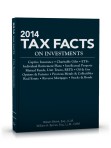
2014 Tax Facts on Investments provides clear, concise answers to often complex tax questions concerning investments.  Pertinent planning points are provided throughout.

Organized in a convenient Q&A format to speed you to the information you need, 2014 Tax Facts on Investments delivers the latest guidance on:

tax-facts-online_medium

  • Mutual Funds, Unit Trusts, REITs
  • Incentive Stock Options
  • Options & Futures
  • Real Estate
  • Stocks, Bonds
  • Oil & Gas
  • Precious Metals & Collectibles
  • And much more!

Key updates for 2014:

  • Important federal income and estate tax developments impacting investments, including changes from the American Taxpayer Relief Act of 2012
  • Expanded coverage of Reverse Mortgages
  • Expanded coverage of Real Estate Investment Trusts (REITs)
  • More than 30 new Planning Points, written by practitioners for practitioners, in the following areas:
    • Limitations on Loss Deductions
    • Charitable Gifts
    • Reverse Mortgages
    • Deduction of Interest and Expenses
    • REITs

The company also points out that the expert authors—Robert Bloink, Esq., LL.M., and William H. Byrnes, Esq., LL.M., CWM®—are delivering real-life guidance based on decades of experience.

The authors’ knowledge and experience in tax law and practice provides the expert guidance for National Underwriter to once again deliver a valuable resource for the financial advising community,” added Kravitz.


Posted in Wealth Management | Tagged: , , , | 1 Comment »

TJSL Tax Law Society Hosts Dr. Dennis Weber Tuesday, March 25

Posted by William Byrnes on March 19, 2014


Dennis picFor event details and rsvp information see > TJSL Tax Law Society Will Host International Tax Professor

Dr. Weber heads the European Direct Tax Law practice at Loyens & Loeff, the largest European continental law firm.  He specializes in advising clients in European tax law proceedings for the Dutch courts, the European Court of Justice and foreign courts. Dr. Weber is a professor of European Corporate Tax Law and the director of the University of Amsterdam’s Centre for Tax Law. He is a deputy judge in the regional Court of Appeal of ‘s-Hertogenbosch and an editor of many books, such as: Taking the Financial Sector (IBFD), EU Income Tax Law: Issues for the Years Ahead (IBFD) and Common Consolidated Corporate Tax Base (CCCTB): Selected Issues (Kluwer). 

“I met Dr. Weber last year during a Thomas Jefferson Tax Law Society career service event when he revealed how Holland is often the center of the world of international finance, and how tax law students can take advantage of often overlooked employment opportunities in this area,” explained the Tax Law Society’s Vice President of Operations Mark Hackmann (3L). “I was excited to obtain a generous sponsorship from Professor William Byrnes for the Tax Society to bring Dr. Weber back to campus to re-engage with our students.”

See the event announcement and details at TJSL Tax Law Society Will Host International Tax Professor

Posted in Courses | Tagged: , , , , | Leave a Comment »

Trustee’s Investment Strategy: Prudent Investor Rule vs. Legal List

Posted by William Byrnes on March 19, 2014


by Roland Ortiz

The fiduciary duty of a trustee must respond to the overall financial goals established by a trust.  The grantor typically provides guidelines of purpose of the trust at the same time allowing the trustee the ability to respond to changing beneficiary needs.  According to the trust, assets are disbursed or can be facilitated as providing life time income, or both.  The trustee is obligated to fulfill the fiduciary duties by proper administration of the trust.

In order to achieve proper fiduciary duty, a trustee is required to provide the beneficiary with performing investments but with consideration of overall risk.  Diversification provides performance while also reducing unsystematic risk.  There are two types of investment strategies which are used to provide this diversification: the Prudent Investor Rule or Legal List.

Read the article at http://www.advisorfyi.com/2014/02/trustees-investment-strategy-prudent-investor-rule-vs-legal-list/

Posted in Wealth Management | Tagged: , , | Leave a Comment »

OECD Publishes Proposals to Prevent Treaty Shopping

Posted by William Byrnes on March 18, 2014


On Friday (March 3) the OECD released its discussion draft of > proposals produced with respect to Action 6 < (Prevent Treaty Abuse) of the BEPS Action Plan.  The OECD stated that the draft proposals set out do not represent the consensus views of either the Committee on Fiscal Affairs or its subsidiary bodies but rather are intended to provide stakeholders with substantive proposals for analysis and comment.  The proposals follow upon the July 2013 OECD > Action Plan on Base Erosion and Profit Shifting <. The Action Plan identifies 15 actions to address BEPS in a comprehensive manner and sets deadlines to implement these actions.

Prevent Treaty Abuse

The Action Plan identifies treaty abuse, and in particular treaty shopping, as one of the most important sources of BEPS concerns. Action 6 (Prevent Treaty Abuse) reads as follows:

Action 6 Prevent treaty abuse

Develop model treaty provisions and recommendations regarding the design of domestic rules to prevent the granting of treaty benefits in inappropriate circumstances. Work will also be done to clarify that tax treaties are not intended to be used to generate double non-taxation and to identify the tax policy considerations that, in general, countries should consider before deciding to enter into a tax treaty with another country. The work will be co-ordinated with the work on hybrids.

US Limitation of Benefits Approach 

The OECD’s primary recommendation is the inclusion of a Limitation of Benefits (LOB) provision in tax treaties.  The detailed OECD proposal refers to the US’ LOB articles and follows a US approach to combatting treaty shopping.

Public Consultation

As part of that consultation process, interested parties are invited to send comments on this discussion draft, which includes the preliminary results of the work carried out in the three different areas identified in Action 6:

A. Develop model treaty provisions and recommendations regarding the design of domestic rules to prevent the granting of treaty benefits in inappropriate circumstances.

B. Clarify that tax treaties are not intended to be used to generate double non-taxation.

C. Identify the tax policy considerations that, in general, countries should consider before deciding to enter into a tax treaty with another country.

The Action Plan also provided that “[t]he OECD’s work on the different items of the Action Plan will continue to include a transparent and inclusive consultation process” and that all stakeholders such as business (in particular BIAC), non-governmental organisations, think tanks, and academia would be consulted.  The comments must be received by April 9, 2014.  The comments received by that date will be examined by the Focus Group at a meeting that will be held on the following week.  Comments on this discussion draft should be sent electronically (in Word format) by email to taxtreaties@oecd.org and should be addressed to: “Tax Treaties, Transfer Pricing and Financial Transactions Division OECD/CTPA”.  It is the policy of the OECD to publish all responses (including the names of responders) on the OECD website.

Persons and organisations who intend to send comments on this discussion draft are invited to indicate as soon as possible, by April 3rd, whether they wish to speak in support of their comments at a public consultation meeting on Action 6 (Prevent Treaty Abuse), which is scheduled to be held in Paris at the OECD Conference Centre on April 14-15, 2014.

This consultation meeting will be open to the public and the press.  Persons wishing to attend this public consultation meeting should fill out their request for registration on line as soon as possible, with a deadline of April 3, 2014.  This meeting will also be broadcast live on the internet and can be accessed on line. No advance registration is required for this internet access.

OECD Proposal Topics

A. Treaty provisions and/or domestic rules to prevent the granting of treaty benefits in inappropriate circumstances

1. Cases where a person tries to circumvent limitations provided by the treaty itself 

a) Treaty shopping

i) Limitation-on-benefits provision
ii) Rules aimed at arrangements one of the main purposes of which is to obtain treaty benefits

b) Other situations where a person seeks to circumvent treaty limitations

i) Splitting-up of contracts
ii) Hiring-out of labour cases
iii) Transactions intended to avoid dividend characterisation
iv) Dividend transfer transactions
v) Transactions that circumvent the application of Art. 13(4)
vi) Tie-breaker rule for determining the treaty residence of dual-resident persons
vii) Anti-abuse rule for permanent establishments situated in third States

2. Cases where a person tries to abuse the provisions of domestic tax law using treaties

B. Clarification that tax treaties are not intended to be used to generate double non-taxation

C. Tax policy considerations that, in general, countries should consider before deciding to enter into a tax treaty with another country.

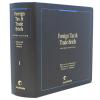
Book Binder

Handle your critical international business ventures with confidence using the indispensable content you can only find in LexisNexis® Foreign Tax & Trade Briefs, the one information service that provides the latest tax and trade information for 128 foreign countries and territories on a regular quarterly basis.  Looseleaf, updated with revisions four times each year.  Professor William Byrnes is the author of six Lexis treatises, including Tax Havens of the WorldLexisNexis® Guide to FATCA Compliance; Money Laundering, Asset Forfeiture and Recovery and Compliance — A Global Guide; Practical Guide to US Transfer Pricing and International Withholding Tax Treaty Guide.

Posted in OECD | Tagged: , , | Leave a Comment »

The IRS Will Pay You to Save Retirement Money !

Posted by William Byrnes on March 18, 2014


2013_tf_insurance_emp_benefits_combo_covers-m_2The IRS reported in Tax Tip 2014-28 that it will pay some taxpayers to save for retirement!

If a taxpayer contributes to a retirement plan, like a 401(k) or an IRA, then the taxpayer may be eligible for the “Saver’s Credit”. The Saver’s Credit can help save for retirement and reduce this year’s tax owed.  5 facts about this credit:

1. The Saver’s Credit is the short name for the Retirement Savings Contribution Credit. It can be worth up to $2,000 for married couples filing a joint return. The credit is worth up to $1,000 for single taxpayers.

2. Eligibility depends on a taxpayer’s filing status and the amount of yearly income.  2013 tax return eligibility for the credit depends on:

  • Married filing separately or a single taxpayer with income up to $29,500
  • Head of household with income up to $44,250
  • Married filing jointly with income up to $59,000

3. Other special rules that apply to the credit include:

  • Must be at least 18 years of age.
  • Can’t be a full-time student in 2013.
  • Can’t be claimed as a dependent on another person’s tax return.

4. The taxpayer must have contributed to a 401(k) plan or similar workplace plan by the end of the year to claim this credit. However, a taxpayer can contribute to an IRA by the due date of a tax return (April 15, 2014) and still have that contribution count for 2013.

5. File Form 8880, Credit for Qualified Retirement Savings Contributions, to claim the credit. Tax software includes this form for e-file.

The Saver’s Credit is in addition to other tax savings for setting aside money for retirement.  For example, a taxpayer may be able to deduct contributions to a traditional IRA.

Authoritative and easy-to-use, 2014 Tax Facts on Insurance & Employee Benefits shows you how the tax law and regulations are relevant to your insurance, employee benefits, and financial planning practices.  Often complex tax law and regulations are explained in clear, understandable language.  Pertinent planning points are provided throughout.

Posted in Retirement Planning, Taxation | Tagged: , , , , | Leave a Comment »

Novel Ideas: Literary Agents, Writers, and the Law

Posted by William Byrnes on March 17, 2014


April 16 (Wednesday) presented by the Entertainment & Sports Law and Intellectual Property Law Sections of the San Diego County Bar Association

Featuring: Vincent F. Aiello, Esq.; William H. Byrnes; Leah Christensen; and Mary Wenzel

Are you a writer or do you represent writers? Join us and bring yourself up to date on the changes in law in the dramatically altered world of publishing and the distribution of the written word. This informative program will cover authorship, protecting books as property, obtaining and negotiating publishing deals.

The following will be addressed:
• Learn what literary agents do and how they help writers obtain and close publishing deals.
• Academic books: How you reach out to a publisher, the proposal process, and why you never really get paid.
• Alternative ways to grow your business via ghost writers for content on websites and blogs.
• How to consistently write intriguing blogicles that build a personal and professional brand that will develop client leads.

Click here to download the PDF flyer.         Click here to register for the remote internet Webcast.

Entertainment & Sports Law Section Co- Chairs: Eric Eastham & D. Jonathan Hadaya, Vice Chair: Jeremy Evans
Intellectual Property Law Section Co-Chairs: Leah Strickland & Jing Liu

Location: SDCBA Conference Center, 401 West A St., Ste. 120 (1st Floor), San Diego, CA 92101
Sponsors: Entertainment & Sports Law Section; Intellectual Property Law Section


Byrnes book on Prospecting

The National Underwriter Sales Essentials Series combines all of the most practical, proven sales techniques advisors, agents, brokers, producers, sales managers or agency owners need to convert prospects into customers, win new business, and to grow sales.

The Life & Health Sales Essentials focuses on the selling skills and techniques essential to achieving success—prospecting for new business and the demands of running an agency.

Posted in book | 1 Comment »

Conflict of Interest: Sole interest or Best Interest

Posted by William Byrnes on March 17, 2014


by Roland Ortiz

One of the most fundamental tools for estate planners, either professional or individuals, is a trust.    Specifically, an inter vivos trust which is a legal arrangement by which property under state law can be transferred by a grantor to a trustee for management and stewardship.  Typically used to transfer grantor assets away from their gross estate, while allowing beneficiaries the benefit of life income, distribution of grantor’s assets or both.  This benefit begins and ends with a trustee’s administration of all assets in the trust.

When accepting this position, the trustee must adhere to the trust provisions and the Uniform Trust Code when evaluating investments, distributions, as well as the termination of the trust.  These provisions and codes are the guidelines for the trustee to administer the trust with fidelity and prudence.  For a trustee, duty of loyalty and good faith for the betterment of the beneficiaries are the cornerstones by which their position exists.

Read the full article at http://www.advisorfyi.com/2014/02/conflict-of-interest-sole-interest-or-best-interest/

Roland Ortiz currently provides clients with evaluations on fixed income trading, derivative trading, security trading, accounting, and portfolio valuations.  You can reach him at:  www.linkedin.com/pub/roland-ortiz/27/622/806/

Posted in Wealth Management | Tagged: , , | Leave a Comment »

Client’s Seeking Market Value Adjusted Annuities

Posted by William Byrnes on March 16, 2014


As clients have begun to feel the shifting winds with respect to the general economy, the annuity market is now undergoing its own type of evolution. While products that tie fluctuations in an annuity’s cash surrender value to prevailing market interest rates may have seemed unacceptably risky to most clients just a few months ago, changes in today’s interest rate environment now have clients flocking to find these features.

Annuities with market value adjustment (MVA) features may be the next hot product for clients looking to beat the return on other conservative investment products, so make sure you are ready for this emerging product trend.

Read the full analysis of Professor William Byrnes and Robert Bloink at Think Advisor !

2013_tf_insurance_emp_benefits_combo_covers-m_2Authoritative and easy-to-use, 2014 Tax Facts on Insurance & Employee Benefits shows you how the tax law and regulations are relevant to your insurance, employee benefits, and financial planning practices.  Often complex tax law and regulations are explained in clear, understandable language.  Pertinent planning points are provided throughout.

Organized in a convenient Q&A format to speed you to the information you need, 2014 Tax Facts on Insurance & Employee Benefits delivers the latest guidance on:

  • Estate & Gift Tax Planning
  • Roth IRAs
  • HSAs
  • Capital Gains, Qualifying Dividends
  • Non-qualified Deferred Compensation Under IRC Section 409A
  • And much more!

Key updates for 2014:

  • Important federal income and estate tax developments impacting insurance and employee benefits including changes from the American Taxpayer Relief Act of 2012
  • Concise updated explanation and highlights of the Patient Protection and Affordable Care Act (PPACA)
  • Expanded coverage of Annuities
  • New section on Structured Settlements
  • New section on International Tax
  • More than thirty new Planning Points, written by practitioners for practitioners, in the following areas:
    • Life Insurance
    • Health Insurance
    • Estate and Gift Tax
    • Deferred Compensation
    • Individual Retirement Plans

Plus, you’re kept up-to-date with online supplements for critical developments.  Written and reviewed by practicing professionals who are subject matter experts in their respective topics, Tax Facts is the practical resource you can rely on.

Posted in Insurance, Pensions, Retirement Planning | Tagged: , , , , | Leave a Comment »

OECD releases “transfer pricing comparability data and developing countries” for comment

Posted by William Byrnes on March 16, 2014


On Tuesday the OECD released Transfer Pricing Comparability and Developing Countries (March 11, 2014).  The OECD is seeking stakeholder and public comment until April 11, 2014 and will publicly discuss the contents in two parallel sessions on March 28, 2014, the last day of the Global Forum on Transfer Pricing.  This last day of the Global Forum meeting will be held in conjunction with the Task Force on Tax & Development.  Written comments should be sent to TransferPricing@oecd.org.

Transfer Pricing Comparability and Developing Countriesets out and briefly discusses four possible approaches to addressing the concerns over the lack of data on comparables that have been expressed by developing countries. 

  1. Expanding access to data sources for comparables, including steps to improve the range of data contained in commercial databases, expand developing country access to such databases, and improve access to comparables data in developing countries with a significant number of sizeable independent companies.
  2. More effective use of data sources for comparables, including guidance or assistance in the effective use of commercial databases, the selection of foreign comparables, whether and how to make adjustments to foreign comparables to enhance their reliability, and alternative approaches to finding comparables.
  3. Approaches to identifying arm’s length prices or results without reliance on direct comparables, including guidance or assistance in making use of proxies for arm’s length outcomes, the profit split method, value chain analysis, and safe harbours, an evaluation of the impact, effectiveness and compatibility with the arm’s length principle of approaches such as the so called “sixth method”, which is increasingly prevalent particularly in developing countries in Latin America and Africa, and a review of possible anti-avoidance approaches.
  4. Advance pricing agreements and mutual agreement proceedings, including a review of developing country experiences with the pros and cons of advance pricing agreements and negotiations to resolve transfer pricing disputes, as well as guidance or assistance with respect to mutual agreement proceedings.

Transfer pricing expert Dr. Gary Stone of PriceWaterhouseCoopers has > analyzed < the OECD paper, available at http://www.pwc.com/en_GX/gx/tax/newsletters/pricing-knowledge-network/assets/pwc-oecd-comparability-data-developing-countries.pdf   Dr. Stone is the global leader of the Transfer Pricing Group of PricewaterhouseCoopers (PwC).  Dr. Stone is based in Chicago and has directed and performed numerous analyses of intercompany pricing and economic valuation issues for Fortune 500 size companies.  Dr. Stone is a contributing co-author to Lexis’ Practical Guide to U.S. Transfer Pricing.

practical_guide_book

Lexis’ Practical Guide to U.S. Transfer Pricing (William Byrnes & the late Robert Cole (2013)) is designed to help multinationals cope with the U.S. transfer pricing rules and procedures, taking into account the international norms established by the Organisation for Economic Co-operation and Development (OECD). It is also designed for use by tax administrators, both those belonging to the U.S. Internal Revenue Service and those belonging to the tax administrations of other countries, and tax professionals in and out of government, corporate executives, and their non-tax advisors, both American and foreign.

The U.S. rules are presented along with ideas on how to apply them in a common-sense fashion in a multi-jurisdictional world.  A few of the highlights in the latest update to the treatise include:

  • The most important development in U.S. transfer pricing in the year ended in July 2013 is the strengthening of the IRS’s capability to enforce the U.S. transfer pricing rules.
  • We examine Transfer Pricing Operations’ three groups: the Advance Pricing and Mutual Agreement group (APMA), the Transfer Pricing Practice, and the International Practice Networks (IPNs).
  • We note the 2014 budget proposal, carried over from 2013, of the Obama administration limiting the shifting of income through intangible property transfers, which would expand the scope of intangible property for purposes of IRC Sections 367(d) and 482 to include ”workforce in place, goodwill, and going concern value.”
  • We discuss the new ”Rapid Appeals Process,” which is available for controversies that have arisen in an LB&I audit. It contemplates that Appeals, the examination team, and the taxpayer will discuss the case jointly in a single preopening conference in an effort to resolve the outstanding issues before the case is considered further by Appeals.

Posted in Transfer Pricing | Tagged: , , | Leave a Comment »

So Where Does the Oft Cited $150 Billion Figure Of Offshore Evasion Come From?

Posted by William Byrnes on March 15, 2014


Continuing from last Saturday March 8th …

Well known tax author and journalist Denis Kleinfeld suggests the following answer to this question.

The Congressional Research Service (CRS) provided a Memorandum of July 23, 2001 referencing an inquiry made by the House Majority Leader as to the method used by attorney Jack Blum to construct the estimate of $70 billion of illegal tax evasion losses due to tax havens. This figure was contained in Jack Blum’s Affidavit submitted in support of the government’s request from the federal court for a John Doe summons for records from MasterCard and American Express.

Dennis Kleinfeld states that, according to the CRS:*

Mr. Blum’s estimate was contained in a declaration filed in connection with a petition the Internal Revenue Service filed with the U.S. District Court for the Southern District. In response to your request, we contacted Mr. Blum and discussed his estimate; he was not able to send us a written discussion of his estimating procedure … We did not discuss these particular aspects of the estimating process in our initial conversation with Mr. Blum and our attempts to contact Mr. Blum on a follow-up basis have not been successful.

Mr. Kleinfeld reports that Mr. Blum has been described as follows:

“Mr. Blum is under contract to the IRS, he testifies before Senate committees and has provided an affidavit in support of at least one IRS search warrant.”[1]  This same statement of $70 billion was given by Jack Blum in testimony in 2002. When asked about that number he admitted it was imprecise stating, “You just have to take a guess at it.”

The Senate Permanent Subcommittee on Investigations issued a report entitled “Tax Haven Banks and U.S. Tax Compliance.” This report examined how tax haven banks facilitate tax evasion by U.S. clients that cost U.S. taxpayers an estimated $100 billion each year. This Report, widely cited as authority for the claim that $100 billion is lost in taxes because of evasion of tax through tax havens, is, in fact, merely based on footnote 1 of the Report which cites to information unsubstantiated in five magazine articles that varied widely in terms of authors and opinions regarding the amount of tax losses the U.S. incurs.[2] Mr. Kleinfeld notes that none of the cited articles provide any empirical evidence or known statistical methodology on how the number was calculated. The Report makes no claim that the $100 billion tax loss is based on anything else than these published articles.

IRS Commissioner Charles Shulman, in testifying before the Permanent Subcommittee on Investigations on March 4, 2009, was questioned on the analysis of hidden money criminally held overseas:[3]

Senator McCaskell: “Has there been any analysis done of how much of this money that is being hidden overseas is, in fact, a result of criminal activity?”

Mr. Shulman: “Not that I am aware of. I mean, estimating how much money that is overseas and not being paid to the government. As far as I am aware, there is no credible estimate because it is kind of a chicken and egg. It is over there and we have not found it, it is hard to estimate what is there. And all estimates that I have seen have not broken down criminal versus civil because, again, until we see the cases, it is hard to say.”

Based on a rate of the 15% long terms capital gain that applies to that money over the past 7 look-back years of Statute of Limitation, the currently cited $150B of lost annual tax revenue would require $1 trillion of annual taxable (hidden) income. To generate $1 trillion of capital gains income at a 5% rate of return requires $20 trillion of “noncompliant” offshore dollars.  Is it likely that noncompliant money represents almost double the M2 money supply (Federal Reserve data of March 6, 2014 about $11T, see http://www.federalreserve.gov/releases/h6/current/) and about 20 times the actual amount of paper dollars that are in circulation?

How Much Did the Congressional Joint Committee on Tax Estimate FATCA Will Bring in Annually?

The Congressional Joint Committee on Tax estimated that FATCA will generate $8.7 billion over ten years or average revenue $870 million per year – a very far cry from $100 billion, much less $150 billion, annually.  The $870 million annually appears not too far out of line with the tax collections generated by the OVDI the past six years, albeit the compliance costs to global industry to prepare for FATCA is currently estimated near this same amount based on government reports from the UK, Canada, Spain among other trade partners of the US.  So for the moment, at least offset for compliance costs, it’s probably a wash out.

An interesting study would be to quantify the total amount of funds from Americans repatriating back to the USA because of FATCA and the amount that expatriates to other jurisdictions.  By example, according to the Texas Bankers Association, to date FATCA has resulted in an outflow of $500 million of deposits from the Texas banking system.4 The Florida Bankers Association reported to Fitch that $60 billion and $100 billion in foreign deposits are held in Florida banks, close to 20% of the state’s total deposits.5  In 2012, Fitch estimated that a substantial portion of these deposits would NOT expatriate from Florida.  

Will the US be a net winner or loser from FATCA in terms of foreign deposits?  Also – in terms of revenue income raised, offset against compliance costs but taking into account that not all compliance costs retard GDP growth (arguably, some compliance costs may add to GDP while others may create a GPP lag).

The Telephone Game

How did the number jump from $60 billion to $100 billion to $150 billion in such a short matter of time?  Perhaps former Secretary of the Treasury O’Neil best poses a response.  Before the Permanent Subcommittee on Investigations of the Committee on Governmental Affairs on July 18, 2001 Secretary of the Treasury O’Neil pointed out the never ending computer life of something not true in his testimony:

“Well, thank you. I was frankly thunderstruck when I got the letter from these distinguished people, because I could not believe that they had read what I said, and I think you will hear today that they were responding to press accounts. As I said before, they did not respond to what I said at all. They responded to misrepresentations in the media, and I am sorry to be so blunt about it, but there is no other way to characterize it. If you look at the pieces that are in this book, if you can find any connection between the representations that were made in these stories and what I have said on the record and off the record, there is no connection whatsoever. But, intelligent people, including these distinguished citizens who have served in their government, took what they read at face value. Many of them know better, because they have been subjected to this, but they had forgotten.

So, when they read it in the newspaper, they filed—you would not believe, I get 2,000 letters a week and many of them are responding to things that I never said, never imagined and never would imagine, but I am still getting letters about it as though it were the real stuff simply because it appears in print. These days, with the wonderful technology we have with Lexis Nexis and all the rest of that, once this stuff is on the record it never goes away. It is always a primary source. So, when I am 95, I am going to be getting letters saying we cannot believe you did not want to prosecute money launderers. I will let them speak for themselves.”


*Congressional Research Service memorandum to House Majority Leader, attention Elizabeth Tobias, Reported Estimate of U.S. Tax Revenue Lost Through Use of Tax Havens, July 23, 2001.

[1] Kleinfeld, Denis, IFC Review, US Scandals Reinforce Warning Signs of FATCA’s Dangers” (July 1, 2013).  See http://www.ifcreview.com/restricted.aspx?articleId=6390&areaId=39 (accessed February 26, 2014).

[2] Permanent Subcommittee on Investigations, Tax Haven Banks and U.S. Tax Compliance, Hearing on March 4, 2009.

[3] Permanent Subcommittee on Investigations, Tax Haven Banks and U.S. Tax Compliance, Hearing on March 4, 2009.

[4] Aubin, Dena, Bankers take fight over U.S. anti-tax dodge rules to appeals court, Reuters, (Feb 5, 2014).

[5] See https://www.fitchratings.com/web/en/dynamic/articles/New-US-Tax-Rules-Could-Prompt-Foreign-Deposit-Outflow.jsp

LexisNexis FATCA Compliance Manual

book coverFifty contributing FATCA experts, each advising major institutions and financial service companies, authored 600 pages of analysis within the LexisNexis® Guide to FATCA Compliance (2nd Edition): many perspectives – one voice crafted by the primary author Professor William Byrnes.

The LexisNexis® Guide to FATCA Compliance (2nd Edition) comprises 34 Chapters grouped in three parts: compliance program (Chapters 1–4), analysis of FATCA regulations (Chapters 5–16) and analysis of Intergovernmental Agreements (IGAs) and local law compliance challenges (Chapters 17–34), including intergovernmental agreements as well as the OECD’s TRACE initiative for global automatic information exchange protocols and systems. The 34 chapters include many practical examples to assist a compliance officer contextualize the regulations, IGA provisions, and national rules enacted pursuant to an IGA.  Chapters include by example an in-depth analysis of the categorization of trusts pursuant to the Regulations and IGAs, operational specificity of the mechanisms of information capture, management and exchange by firms and between countries, insights as to the application of FATCA and the IGAs within new BRIC and European country chapters.

FATCA Experts Selected for the Lexis’ Guide  (please contact williambyrnes@gmail.com for an introduction to any of the below FATCA implementation experts)

Theodore C. Ahlgren, Esq. Ted Ahlgren concentrates his practice on international tax, trust, and estate planning. He has advised numerous U.S. and non-U.S. financial institutions, corporations, high net worth individuals, and their advisors on a variety of U.S. federal income, transfer, and withholding tax issues and has represented individuals and financial institutions in audits and voluntary disclosures. He participated in the submission of comments to Treasury and the IRS on the proposed FATCA regulations, and has written and spoken extensively on FATCA and other topics of relevance to international tax and estate planning. Contributions include chapter 7: Foreign Financial Institutions.

Devang Ambavi Devang Ambavi is Manager at PricewaterhouseCoopers Pvt. Ltd, India (PwC). He has over six years of experience in advising clients in multidisciplinary areas including international tax, domestic tax, exchange control and regulatory matters. More recently, he was on a two year secondment to PwC New York where he advised US based Funds on global structuring and international tax issues on a cross-jurisdictional basis. Contribution includes chapter 34: Exchange of Tax Information and Impact of FATCA for India.

Kyria Ali FCCA CIA CFE MCSI Kyria Ali, with her in-depth experience and qualifications in securities and investment (CISI), internal and forensic auditing (CIA and CFE) and financial background (FCCA) is strategically positioned as a leading business advisor in the BVI, Eastern Caribbean and Central American region. Very knowledgeable of the offshore sector, she has assisted many organisations, in the financial services industry, with risk management, compliance, FATCA and other tax related matters; just some of the areas addressed by the suite of business advisory services she provides. Contribution includes chapter 26: Exchange of Tax Information and Impact of FATCA for the The British Virgin Islands.

Michael Alliston, Esq.  Michael Alliston is a solicitor in the London office of Herbert Smith Freehills LLP. He advises on a range of corporate tax matters including mergers and acquisitions, corporate reorganizations, general finance and capital markets transactions. He also has particular experience in real estate and investment fund transactions and much of his work involves a cross-border element. Michael regularly advises clients on the transactional implications of FATCA from a UK law perspective and presents externally on the subject. Contribution includes chapter 24: U.K.-U.S. Intergovernmental Agreement and Its Implementation.

Maarten de Bruin, Esq. Maarten de Bruin advises on domestic and international tax aspects of commercial and (structured) finance transactions for Stibbe Simont. Maarten joined Stibbe’s tax department in 1989 and moved to the New York office in 1993 where he became partner in 1997. While in New York he graduated from New York University (tax LLM) and spent 6 months in the tax department of Cravath Swaine & Moore. He returned to the Amsterdam office of Stibbe in 1999 where he focused on clients in the industrial and real estate sector. His clients include Accor, Tata, APG and Super de Boer. Contribution includes chapter 30: Exchange of Tax Information and Impact of FATCA for the Netherlands.

Jean-Paul van den Berg, Esq. Jean-Paul van den Berg is a tax partner of Stibbe Simont whose areas of expertise include the application of tax treaties and EU law, major public and private cross-border mergers and acquisitions, private equity transactions (fund formation and investments), tax structuring, structured finance, debt restructuring, and corporate reorganizations. He is a regular speaker and author of articles in his practice area. He is currently based in our Amsterdam office. Previously, from 2008–2012 he was the resident tax partner in Stibbe’s New York offices and from 2002–2005 he was based in Stibbe’s London office. Contribution includes chapter 30: Exchange of Tax Information and Impact of FATCA for the The Netherlands.

Prof. William H. Byrnes, Esq.  William Byrnes has achieved authoritative prominence with 30 book and compendium volumes, 97 book & treatise chapters and book supplements, 1,000 articles, and the monthly subscription Tax Facts Intelligence available via Lexis.com. He is the author of several Lexis multi-volume publications including Foreign Tax & Trade Briefs; Tax Havens of the World; Money Laundering, Asset Forfeiture and Recovery, and Compliance—A Global Guide, and a Practical Guide to U.S. Transfer Pricing. Professionally, William Byrnes was a Senior Manager then Associate Director of international tax for Coopers and Lybrand based in its Johannesburg office. Academically, William Byrnes obtained the title of tenured law professor in 2005 at St. Thomas University and in 2008 the level of Associate Dean at Thomas Jefferson School of Law. William Byrnes pioneered online legal education in 1995, and established the first online LL.M. offered by an ABA accredited law school. The International Tax & Financial Services graduate program enrolls approximately 200 professionals annually pursuing a Master or Doctorate.

Amanda Castellano, Esq.   Amanda Castellano, an attorney working on tax, business, nonprofit and estate planning matters spent three years as an auditor with the Internal Revenue Service. She is currently a tax consultant based in Portland, Oregon. She graduated summa cum laude from Thomas Jefferson School of Law, where she served as Chief Notes Editor on the Thomas Jefferson Law Review. Contribution includes chapter 1: Introduction (Accidental American).

Luzius Cavelti, Esq. Luzius obtained his law degree from the University of Fribourg, Switzerland. He is qualified as certified tax expert (specialization in international tax) and holds an LL.M. degree from the Columbia School of Law. Luzius is admitted to the bar in Zurich and works as associate at Tappolet & Partner in Zurich. Luzius is specialized in international and domestic tax law. Contribution includes chapter 23: Switzerland-U.S. Intergovernmental Agreement and Its Implementation.

Peter Cotorceanu, Esq. Peter Cotorceanu is the Head of Product Management for Trusts and Foundations at UBS AG in Zurich. He was previously UBS’s Head of Wealth Structuring Consulting for UHNW clients in Zurich. In his current role, Peter is responsible for UBS’s FATCA compliance for trusts, foundations, and other fiduciary structures. Before joining UBS, Peter practiced law for over 20 years, both in Switzerland and the U.S., most recently at Baker & McKenzie Zurich. His practice concentrated on trust and estate planning and transfer taxes. Peter was also a law professor for a number of years at Washburn University School of Law, Topeka, Kansas and (as an adjunct) at the Marshall-Wythe School of Law, College of William and Mary, in Williamsburg, Virginia.  Peter is a former member of the Board of Governors of Virginia State Bar’s Trusts and Estates Section, as well as the Kansas Judicial Council’s Probate Advisory Committee and Estate Tax Advisory Sub-Committee.  Peter is admitted to practice in New Zealand as well as in Maryland and Virginia. He has an LL.B. (Hons) from Victoria University, Wellington, New Zealand, a J.D. (With Distinction) from Duke University, Durham, North Carolina, and an Executive LL.M. (Tax) from the New York University School of Law.  Peter is certified as a Trusts and Estates Practitioner (TEP) by STEP, and is a member of the International Bar Association and International Tax Planning Association, among other professional organizations.  Contribution includes chapter 9: FATCA and the Offshore Trust Industry.

Bruno Da Silva, LL.M.  Bruno da Silva works at Loyens & Loeff, European Direct Tax Law team, is a tax treaty adviser for the Macau special administrative region of the People’s Republic of China, and is also a researcher at the Amsterdam Centre for Tax Law of the University of Amsterdam. He lectures at different institutions such as the University of Leiden, University of Amsterdam, International Bureau of Fiscal Documentation (IBFD), Universidade Católica Portuguesa and IBDT (Brazil). He obtained an LL.M. in International Tax Law and he is currently pursuing his Ph.D. Contribution includes chapter 17: European Union Cross Border Information Reporting; and chapter 18: The OECD Role On Exchange Of Information: The TRACE Project, FATCA, and Beyond.

Prof. J. Richard Duke, Esq.  Richard Duke,  attorney, is  a member of the Alabama and the Florida Bar, specializing over forty years in income and estate tax planning and compliance, as well as asset protection, for high net wealth individuals. He served as Counsel to the Ludwig von Mises Institute for Austrian Economics 1983–1989 and a Fellow and Honorary Legal Scholar of the International Academy of Tax Advisors. Over his career he has served on numerous American Bar Association Committees and written many articles for legal and financial publications, several books, and was named to the list of “Top 100 Attorneys” in the U.S., Worth magazine, December 2005-2008. He is a Professor of Law of the LL.M. International Tax Program of Thomas Jefferson School of Law, San Diego, California and was an Adjunct Professor of Law at the Cumberland School of Law of Samford University International for Tax and Asset Protection Planning from 1983–1999. Contribution includes chapter 10: Withholding and Qualified Intermediary Reporting, chapter 11: Withholding and FATCA, chapter 12: “Withholdable” Payments, and chapter 13: Determining and Documenting the Payee.

Dr. Jan Dyckmans, Esq.  Jan Dyckmans is a German attorney at Flick Gocke Schaumburg in Frankfurt am Main, Germany where advises clients on corporate tax law in general and on international tax law matters in particular. He studied law at the University of Würzburg, Germany, where he was awarded his doctorate in 2008.  Contribution includes chapter 19: Exchange of Tax Information and Impact of FATCA for Germany.

Umurcan Gago, Esq., Umurcan Gago is a partner of PwC Turkey. He is a member of the Istanbul Bar and an Independent Chartered Accountant and Financial Advisor. Umurcan is specialised in cross border financial transactions, financial structures/products, conventional and structured financial products, investment banking products, international tax planning, securities law related matters, and financial structuring.   Contribution includes chapter 33: Exchange of Tax Information and the Impact of FATCA for Turkey.

Dr. F. Alfredo García Dr. F. Alfredo García is professor of Financial and Tax Law at the University of Valencia and Jean Monnet Chair of EU Law and Taxation. He is professor of European Taxation at Thomas Jefferson School of Law in California, and has been visiting professor at the Universities of London, Harvard, Leiden, Leuven, Bergamo and Georgetown.  Contribution includes chapter 28: Spain-U.S. Intergovernmental Agreement and its Implementation.

Dr. Valcir Gassen Dr. Valcir Gassen is a Professor of Federal University of Brasilia (UnB), participating with the support CAPES Foundation, Ministry of Education of Brazil. His hold a law degree from the University of Northwest of State of Rio Grande do Sul; an LL.M. from the Federal University of Santa Catarina; Ph.D. from the Federal University of Santa Catarina and Post-doctoral research from the University of Alicante, Spain. He coordinates since 2009 the Research Group in State, Constitution and Tax Law, with undergraduate and graduate students in UnB. Contribution includes chapter  25: Exchange of Tax Information and the Impact of FATCA for Brazil.

Arne Hansen Arne Hansen is a legal trainee of the Hanseatisches Oberlandesgericht (Higher Regional Court of Hamburg), Germany and previously undertook his stage at the Frankfurt office of Flick Gocke Schaumburg. He studied law at the University of Bayreuth, Germany, and the Victoria University of Wellington, New Zealand. He further completed an additional qualification in economics with the focus on finance and taxation at the University of Bayreuth. He is finalizing his doctoral thesis on a topic of international tax law with special regard to double tax treaties. Contribution includes chapter 20: Exchange of Tax Information and Impact of FATCA for Germany.

Mark Heroux, J.D. Mark Heroux, Principal in the Tax Services Group at Baker Tilly Virchow Krause, LLP, joined the firm in 2008. He has more than 25 years of tax litigation, technical, and program management experience. Mark began his career in 1986 with the IRS Office of Chief Counsel, and left public service in 2000. Mark specializes in IRS procedures including the withholding requirements of the US Internal Revenue Code, and dispute resolution including transfer pricing and the negotiation of Advance Pricing Agreements. He leads the IRS Practice and Procedures group, and has provided tax and business advisory services to large and mid-size financial institutions, and high net worth individuals. Contribution includes chapter 26: Exchange of Tax Information and Impact of FATCA for the The British Virgin Islands.

Véronique Hoffeld, Esq. Véronique Hoffeld, attorney-at-law, is a member of the Management Committee of Loyens & Loeff Luxembourg and heads the Luxembourg Commercial and Litigation department.  She can be considered as a generalist lawyer, whose activities cover matters in the areas of commercial law (negotiation of contracts), litigation and arbitration, bankruptcy & restructuring, IP law, real estate law, environment law, E-commerce and new technologies. Véronique is also occasionally involved in maritime and administrative law matters.  Prior to joining Loyens & Loeff Luxembourg, Véronique worked for more than 10 years in another important Luxembourg law firm at which she was made partner in 2003. Véronique is a member of the Luxembourg Bar since 1996.  Contributions include chapter 31: Exchange of Tax Information and Impact of FATCA for Luxembourg.

Rob. H. Holt, Esq. Rob H. Holt is a practicing attorney of thirty years licensed in New York and Texas representing real estate investment companies, university professors, and a variety of other business owners in the formation of their entities, business contracts, and distribution and channel documentation. He is currently completing his LL.M. in Taxation from Thomas Jefferson School of Law. Rob and his wife of 29 years live in College Station/Bryan, Texas. He is an avid, amateur ballroom dancer and loves the waltz, foxtrot, and tango. Contribution includes chapter 7: Foreign Financial Institutions.

Rajul Jain Rajul Jain is Senior Manager at PricewaterhouseCoopers Pvt. Ltd, India (PwC). He has more than 11 years of  International professional experience which involves proactively leading global teams and providing Financial and Strategic analysis, advice on RBI and Regulatory frameworks,  Designing  Compliance frameworks, Project management  advice and performing Enterprise risk reviews. Contribution includes chapter 34 Exchange of Tax Information and Impact of FATCA for India.

Richard Kando, CPA  Richard Kando, a Certified Public Accountant (New York) is a Director at Navigant Consulting. Richard specializes in forensic accounting and compliance matters relating to Government investigations, anti-money laundering and the Foreign Account Tax Compliance Act (“FATCA”). Richard is a leader of Navigant’s FATCA task force. Previously, Richard served as a Special Agent with the IRS Criminal Investigation Division where he received the U.S. Department of Justice—Tax Division Assistant Attorney General’s Special Contribution Award. Contribution includes chapter 2: Practical Considerations for Developing a FATCA Compliance Program.

Denis Kleinfeld, Esq., CPA. Denis Kleinfeld is Of Counsel to Fuerst Ittleman David & Joseph, PL, in Miami, Florida and a Professor of Law of the LL.M. International Tax Program of Thomas Jefferson School of Law, San Diego, California. The author of chapters in prominent legal publications, he has written extensively in professional and general circulation magazines and publications on a wide variety of tax, insurance, estate planning, treaty planning, domestic and international asset protection, and investment issues as well as observations on relevant political, social and economic issues. Mr. Kleinfeld is the founder of, and now serves as co-chairman for, the Florida Annual Wealth Protection Conference and is a speaker at a wide variety of professional conferences, seminars, and symposiums in the United States and around the world. After obtaining his B.S. degree in Accountancy from the University of Illinois in 1967 and obtaining his license as a Certified Public Accountant, Mr. Kleinfeld enrolled at the Loyola University of Chicago School of Law, graduating in 1970. He was admitted to the Illinois Bar in 1970 and was employed as an attorney with the Internal Revenue Service in the Estate and Gift Tax Division for four years before going into private practice. Mr. Kleinfeld has been a member of the Florida Bar since 1983, and is also a member of the Florida Institute of Certified Public Accountants, the American Bar Association, and the American Institute of Certified Public Accountants. Contribution includes chapter 1: Introduction and chapter 5: FBAR & 8938 FATCA Reporting.

Richard L. Knickerbocker, Esq. Richard L. Knickerbocker is the senior partner in the Los Angeles office of the Knickerbocker Law Group. He is the former City Attorney of the City of Santa Monica. He was designated Super Lawyer five years running by Los Angeles magazine, made numerous television appearances and has extensive publications. He has taught law in various colleges and law schools and is a certified civil trial advocate and appellate specialist. He graduated from the University of Southern California Gould School of Law with both a J.D. and an LL.M. degree. Contributions include chapter 11: Withholding and FATCA and chapter 13: Determining and Documenting the Payee.

Saloi Abou-Jaoude’ Knickerbocker  Saloi Abou-Jaoude’ Knickerbocker is a Legal Administrator in the Los Angeles office of the Knickerbocker Law Group. She holds LL.M. (Summa Cum Laude) in International Taxation and Financial Services has earned her J.D. (Summa Cum Laude). She has concentrated her practice and research on shari’a finance. She has published Shari’a Finance: Rapid Expansion With the Islamic Golden Age—Some International Taxation Implications in the TaxTalk Magazine (South Africa).  Contributions include chapter 11: Withholding and FATCA and chapter 13: Determining and Documenting the Payee.

Shinjini Kumar Shinjini Kumar is Executive Director at PricewaterhouseCoopers Pvt. Ltd, India (PwC). She is the Sector leader for Banking and Capital Markets and also heads Financial Services regulatory practice at PwC India. Prior to joining PwC in 2010, Shinjini has held senior positions at the Reserve Bank of India (RBI) and Bank of America-Merill Lynch. Her vast experience with the regulator and industry gives her the distinctive opportunity to engage with the industry, media and policy makers on important issues affecting the industry. Contribution includes chapter 34 Exchange of Tax Information and Impact of FATCA for India.

Mathias M. Link, Esq., LL.M.  Mathias Link is a counsel in the Frankfurt office of Hengeler Mueller. He is qualified as German attorney-at-law and tax consultant, holds an LL.M. degree from Columbia University and is also admitted to the New York bar. He advises corporate clients, banks and financial services institutions on a variety of tax matters including mergers and acquisitions, reorganizations, finance and capital markets transactions. He has particular expertise in the structuring of private equity, real estate and investment fund transactions and his main focus is on international tax aspects. Mathias regularly advises clients on the implications of FATCA from a German law perspective.  Contribution includes chapter 19: Germany.-U.S. Intergovernmental Agreement and Its Implementation.

Jinghua Liu, JD Jinghua Liu is a partner in the Tax group at Baker & McKenzie and is based in the Beijing office. She heads the tax dispute resolution practice in China. She joined Baker & McKenzie in 2004 and has been practicing China tax law since then. She is a frequent speaker at international tax conferences on PRC taxation and international tax planning, and authored and co-authored various articles in leading tax publications. Chambers Asia Pacific lists her as one of the recommended lawyers for tax in 2011 and 2012.  Contribution includes chapter 29: Exchange of Tax Information and Impact of FATCA for China.

Jeffrey Locke, Esq. Jeffrey Locke is Director at Navigant Consulting. At Navigant, he is a leader of the FATCA Task Force and has drafted numerous white papers and articles concerning the practical implementation of FATCA. Prior to joining Navigant, he served as an assistant New York state attorney general in the Criminal Prosecutions Bureau, worked in the prosecutor’s office for the United Nations in Kosovo and was an assistant public defender in Philadelphia. He received his law degree from Columbia Law School. Mr. Locke recently contributed a chapter to the book “International Prosecutors” published by Oxford University Press. Contribution includes chapter 2: Practical Considerations for Developing a FATCA Compliance Program.

Josh Lom  Josh works at Herbert Smith Freehills LLP having graduated from Oxford University. Contributions include chapter 24: UK-U.S. Intergovernmental Agreement and Its Implementation.

Jason R. Miller  Jason R. Miller recently spent the summer as a stagier at PwC Istanbul working with Umurcan Gago to author several chapters on Turkey for Lexis publications.  He will graduate in 2014 from Thomas Jefferson School of Law with his Juris Doctorate specializing in Global Legal Studies and Business Law.  Jason has a BS in Business Administration from California Polytechnic State University, San Luis Obispo, with a concentration in Human Resources.  He has contributed to publications for LexisNexis and Wolters Kluwer, including chapters on Company Law, AML, FATCA, and Foreign Tax and Trade Briefs.  Jason is an Editor of the Thomas Jefferson Law Review.   Contribution includes: chapter 33 Exchange of Tax Information and the Impact of FATCA for Turkey.

Dr. Robert J. Munro Dr. Robert Munro is the author of 35 published books including Lexis’ three volume Tax Havens of the World, two volume Foreign Tax & Trade Briefs, and Money Laundering, Asset Forfeiture and Recovery, and Compliance—A Global Guide. He is a Professor of the International Tax & Financial Services Graduate Program of Thomas Jefferson School of Law, San Diego, California. A former Law Librarian at University of Florida College of Law, Dr. Munro was the Director of the Center for International Financial Crimes Studies at UF and continues as a Senior Research Fellow and Director of Research for North America of CIDOEC at Jesus College, Cambridge University, England. He has addressed audiences at Cambridge University, the University of Florida, the University of London, the CIA and the U.S. State Department and created, organized and chaired over twenty conferences in Miami, Aruba, Curacao, the Bahamas, Washington, D.C., New York City, Cambridge, England and San Francisco.

Rachel O’Toole  Rachel O’Toole BA, LL.B, BL, is a barrister-at-law licensed in Ireland and holds the Master of Laws, International Taxation & Financial Services (Thomas Jefferson School of Law, San Diego). She practices a wide range of civil litigation. Besides her role as trial advocate, her work includes advice in financial and debt related issues, planning law compliance, implementation and compliance of European environmental law, and construction and contract disputes. She is an accredited civil and commercial mediator. She has researched and presented papers on current and emerging areas of financial law and compliance facing practitioners in Ireland. Contribution includes Chapter 20: Ireland-U.S. Intergovernmental Agreement and Its Implementation.

Dr. Maji C. Rhee  Maji C. Rhee is a professor of Waseda University located in Tokyo, Japan where she teaches courses on language and legal communications. Rhee received her Ed.D. from Rutgers, her LL.M. in International Taxation & Financial Services from Thomas Jefferson School of Law and is currently finishing her J.S.D. dissertation on transfer pricing in Japan. Contribution includes chapter 21: Japan-U.S. Intergovernmental Agreement and Its Implementation.

Jean Richard, Esq. Jean Richard, a Canadian attorney, previously worked for the Quebec Tax Department, as a Senior Tax Manager with a large international accounting firm and as a Tax & Estate consultant for a pre-eminent Canadian insurance company. He is currently the Vice President and Sr. Wealth Management Consultant of the BMO Financial Group. He completed a LL.L. at University of Montreal, was admitted to the Quebec Bar Association in 1981. He also completed the Canadian ‘In Depth Tax Course’ (Canadian Institute of Chartered Accountant), a Master in International Taxation with the Australian School of Taxation (ATAX), University of New South Wale, Sydney, Australia and a LL.M. in International Tax and Financial Services (International Taxation) with the Thomas Jefferson School of Law. He is a licensed financial planner and financial security advisor.  Contribution includes chapter 27: Exchange of Tax Information and Impact of FATCA for Canada.

Michael J. Rinaldi, II, CPA.  Mr. Rinaldi represents U.S. and foreign institutions and families in a broad range of advisory activities including private equity real estate opportunity funds, with regard to formation, acquisitions, operations, dispositions and development of significant properties and portfolios. He is a Professor in the graduate international tax law program at Thomas Jefferson School of Law, where he teaches on Trusts, Private Equity Funds and Tax Treaties. Professor Rinaldi has authored several publications for Kluwer Law International, Jordan’s and LexisNexis. He is licensed as a certified public accountant in the District of Columbia and is a member of the International Tax Planning Association (ITPA), the Society of Trust and Estate Practitioners (STEP) and the American Bar Association, Tax Section-Partnership and US Activities of Foreigners & Tax Treaties Committees. He holds graduate degrees in accounting and tax law (both US and International). Contributions includes chapter 6: Determining U.S. Ownership Under FATCA; chapter 7: Foreign Financial Institutions; and chapter 8: Non-Financial Foreign Entities.

Edgardo Santiago-Torres, Esq. Edgardo Santiago-Torres is an attorney at law, principal of Santiago Law Group, LLC, and of counsel of the Knickerbocker Law Group, representing individuals and entities in corporate, taxation, and estate planning litigation. Mr. Santiago is also a Certified Public Accountant and a Chartered Global Management Accountant, pursuant to the AICPA and CIMA rules and regulations, admitted by the Puerto Rico Board of Accountancy to practice Public Accounting in Puerto Rico. He holds an LL.M. in International Taxation and Financial Services (highest honors) and a Juris Doctor (honors) of the University of Puerto Rico School of Law.  Contributions include chapter 11: Withholding and FATCA and chapter 13: Determining and Documenting the Payee.

Hope M. Shoulders, Esq.  Hope M. Shoulders is a licensed attorney in the State of New Jersey. She is currently consulting for a major insurance company assisting with their implementation of FATCA. She is also an adjunct professor for the Thomas Jefferson School of Law. She  previously worked for General Motors, National Transportation Safety Board and the Department of Commerce. She completed her LL.M. in International Taxation from Thomas Jefferson School of Law in San Diego, California. She is a contributor of numerous articles and completed her thesis on OECD transfer pricing and business restructuring. She earned her J.D. and her MBA from the University of Tennessee and a Bachelors of Science from the University of Virginia. Contribution includes chapter 10: FATCA and the Insurance Industry.

Jason Simpson, LL.M., CRA, CCA  Jason Simpson is the Director of the Miami office for Global Atlantic Partners, overseeing all operations in Florida, the Caribbean and most of Latin America. He has worked previously as a bank compliance employee and advisor at various large and mid-sized financial institutions over the past ten years. He has been a key component in the removal of Cease and Desist Orders as well as other written regulatory agreements within a number of Domestic and International Banks, and designed complete AML/BSA units for domestic as well as international banks with over ten million accounts. He is an Adjunct Faculty Member of Thomas Jefferson School of Law for Compliance, AML and Fraud, where he holds a Master of Laws in International Taxation with a concentration specialized in Anti-Money Laundering, Anti-Terrorist Financing and Compliance. Through various online venues, he creates and teaches specialized webinars in both English and Spanish focused compliance. Contribution includes chapter 3: FATCA Compliance and Integration of Information Technology; and chapter 4: Financial Institution Account Remediation.

Dr. Alberto Gil Soriano, Esq. Alberto Gil Soriano is a Spanish attorney who holds a Ph.D. in Tax Law at University of Bologna (Italy), LL.M. in International Taxation and Financial Services at Thomas Jefferson School of Law in San Diego (California) and is Law degree from the University of Valencia (Spain). He has worked at the University of Valencia, at the European Commission’s Anti-Fraud Office in Brussels, and most recently at the Legal Department of the International Monetary Fund’s Financial Integrity Group in Washington, D.C. He currently works at the Fiscal Department of Uría Menéndez Abogados, S.L.P in Barcelona (Spain). Contributions include chapter 1: Introduction and chapter 15: Framework of Intergovernmental Agreements.

Krisztina Szombathy, Esq.  Krisztina Szombathy joined the Commercial & Litigation Department of Loyens & Loeff Luxembourg in October 2013.  She specializes in dispute resolution, and advises on commercial and civil law. Her areas of expertise also include European law, energy law and intellectual property. Before joining Loyens & Loeff, Krisztina acquired experience in legal drafting, notably in European and energy law matters during an internship at the European Court of Justice in Luxembourg.  Krisztina has been a member of the Luxembourg Bar since spring 2013.  Contributions include chapter 31: Exchange of Tax Information and Impact of FATCA for Luxembourg.

Debora de Souza Correa Talutto  Debora de Souza Correa Talutto is the International Transfer Pricing Manager at Temenos Banking Software Co., and a professor of international transfer pricing at Thomas Jefferson School of Law International Tax graduate program.  She is a sought after Brazilian tax authority, having authored the Brazilian chapter of LexisNexis’ Foreign Tax and Trade Briefs, the Brazilian chapter of Lexis’ Anti Money Laundering, Asset Forfeiture, & Recovery Guide, and most recently the Cost Sharing Arrangement chapter of Lexis’ Practical Guide to U.S. Transfer Pricing.    Ms. Talutto previously served as a tax consultant at Deloitte (Brazil) before earning her LL.M. in International Tax from University of Florida.  She holds an MBA, an LL.B. (Brazil), as well as a post-graduate degree in Brazilian taxation.  Contributions include chapter 25: Exchange of Tax Information and Impact of FATCA for Brazil.

Andrey Tereschenko, Esq.  Andrey Tereschenko is a tax partner in the Moscow office of Pepeliaev Group LLC. He focuses on tax law and has a high level of expertise in providing advice to major Russian and foreign companies on a wide range of tax issues but especially the implementation of compensation tax arrangements. Andrey has participated in projects to set up businesses in Russia, including assessment of the tax environment in the chosen business region, investment agreements with regional authorities and tax support for due diligence. Andrey has been directly involved in tax structuring of investment projects, particularly in the sphere of construction, land and real estate acquisition. Contributions include chapter 32: Exchange of Tax Information and Impact of FATCA for Russia.

Lily L. Tse, CPA.  Ms. Tse, a partner of Rinaldi & Associates (Washington, D.C.), represents US and foreign real estate private equity funds and property owners with regard to financial reporting and international tax matters. Her area of practice includes real estate development and leasing, joint ventures, consolidations and mezzanine financing. She has significant experience in U.S. withholding issues effecting foreign partnerships and trusts. Ms. Tse also heads the firm’s audit practice specializing in the development and operation of multi-family housing. Ms. Tse has been qualified as an expert witness in Federal Court, providing testimony in the area of real estate financing. Ms. Tse is licensed as a certified public accountant in the District of Columbia and holds graduate degrees in business and taxation. Contributions include chapter 7: Foreign Financial Institutions.

Dr. Oliver Untersander, Esq.  Oliver Untersander obtained his law degree and his PhD from the University of Zurich. Her holds a LL.M. from the New York University (international tax) and is admitted to the bar in Zurich (Switzerland). He is partner at Tappolet & Partner in Zurich. He is experienced in Swiss and international corporate taxation, corporate reorganizations and tax litigation. Contribution includes chapter 23: Switzerland-U.S. Intergovernmental Agreement and Its Implementation.

Mauricio Cano del Valle, Esq.  Mauricio Cano del Valle is a Mexican attorney who has previously worked for the Mexican Ministry of Finance (Secretaría de Hacienda),  Deloitte Mexico and the Amicorp Group. He is the founding partner of Brook & Cano SC, a Mexican boutique Law Firm, specializing on private clients, HNWI, UHNWI, their families and their businesses. Mauricio has been a professor at both the undergraduate and the graduate level at ITAM, the author of the book “Game Theory and Tax Evasion” published in Mexico in 2006, and the most recently published paper on “Game Theory and Minimum Taxes” included as part of a book on “Game Theory and Contemporary Law” published in Mexico in 2009. He holds a Law Degree, a Masters Degree in Law and Economics, and an MBA. Contribution includes chapter 22: Mexico-U.S. Intergovernmental Agreement and Its Implementation.

Janneke Versantvoort  Janneke Versantvoort is an international tax specialist and a member of the general tax practice at Loyens & Loeff Luxembourg. She is specialized in international tax law, focusing on advising multinational clients on cross-border transactions, group restructurings, project financing and transfer pricing. She worked for three years at the Loyens & Loeff Rotterdam office and is seconded to the Luxembourg office for two years.  Janneke is a member of the Dutch Association of Tax Advisers (NOB) and a member of the Young IFA in Luxembourg.  Contributions include chapter 31: Exchange of Tax Information and Impact of FATCA for Luxembourg.

John Walker, Esq.  John M. Walker, Esq., LL.M., is an international tax attorney who earned his LL.M. in International Taxation and Financial Services. He focuses on international tax compliance for high-net worth individuals as well as foreign trust compliance and structuring under the Foreign Account Tax Compliance Act (FATCA). He is Of Counsel to Duke Law Firm, P.C., and Michael Rinaldi & Co, LLP . Contributions include chapter 6: Determining U.S. Ownership Under FATCA, chapter 12: FATCA Withholding Compliance, chapter 13: “Withholdable” Payments Under FATCA, and chapter 14: Determining and Documenting the Payee.

Prof. Bruce Zagaris, Esq.  Bruce Zagaris is a partner at the Washington, D.C. law firm Berliner, Corcoran & Rowe, LLP, where he practices tax controversy and international criminal law, including representing individuals on voluntary disclosures, audits, and litigation as well as consulting and serving as an expert witness. He represents foreign governments, including helping negotiate treaties. He is an adjunct law professor of the LL.M. in International Taxation and Financial Services at Thomas Jefferson School of Law in San Diego. Mr. Zagaris is founder and editor of the International Enforcement Law Reporter (www.ielr.com). He is the author of International White Collar Crime (Cambridge U. Press 2010). Contribution includes chapter 15: Analysis of Current Intergovernmental Agreements.

Qiguang (Hardy) Zhou, LL.M., CPA  Qiguang (Hardy) Zhou works in the Tax group at Baker & McKenzie and is based in the Shanghai office. He obtained an LL.M. in International Tax Law. Contribution includes chapter 29: Exchange of Tax Information and Impact of FATCA for China.

Chapter 1 Background and Current Status of FATCA
Chapter 2 Practical Considerations for Developing a FATCA Compliance Program
Chapter 3 FATCA Compliance and Integration of Information Technology
Chapter 4 Financial Institution Account Remediation
Chapter 5 FBAR and Form 8938 Reporting and List of International Taxpayer IRS Forms
Chapter 6 Determining U.S. Ownership of Foreign Entities
Chapter 7 Foreign Financial Institutions
Chapter 8 Non-Financial Foreign Entities
Chapter 9 FATCA and the Offshore Trust Industry
Chapter 10 FATCA and the Insurance Industry
Chapter 11 Withholding and Qualified Intermediary
Chapter 12 FATCA Withholding Compliance
Chapter 13 ”Withholdable” Payments
Chapter 14 Determining and Documenting the Payee
Chapter 15 Framework of Intergovernmental Agreements
Chapter 16 Analysis of Current Intergovernmental Agreements
Chapter 17 European Union Cross Border Information Reporting
Chapter 18 The OECD Role in Exchange of Information: The Trace Project, FATCA, and Beyond
Chapter 19 Germany-U.S. Intergovernmental Agreement and its Implementation
Chapter 20 Ireland-U.S. Intergovernmental Agreement and its Implementation
Chapter 21 Japan-U.S. Intergovernmental Agreement and its Implementation
Chapter 22 Mexico-U.S. Intergovernmental Agreement and its Implementation
Chapter 23 Switzerland-U.S. Intergovernmental Agreement and its Implementation
Chapter 24 The United Kingdom-U.S. Intergovernmental Agreement and its Implementation
Chapter 25 Exchange of Tax Information and the Impact of FATCA for Brazil
Chapter 26 Exchange of Tax Information and the Impact of FATCA for The British Virgin Islands
Chapter 27 Exchange of Tax Information and the Impact of FATCA for Canada
Chapter 28 Exchange of Tax Information and the Impact of FATCA for Spain
Chapter 29 Exchange of Tax Information and the Impact of FATCA for China
Chapter 30 Exchange of Tax Information and the Impact of FATCA for Netherlands
Chapter 31 Exchange of Tax Information and the Impact of FATCA for Luxembourg
Chapter 32 Exchange of Tax Information and the Impact of FATCA for Russia
Chapter 33 Exchange of Tax Information and the Impact of FATCA for Turkey
Chapter 34 Exchange of Tax Information and the Impact of FATCA for India

Posted in FATCA | Tagged: | Leave a Comment »

FATCA and the size of Delaware’s International Financial Center

Posted by William Byrnes on March 14, 2014


Today’s FATCA anecdote from a recent interview ….

Professor William Byrnes stated, “The US has a highly successful international financial service industry that is important to the US economy, exemplified by, firstly, the international financial centres such as Miami and New York) of over a half trillion dollars of foreign deposits of high net wealth individuals whom many experts allege are not tax and exchange control compliant in their home countries; secondly, over 900,000 Delaware companies is the second to Hong Kong, and ahead of British Virgin Islands (BVI is actually third in the world);[1] and thirdly, the US territories’ offshore regimes, reducing the effective US corporate and income tax rates below 3.5 percent.[2]

In 2011, 133,297 businesses incorporated in Delaware.  Delaware has more corporate entities than people, reports Leslie Wayne of the New York Times — 945,326 to 897,934. These absentee corporate residents account for a quarter of Delaware’s total budget, roughly $860 million in taxes and fees in 2011.[3]  Moreover, the economic spill over impact for Delaware includes substantial employment and professional fees to Delaware business participating in the incorporation and advisory industry. Delaware is just behind China’s Hong Kong in number of annual incorporations and overall incorporations, and well ahead of the UK’s Virgin Islands (British) both in terms of offshore business and the dollars earned from that offshore business.

Tomorrow (Saturday March 15) I will provide a detailed account Where the Oft Cited “$150 Billion” Figure Of Offshore Evasion Come From?

See dozens of articles analyzing various compliance requirements of the FATCA Regulations and select IGAs at https://profwilliambyrnes.com/category/fatca/


[1] “Storm Survivors”, Special Report: Offshore Finance, The Economist, 16 Feb 2013. Available at http://www.economist.com/news/special-report/21571549-offshore-financial-centres-have-taken-battering-recently-they-have-shown-remarkable (accessed 28 February 2014).

[2] See William H Byrnes and Dr. Robert J Munro, Tax Havens of the World, US Virgin Islands chapter, LexisNexis.

[3] See Wayne, Leslie, How Delaware Thrives as a Corporate Tax Haven, New York Times (June 30, 2012).

LexisNexis FATCA Compliance Guide

book coverFifty contributing FATCA experts, each advising major institutions and financial service companies, authored 600 pages of analysis within the LexisNexis® Guide to FATCA Compliance (2nd Edition): many perspectives – one voice crafted by the primary author Professor William Byrnes.

The LexisNexis® Guide to FATCA Compliance (2nd Edition) comprises 34 Chapters grouped in three parts: compliance program (Chapters 1–4), analysis of FATCA regulations (Chapters 5–16) and analysis of Intergovernmental Agreements (IGAs) and local law compliance challenges (Chapters 17–34), including intergovernmental agreements as well as the OECD’s TRACE initiative for global automatic information exchange protocols and systems. The 34 chapters include many practical examples to assist a compliance officer contextualize the regulations, IGA provisions, and national rules enacted pursuant to an IGA.  Chapters include by example an in-depth analysis of the categorization of trusts pursuant to the Regulations and IGAs, operational specificity of the mechanisms of information capture, management and exchange by firms and between countries, insights as to the application of FATCA and the IGAs within new BRIC and European country chapters.

Posted in FATCA | Tagged: , , | 2 Comments »

2nd book released for Sales Essentials Series – Managing Your Agency!

Posted by William Byrnes on March 13, 2014


National Underwriter Sales Essentials: Managing Your Agency, the second book by Associate Dean William Byrnes in this soft skills series, released March 3rd.

“The National Underwriter Sales Essentials Series combines all of the most practical, proven sales techniques advisors need to convert prospects into customers, win new business, and to grow sales,” added Rick Kravitz Managing Director of the National Underwriter Professional Publishing Division. “The Life & Health Sales Essentials focuses on the selling skills and techniques essential to achieving success—prospecting for new business and the demands of running an agency.”  

Byrnes book Managing your Agency“While America is experiencing its greatest transfer of wealth, the senior level ‘baby boomer’ financial advisors are retiring out of the market,” explained Associate Dean William Byrnes.  “The next five years presents substantial opportunities for this generation of attorneys and financial advisors who exercise best networking and face-to-face practices.”

“Many young professionals unproductively spin their wheels when it comes to growing their client base,” interjected Robert Bloink. “The Walter H. Diamond Graduate Program, available online, is competitive because most faculty members like myself brings decades of business experience into the classroom and keep our students eye on the ball – developing their client books.”

William Byrnes added, “We invite our readers to the upcoming April 2 webinar wherein we will discuss topics such as How to Clone Your Clients, What`s Your Point of Difference?, The ‘Ben Franklin Method’ For Winning People Over, How to Cultivate a Network of Endless Referrals, and Marketing to the Millennials. Just email me to join the webinar.”

“For advisors that live in Southern California, I’ll be discussing ‘Prospecting in the Twenty-First Century’ on April 16 for a noon panel at the San Diego County Bar Association.”

For the April 2 (8am Pacific, 11am Eastern) > webinar link < or email williambyrnes@gmail.com

Posted in book, Courses | Tagged: , , , | Leave a Comment »

Updated FATCA IGA in Effect List

Posted by William Byrnes on March 13, 2014


The following 24 jurisdictions are treated as having a FATCA intergovernmental agreement in effect.

Model 1 IGA

Model 2 IGA

IGA FATCA XML Schema For Providing Information To IRS

The IRS has finalized the format for automatically exchanging FATCA data with IGA jurisdictions.  The Intergovernmental FATCA XML Schema (version 1.1):

  • Is a standard format developed in close cooperation with the OECD
  • Captures required information for reporting of FATCA data from both Financial Institutions (FIs) and Host Country Tax Administrations (HCTAs)
  • Will be used for automatic exchange with all FATCA jurisdictions
  • Uses elements from existing reporting schemas used by the OECD and the European Union to reduce burden on reporting entities
  • Uses XML to allow for easier modifications down the road in the event of legislative or regulatory changes in reporting rules
  • Will facilitate safe and secure electronic data transmission using the  International Data Exchange Service

IRS Compliance Guide For IGA FATCA XML Schema

The newly published IRS Guide to completing the schema pursuant to an IGA explains the information required to be included in each data element of the FATCA XML schema v1.1. The guide is divided into logical sections based on the schema and provides information on specific data elements and any attributes that describe that data element.

LexisNexis FATCA Compliance Guide

book coverFifty contributing FATCA experts, each advising major institutions and financial service companies, authored 600 pages of analysis within the LexisNexis® Guide to FATCA Compliance (2nd Edition): many perspectives – one voice crafted by the primary author Professor William Byrnes.

The LexisNexis® Guide to FATCA Compliance (2nd Edition) comprises 34 Chapters grouped in three parts: compliance program (Chapters 1–4), analysis of FATCA regulations (Chapters 5–16) and analysis of Intergovernmental Agreements (IGAs) and local law compliance challenges (Chapters 17–34), including intergovernmental agreements as well as the OECD’s TRACE initiative for global automatic information exchange protocols and systems. The 34 chapters include many practical examples to assist a compliance officer contextualize the regulations, IGA provisions, and national rules enacted pursuant to an IGA.  Chapters include by example an in-depth analysis of the categorization of trusts pursuant to the Regulations and IGAs, operational specificity of the mechanisms of information capture, management and exchange by firms and between countries, insights as to the application of FATCA and the IGAs within new BRIC and European country chapters.

Posted in FATCA | Tagged: , , | Leave a Comment »

Three Tax Tips about Obama Care

Posted by William Byrnes on March 12, 2014


Here are three tips about how the law may affect you:

The IRS published tax tip HC-TT- 2014-05 alerting taxpayers that Obama Care has provisions that may affect personal income taxes. How Obama Care affects a taxpayer depends on employment status, whether the taxpayer participates in a tax favored health plan, and the taxpayer’s age.

1. Employment Status

  • If a taxpayer is employed then the employer may report the value of the health insurance provided on the W-2 in Box 12 with a Code “DD”.  However, this amount is not taxable.
  • If a taxpayer is self-employed, then the taxpayer may deduct the cost of health insurance premiums, within limits.

2. Tax Favored Health Plans

  • If a taxpayer has a health flexible spending arrangement (FSA) at work, money added to it normally reduces taxable income.
  • If a taxpayer has a health savings account (HSA) at work, money the employer adds to it, within limits, is not taxable.
  • Money added to an HSA usually counts as a deduction.
  • Money used from an HSA for “qualified medical expenses” is not taxable income; however, withdrawals for other purposes are taxable and can even be subject to an additional tax.
  • If a taxpayer has a health reimbursement arrangement (HRA) at work, money received from it is generally not taxable.

3. Age

If a taxpayer is age 65 or older, the threshold for itemized medical deductions remains at 7.5 percent of Adjusted Gross Income (AGI) until 2017; for others the threshold increased to 10 percent of AGI in 2013.  AGI is shown on Form 1040 tax form.

Posted in Taxation | Tagged: , , , , | Leave a Comment »

IRS publishes User Guide for Providing FATCA Information Pursuant to IGA

Posted by William Byrnes on March 11, 2014


International Data Exchange Service

The IRS is finalizing requirements for a Data Exchange service to allow for Financial Institutions (FIs) and Host Country Tax Administrations (HCTAs) to automatically exchange FATCA data with the United States.  The Service will also allow the United States to make reciprocal exchanges where called for by an IGA that is in force.  The International Data Exchange Service:

  • Is based on business requirements collected by a multilateral working group
  • Serves as a single point of FATCA information delivery for both FIs and HCTAs
  • May be used for automatic exchange with all FATCA jurisdictions
  • Is based on readily-available mature technology
  • Requires both the file being sent (in the Intergovernmental FATCA XML Schema) and the transmission pathway to be encrypted, ensuring the security of tax data
  • Can be accessed either through a Browser-Based or a Scheduled Bulk Data Transfer environment

Intergovernmental FATCA XML Schema

The IRS has finalized the format for automatically exchanging FATCA data with IGA jurisdictions.  The Intergovernmental FATCA XML Schema (version 1.1):

  • Is a standard format developed in close cooperation with the OECD
  • Captures required information for reporting of FATCA data from both Financial Institutions (FIs) and Host Country Tax Administrations (HCTAs)
  • Will be used for automatic exchange with all FATCA jurisdictions
  • Uses elements from existing reporting schemas used by the OECD and the European Union to reduce burden on reporting entities
  • Uses XML to allow for easier modifications down the road in the event of legislative or regulatory changes in reporting rules
  • Will facilitate safe and secure electronic data transmission using the  International Data Exchange Service

IRS Guide For Using the Intergovernmental (IGA) FATCA XML Schema

The newly published IRS Guide to completing the schema pursuant to an IGA explains the information required to be included in each data element of the FATCA XML schema v1.1. The guide is divided into logical sections based on the schema and provides information on specific data elements and any attributes that describe that data element.

The requirement field for each data element and its attribute indicates whether the element (a) must be included in the schema (mandatory or validation), (b) is optional, or (c) is not used for FATCA (null).

I. Message Header

Information in the message header identifies the Financial Institution (FI) or Tax Administration that is sending the message. It specifies when the message was created, what calendar year the report is for, and the nature of the report (original, corrected, supplemental, etc).

II. PersonParty_Type

The data elements in this section are used when the Account Holder is a natural person.

IIa. TIN Type

This data element identifies the Tax Identification Number (TIN) used by the receiving tax administration to identify the Individual Account Holder

IIb. ResCountryCode

This data element describes the tax residence country code(s) for the individual being reported upon.

IIc. NamePerson_Type

IId. Address_Type

There are two options for Address type in the schema – AddressFix and AddressFree. AddressFix should be used for all FATCA reporting unless the reporting FI or tax administration transmitting the message cannot define the various parts of the account holder’s address.

IIe. Nationality

IIf. BirthInfo

III. OrganisationParty_Type

This complex type identifies the name of an Account Holder or Payee that is an Entity as opposed to an Individual.

IIIa. TIN_Type

IIIb. ResCountryCode

IIIc. Organisation Name

IV. Reporting FI

Identifies the financial institution that maintains the reported financial account or that makes the reported payment. Examples:

  • The reporting FI is the financial institution that has agreed to treat another financial institution as an owner documented FFI.
  • The reporting FI is the financial institution that makes a reported payment to a territory organized financial institution that is acting as an intermediary and that has not elected to be treated as a U.S. person
  • The reporting FI is the Sponsored FFI and the Sponsoring FFI is identified in the Sponsor group, see below.

If the reporting FI maintains branches outside of its country of tax residence then the GIIN for the reporting FI is the GIIN associated with the branch of the reporting FI that maintains the reported financial account.

IVa. ReportingGroup

IVb. Account Report

IVc. Pool Report

The IRS Guide is available at http://www.irs.gov/pub/irs-utl/Pub5124UserGuide.pdf

LexisNexis FATCA Compliance Guide

book coverFifty contributing FATCA experts, each advising major institutions and financial service companies, authored 600 pages of analysis within the LexisNexis® Guide to FATCA Compliance (2nd Edition): many perspectives – one voice crafted by the primary author Professor William Byrnes.

The LexisNexis® Guide to FATCA Compliance (2nd Edition) comprises 34 Chapters grouped in three parts: compliance program (Chapters 1–4), analysis of FATCA regulations (Chapters 5–16) and analysis of Intergovernmental Agreements (IGAs) and local law compliance challenges (Chapters 17–34), including intergovernmental agreements as well as the OECD’s TRACE initiative for global automatic information exchange protocols and systems. The 34 chapters include many practical examples to assist a compliance officer contextualize the regulations, IGA provisions, and national rules enacted pursuant to an IGA.  Chapters include by example an in-depth analysis of the categorization of trusts pursuant to the Regulations and IGAs, operational specificity of the mechanisms of information capture, management and exchange by firms and between countries, insights as to the application of FATCA and the IGAs within new BRIC and European country chapters.

Posted in FATCA | Tagged: , , , , | 3 Comments »

IRS Offers Obama Care Tax Tips for 2013 and 2014

Posted by William Byrnes on March 11, 2014


The IRS has set up a webpage >Health Care Tax Tips< to help people understand what they need to know for the 2013 federal individual income tax returns they are filing by April 15th, as well as for future tax returns. This includes information on the new Premium Tax Credit and making health care coverage choices.

Because many of the new Obama Care tax rules only went into effect on Jan. 1, 2014, most of these Obama Care changes do not affect the 2013 tax return.

What do I need to know for my 2013 tax return?

Considerations for 2014 tax year?

  • Open Enrollment for the Health Insurance Marketplace: The open enrollment period to purchase health care coverage through the Health Insurance Marketplace for 2014 began Oct. 1, 2013 and runs through March 31, 2014. When you get health insurance through the marketplace, you may be able to get advance payments of the premium tax credit that will immediately help lower your monthly premium. Learn more at HealthCare.gov.
  • Premium Tax Credit: If you get insurance through the Marketplace, you may be eligible to claim the premium tax credit. You can elect to have advance payments of the tax credit sent directly to your insurer during 2014, or wait to claim the credit when you file your tax return in 2015. If you choose to have advance payments sent to your insurer, you will have to reconcile the payments on your 2014 tax return, which will be filed in 2015. If you’re already receiving advance payments of the credit, you need do nothing at this time unless you have a change in circumstance. Learn More.
  • Change in Circumstances: If you’re receiving advance payments of the premium tax credit to help pay for your insurance coverage, you should report life changes, such as income, marital status or family size changes, to your marketplace. Reporting changes will help to make sure you are getting the proper amount of advance payments.
  • Individual Shared Responsibility Payment: Starting January 2014, you and your family must have health care coverage, have an exemption from coverage, or make a payment when you file your 2014 tax return in 2015. Most people already have qualifying health care coverage and will not need to do anything more than maintain that coverage throughout 2014. Learn More.

The Health Care Tax Tips available at >IRS ACA website< include:

  • IRS Reminds Individuals of Health Care Choices for 2014 ─ Find out what you need to know about how health care choices you make for 2014 may affect your taxes.
  • The Health Insurance Marketplace – Learn about Your Health Insurance Coverage Options – Find out about getting health care coverage through the Health Insurance Marketplace.
  • The Premium Tax Credit ─ Learn the basics of the Premium Tax Credit, including who might be eligible and how to get the credit.
  • The Individual Shared Responsibility Payment – An Overview ─ Provides information about types of qualifying coverage, exemptions from having coverage, and making a payment if you do not have qualifying coverage or an exemption.
  • Three Timely Tips about Taxes and the Health Care Law ─  Provides tips that help with filing the 2013 tax return, including information about employment status, tax favored health plans and itemized deductions.
  • Four Tax Facts about the Health Care Law for Individuals ─Offers basic tips to help people determine if the Affordable Care Act affects them and their families, and where to find more information.
  • Changes in Circumstances can Affect your Premium Tax Credit ─ Learn the importance of reporting any changes in circumstances that involve family size or income when advance payments of the Premium Tax Credit are involved.

For more than half a century, Tax Facts has been an essential resource designed to meet the real-world tax-guidance needs of professionals in both the insurance and investment industries.

2014_tf_on_individuals_small_businesses-m_1Due to a number of recent changes in the law, taxpayers are currently facing many questions connected to important issues such as healthcare, home office use, capital gains, investments, and whether an individual is considered an employee or a contractor. Financial advisors are continually looking for updated tax information that can help them provide the right answers to the right people at the right time. This brand-new resource provides fast, clear, and authoritative answers to pressing questions, and it does so in the convenient, timesaving, Q&A format for which Tax Facts is famous.

“Our brand-new Tax Facts title is exciting in many ways,” says Rick Kravitz, Vice President & Managing Director of Summit Professional Network’s Professional Publishing Division. “First of all, it fills a huge gap in the resources available to today’s advisors. Small business is a big market, and this book enables advisors to get up-and-running right away, with proven guidance that will help them serve their clients’ needs. Secondly, it addresses the biggest questions facing all taxpayers and provides absolutely reliable answers that help advisors solve today’s biggest problems with confidence.”

tax-facts-online_mediumThe company also points out that the expert authors—Robert Bloink, Esq., LL.M., and William H. Byrnes, Esq., LL.M., CWM®—are delivering real-life guidance based on decades of experience.

The authors’ knowledge and experience in tax law and practice provides the expert guidance for National Underwriter to once again deliver a valuable resource for the financial advising community,” added Kravitz.

Anyone interested can try Tax Facts on Individuals & Small Business, risk-free for 30 days, with a 100% guarantee of complete satisfaction.  For more information, please go to www.nationalunderwriter.com/TaxFactsIndividuals or call 1-800-543-0874.

Posted in Taxation | Tagged: , , , , | 1 Comment »

Income Higher Than $51,900? Does Alternative Minimum Tax (AMT) Apply to You?

Posted by William Byrnes on March 10, 2014


The IRS’ Tax Tip 2014-10

The IRS published a recent tax tip for the 2014 tax filing season to remind taxpayers about the possibility that even if no tax is owed under regular tax rules, under the special calculation rules of the alternative minimum tax system, tax may be owed anyway.  Excerpted below:

The AMT attempts to ensure that some individuals who claim certain tax benefits pay a minimum amount of tax.

1. You may have to pay the tax if your taxable income, plus certain adjustments, is more than the AMT exemption amount for your filing status. If your income is below this amount, you usually will not owe AMT.

2. The 2013 AMT exemption amounts for each filing status are:

• Single and Head of Household = $51,900

• Married Filing Joint and Qualifying Widow(er) = $80,800

• Married Filing Separate = $40,400

3. The rules for AMT are more complex than the rules for regular income tax. The best way to make it easy on yourself is to use IRS e-file to prepare and file your tax return. E-file tax software will figure AMT for you if you owe it.

4. If you file a paper return, use the AMT Assistant tool on IRS.gov to find out if you may need to pay the tax.

5. If you owe AMT, you usually must file Form 6251, Alternative Minimum Tax – Individuals. Some taxpayers who owe AMT can file Form 1040A and use the AMT Worksheet in the instructions.

Additional IRS Resources:

Posted in Taxation | Tagged: , | Leave a Comment »

Is $150 Billion Actually Lost Each Year to Offshore Noncompliance?

Posted by William Byrnes on March 8, 2014


continuing from last Saturday, March 1st’s article …

The Senate Subcommittee reported that: “According to the IRS, the current estimated annual U.S. tax gap is $450 billion, which represents the total amount of U.S. taxes owed but not paid on time, despite an overall tax compliance rate among American taxpayers of 83 percent. Contributing to that annual tax gap are offshore tax schemes responsible for lost tax revenues totaling an estimated $150 billion each year.”

To justify the reporting of the number of $150 billion a year of lost tax revenue due to “offshore tax schemes”, the Senate Report primarily cites its own investigatory reports and third party articles that refer to transfer pricing issues.  While transfer pricing regulations have been under scrutiny, at least by the Democrats, in the Senate, it is certainly not commonly held by those same Democrats that transfer pricing is illegal or constitutes an “offshore scheme”.  

It is proven beyond a doubt by the UBS, Credit Suisse, and other similar investigations, validated by the OVDI disclosures, that some Americans are noncompliant, and that some of those noncompliant Americans would owe tax if disclosing foreign income on their tax returns.  There is also no doubt that the total number of noncompliant Americans between 2008 and 2013 was at least 43,000. 

There is also no doubt that the tax that would have been collected from them had they been compliant during their time in the wilderness was in fact, relative to the reported figure of $150 billion lost annually, miniscule (somewhere probably between $300 million and $500 million a year for lost tax, with the majority of the $6 billion collected representing FBAR penalties, tax penalties, and interest).  To date, of the $150 billion referred to as lost a year to offshore schemes, only approximately .003% (a third of one percent) has been collected – and that assuming the above higher number of $500 million a year.

What is motivating the Subcommittee? 

Is the Senate searching for a magic bean to grow a money tree that will help cover up the $500 billion annual deficit (that has led to a $17 trillion national debt)?  The Subcommittee Report states: “Offshore tax evasion has been an issue of concern … because lost tax revenues contribute to the U.S. annual deficit, which today exceeds $500 billion. Collecting unpaid taxes is one way to reduce the deficit without raising taxes.”

90% of Taxpayers with Foreign Accounts are Tax Evaders!

The Taxpayer Advocate, relying on State Department statistics, cited that 7.6 million U.S. citizens reside abroad and many more U.S. residents have FBAR filing requirements, yet the IRS received only 807,040 FBAR submissions as recently as 2012.  The Taxpayer Advocate noted that in Mexico alone, more than one million U.S. citizens reside, and many Mexican citizens reside in the U.S. (and thus are required to file a FBAR for any Mexican accounts of $10,000 or greater).

Thus, more than 90% of taxpayers with foreign accounts are NOT compliant with the tax law? 7.6 million Americans abroad, at least 1 million nonresident aliens in the US, and some number of American in the US with foreign accounts equals a number of approximately 10 million taxpayers.  But the IRS reports that 87% of American residing taxpayers are compliant?  So statistically speaking, having a foreign account is indicative of being a tax evader.

Based on these numbers, being an American living in a foreign country is a leading cause of criminality.  What the statistics do not tell is which comes first?  A person tends toward criminality and thus moves to a foreign country or a person moves to a foreign country and then tends toward criminality? Enough facetiousness…     

I will greatly appreciate if a reader can supply me any studies / audit undertaken in the past five years of a statistically representative sample of the taxable incomes of these approximate 7.6 million Americans residing in foreign countries (I have of course read the CRFB articles and references).  I am curious how many of the nearly seven million non-compliant Americans:

(a) earn more income than that qualifying for the Foreign Income Exclusion of $97,600 for 2013 (combined with the Housing Allowance or Deduction Exclusion), and live in a country with lower effective tax rates than the US that US tax would be owing after the applicable tax credit on the remainder, and  

(b) of the sample, if the exclusion was not available, how many would have an excess tax credit because the foreign taxes paid are higher than the US taxes that would be due?

Maybe Foreign-Resident Americans are a Red Herring?

It will be interesting to learn if these approximate 7 – 8 million American foreign-residents in general owe tax after the foreign income / housing exemption and qualified retirement planning, or whether this group in general represents a red herring (at least as concerns filling in the $500 billion annual deficit).

$100 million is Still $100 million!

However, even if the number is only $1 billion or even $100 million collected a year from the IRS civil and criminal enforcement efforts, while it’s not going to put a dent in a $500 billion deficit, as Senator John McCain told the Credit Suisse representatives at the hearing February 26, it’s still a large amount of money that turns voters heads.

So Where Did the $150 Billion Figure Come From?

Check back next Saturday March 15 to discover the surprise answer…. 

LexisNexis FATCA Compliance Manual

book coverFifty contributing FATCA experts, each advising major institutions and financial service companies, authored 600 pages of analysis within the LexisNexis® Guide to FATCA Compliance (2nd Edition): many perspectives – one voice crafted by the primary author Professor William Byrnes.

The LexisNexis® Guide to FATCA Compliance (2nd Edition) comprises 34 Chapters grouped in three parts: compliance program (Chapters 1–4), analysis of FATCA regulations (Chapters 5–16) and analysis of Intergovernmental Agreements (IGAs) and local law compliance challenges (Chapters 17–34), including intergovernmental agreements as well as the OECD’s TRACE initiative for global automatic information exchange protocols and systems. The 34 chapters include many practical examples to assist a compliance officer contextualize the regulations, IGA provisions, and national rules enacted pursuant to an IGA.  Chapters include by example an in-depth analysis of the categorization of trusts pursuant to the Regulations and IGAs, operational specificity of the mechanisms of information capture, management and exchange by firms and between countries, insights as to the application of FATCA and the IGAs within new BRIC and European country chapters.

FATCA Experts Selected for the Lexis’ Guide  (please contact williambyrnes@gmail.com for an introduction to any of the below FATCA implementation experts)

Theodore C. Ahlgren, Esq. Ted Ahlgren concentrates his practice on international tax, trust, and estate planning. He has advised numerous U.S. and non-U.S. financial institutions, corporations, high net worth individuals, and their advisors on a variety of U.S. federal income, transfer, and withholding tax issues and has represented individuals and financial institutions in audits and voluntary disclosures. He participated in the submission of comments to Treasury and the IRS on the proposed FATCA regulations, and has written and spoken extensively on FATCA and other topics of relevance to international tax and estate planning. Contributions include chapter 7: Foreign Financial Institutions.

Devang Ambavi Devang Ambavi is Manager at PricewaterhouseCoopers Pvt. Ltd, India (PwC). He has over six years of experience in advising clients in multidisciplinary areas including international tax, domestic tax, exchange control and regulatory matters. More recently, he was on a two year secondment to PwC New York where he advised US based Funds on global structuring and international tax issues on a cross-jurisdictional basis. Contribution includes chapter 34: Exchange of Tax Information and Impact of FATCA for India.

Kyria Ali FCCA CIA CFE MCSI Kyria Ali, with her in-depth experience and qualifications in securities and investment (CISI), internal and forensic auditing (CIA and CFE) and financial background (FCCA) is strategically positioned as a leading business advisor in the BVI, Eastern Caribbean and Central American region. Very knowledgeable of the offshore sector, she has assisted many organisations, in the financial services industry, with risk management, compliance, FATCA and other tax related matters; just some of the areas addressed by the suite of business advisory services she provides. Contribution includes chapter 26: Exchange of Tax Information and Impact of FATCA for the The British Virgin Islands.

Michael Alliston, Esq.  Michael Alliston is a solicitor in the London office of Herbert Smith Freehills LLP. He advises on a range of corporate tax matters including mergers and acquisitions, corporate reorganizations, general finance and capital markets transactions. He also has particular experience in real estate and investment fund transactions and much of his work involves a cross-border element. Michael regularly advises clients on the transactional implications of FATCA from a UK law perspective and presents externally on the subject. Contribution includes chapter 24: U.K.-U.S. Intergovernmental Agreement and Its Implementation.

Maarten de Bruin, Esq. Maarten de Bruin advises on domestic and international tax aspects of commercial and (structured) finance transactions for Stibbe Simont. Maarten joined Stibbe’s tax department in 1989 and moved to the New York office in 1993 where he became partner in 1997. While in New York he graduated from New York University (tax LLM) and spent 6 months in the tax department of Cravath Swaine & Moore. He returned to the Amsterdam office of Stibbe in 1999 where he focused on clients in the industrial and real estate sector. His clients include Accor, Tata, APG and Super de Boer. Contribution includes chapter 30: Exchange of Tax Information and Impact of FATCA for the Netherlands.

Jean-Paul van den Berg, Esq. Jean-Paul van den Berg is a tax partner of Stibbe Simont whose areas of expertise include the application of tax treaties and EU law, major public and private cross-border mergers and acquisitions, private equity transactions (fund formation and investments), tax structuring, structured finance, debt restructuring, and corporate reorganizations. He is a regular speaker and author of articles in his practice area. He is currently based in our Amsterdam office. Previously, from 2008–2012 he was the resident tax partner in Stibbe’s New York offices and from 2002–2005 he was based in Stibbe’s London office. Contribution includes chapter 30: Exchange of Tax Information and Impact of FATCA for the The Netherlands.

Prof. William H. Byrnes, Esq.  William Byrnes has achieved authoritative prominence with 30 book and compendium volumes, 97 book & treatise chapters and book supplements, 1,000 articles, and the monthly subscription Tax Facts Intelligence available via Lexis.com. He is the author of several Lexis multi-volume publications including Foreign Tax & Trade Briefs; Tax Havens of the World; Money Laundering, Asset Forfeiture and Recovery, and Compliance—A Global Guide, and a Practical Guide to U.S. Transfer Pricing. Professionally, William Byrnes was a Senior Manager then Associate Director of international tax for Coopers and Lybrand based in its Johannesburg office. Academically, William Byrnes obtained the title of tenured law professor in 2005 at St. Thomas University and in 2008 the level of Associate Dean at Thomas Jefferson School of Law. William Byrnes pioneered online legal education in 1995, and established the first online LL.M. offered by an ABA accredited law school.  The International Tax & Financial Services graduate program enrolls approximately 200 professionals annually pursuing a Master or Doctorate.

Amanda Castellano, Esq. Amanda Castellano, an attorney working on tax, business, nonprofit and estate planning matters spent three years as an auditor with the Internal Revenue Service. She is currently a tax consultant based in Portland, Oregon. She graduated summa cum laude from Thomas Jefferson School of Law, where she served as Chief Notes Editor on the Thomas Jefferson Law Review. Contribution includes chapter 1: Introduction (Accidental American).

Luzius Cavelti, Esq. Luzius obtained his law degree from the University of Fribourg, Switzerland. He is qualified as certified tax expert (specialization in international tax) and holds an LL.M. degree from the Columbia School of Law. Luzius is admitted to the bar in Zurich and works as associate at Tappolet & Partner in Zurich. Luzius is specialized in international and domestic tax law. Contribution includes chapter 23: Switzerland-U.S. Intergovernmental Agreement and Its Implementation.

Peter Cotorceanu, Esq. Peter Cotorceanu is the Head of Product Management for Trusts and Foundations at UBS AG in Zurich. He was previously UBS’s Head of Wealth Structuring Consulting for UHNW clients in Zurich. In his current role, Peter is responsible for UBS’s FATCA compliance for trusts, foundations, and other fiduciary structures. Before joining UBS, Peter practiced law for over 20 years, both in Switzerland and the U.S., most recently at Baker & McKenzie Zurich. His practice concentrated on trust and estate planning and transfer taxes. Peter was also a law professor for a number of years at Washburn University School of Law, Topeka, Kansas and (as an adjunct) at the Marshall-Wythe School of Law, College of William and Mary, in Williamsburg, Virginia.  Peter is a former member of the Board of Governors of Virginia State Bar’s Trusts and Estates Section, as well as the Kansas Judicial Council’s Probate Advisory Committee and Estate Tax Advisory Sub-Committee.  Peter is admitted to practice in New Zealand as well as in Maryland and Virginia. He has an LL.B. (Hons) from Victoria University, Wellington, New Zealand, a J.D. (With Distinction) from Duke University, Durham, North Carolina, and an Executive LL.M. (Tax) from the New York University School of Law.  Peter is certified as a Trusts and Estates Practitioner (TEP) by STEP, and is a member of the International Bar Association and International Tax Planning Association, among other professional organizations.  Contribution includes chapter 9: FATCA and the Offshore Trust Industry.

Bruno Da Silva, LL.M.  Bruno da Silva works at Loyens & Loeff, European Direct Tax Law team, is a tax treaty adviser for the Macau special administrative region of the People’s Republic of China, and is also a researcher at the Amsterdam Centre for Tax Law of the University of Amsterdam. He lectures at different institutions such as the University of Leiden, University of Amsterdam, International Bureau of Fiscal Documentation (IBFD), Universidade Católica Portuguesa and IBDT (Brazil). He obtained an LL.M. in International Tax Law and he is currently pursuing his Ph.D. Contribution includes chapter 17: European Union Cross Border Information Reporting; and chapter 18: The OECD Role On Exchange Of Information: The TRACE Project, FATCA, and Beyond.

Prof. J. Richard Duke, Esq.  Richard Duke,  attorney, is  a member of the Alabama and the Florida Bar, specializing over forty years in income and estate tax planning and compliance, as well as asset protection, for high net wealth individuals. He served as Counsel to the Ludwig von Mises Institute for Austrian Economics 1983–1989 and a Fellow and Honorary Legal Scholar of the International Academy of Tax Advisors. Over his career he has served on numerous American Bar Association Committees and written many articles for legal and financial publications, several books, and was named to the list of “Top 100 Attorneys” in the U.S., Worth magazine, December 2005-2008. He is a Professor of Law of the LL.M. International Tax Program of Thomas Jefferson School of Law, San Diego, California and was an Adjunct Professor of Law at the Cumberland School of Law of Samford University International for Tax and Asset Protection Planning from 1983–1999. Contribution includes chapter 10: Withholding and Qualified Intermediary Reporting, chapter 11: Withholding and FATCA, chapter 12: “Withholdable” Payments, and chapter 13: Determining and Documenting the Payee.

Dr. Jan Dyckmans, Esq.  Jan Dyckmans is a German attorney at Flick Gocke Schaumburg in Frankfurt am Main, Germany where advises clients on corporate tax law in general and on international tax law matters in particular. He studied law at the University of Würzburg, Germany, where he was awarded his doctorate in 2008.  Contribution includes chapter 19: Exchange of Tax Information and Impact of FATCA for Germany.

Umurcan Gago, Esq., Umurcan Gago is a partner of PwC Turkey. He is a member of the Istanbul Bar and an Independent Chartered Accountant and Financial Advisor. Umurcan is specialised in cross border financial transactions, financial structures/products, conventional and structured financial products, investment banking products, international tax planning, securities law related matters, and financial structuring.   Contribution includes chapter 33: Exchange of Tax Information and the Impact of FATCA for Turkey.

Dr. F. Alfredo García Dr. F. Alfredo García is professor of Financial and Tax Law at the University of Valencia and Jean Monnet Chair of EU Law and Taxation. He is professor of European Taxation at Thomas Jefferson School of Law in California, and has been visiting professor at the Universities of London, Harvard, Leiden, Leuven, Bergamo and Georgetown.  Contribution includes chapter 28: Spain-U.S. Intergovernmental Agreement and its Implementation.

Dr. Valcir Gassen Dr. Valcir Gassen is a Professor of Federal University of Brasilia (UnB), participating with the support CAPES Foundation, Ministry of Education of Brazil. His hold a law degree from the University of Northwest of State of Rio Grande do Sul; an LL.M. from the Federal University of Santa Catarina; Ph.D. from the Federal University of Santa Catarina and Post-doctoral research from the University of Alicante, Spain. He coordinates since 2009 the Research Group in State, Constitution and Tax Law, with undergraduate and graduate students in UnB. Contribution includes chapter  25: Exchange of Tax Information and the Impact of FATCA for Brazil.

Arne Hansen Arne Hansen is a legal trainee of the Hanseatisches Oberlandesgericht (Higher Regional Court of Hamburg), Germany and previously undertook his stage at the Frankfurt office of Flick Gocke Schaumburg. He studied law at the University of Bayreuth, Germany, and the Victoria University of Wellington, New Zealand. He further completed an additional qualification in economics with the focus on finance and taxation at the University of Bayreuth. He is finalizing his doctoral thesis on a topic of international tax law with special regard to double tax treaties. Contribution includes chapter 20: Exchange of Tax Information and Impact of FATCA for Germany.

Mark Heroux, J.D. Mark Heroux, Principal in the Tax Services Group at Baker Tilly Virchow Krause, LLP, joined the firm in 2008. He has more than 25 years of tax litigation, technical, and program management experience. Mark began his career in 1986 with the IRS Office of Chief Counsel, and left public service in 2000. Mark specializes in IRS procedures including the withholding requirements of the US Internal Revenue Code, and dispute resolution including transfer pricing and the negotiation of Advance Pricing Agreements. He leads the IRS Practice and Procedures group, and has provided tax and business advisory services to large and mid-size financial institutions, and high net worth individuals. Contribution includes chapter 26: Exchange of Tax Information and Impact of FATCA for the The British Virgin Islands.

Véronique Hoffeld, Esq. Véronique Hoffeld, attorney-at-law, is a member of the Management Committee of Loyens & Loeff Luxembourg and heads the Luxembourg Commercial and Litigation department.  She can be considered as a generalist lawyer, whose activities cover matters in the areas of commercial law (negotiation of contracts), litigation and arbitration, bankruptcy & restructuring, IP law, real estate law, environment law, E-commerce and new technologies. Véronique is also occasionally involved in maritime and administrative law matters.  Prior to joining Loyens & Loeff Luxembourg, Véronique worked for more than 10 years in another important Luxembourg law firm at which she was made partner in 2003. Véronique is a member of the Luxembourg Bar since 1996.  Contributions include chapter 31: Exchange of Tax Information and Impact of FATCA for Luxembourg.

Rob. H. Holt, Esq. Rob H. Holt is a practicing attorney of thirty years licensed in New York and Texas representing real estate investment companies, university professors, and a variety of other business owners in the formation of their entities, business contracts, and distribution and channel documentation. He is currently completing his LL.M. in Taxation from Thomas Jefferson School of Law. Rob and his wife of 29 years live in College Station/Bryan, Texas. He is an avid, amateur ballroom dancer and loves the waltz, foxtrot, and tango. Contribution includes chapter 7: Foreign Financial Institutions.

Rajul Jain Rajul Jain is Senior Manager at PricewaterhouseCoopers Pvt. Ltd, India (PwC). He has more than 11 years of  International professional experience which involves proactively leading global teams and providing Financial and Strategic analysis, advice on RBI and Regulatory frameworks,  Designing  Compliance frameworks, Project management  advice and performing Enterprise risk reviews. Contribution includes chapter 34 Exchange of Tax Information and Impact of FATCA for India.

Richard Kando, CPA  Richard Kando, a Certified Public Accountant (New York) is a Director at Navigant Consulting. Richard specializes in forensic accounting and compliance matters relating to Government investigations, anti-money laundering and the Foreign Account Tax Compliance Act (“FATCA”). Richard is a leader of Navigant’s FATCA task force. Previously, Richard served as a Special Agent with the IRS Criminal Investigation Division where he received the U.S. Department of Justice—Tax Division Assistant Attorney General’s Special Contribution Award. Contribution includes chapter 2: Practical Considerations for Developing a FATCA Compliance Program.

Denis Kleinfeld, Esq., CPA. Denis Kleinfeld is Of Counsel to Fuerst Ittleman David & Joseph, PL, in Miami, Florida and a Professor of Law of the LL.M. International Tax Program of Thomas Jefferson School of Law, San Diego, California. The author of chapters in prominent legal publications, he has written extensively in professional and general circulation magazines and publications on a wide variety of tax, insurance, estate planning, treaty planning, domestic and international asset protection, and investment issues as well as observations on relevant political, social and economic issues. Mr. Kleinfeld is the founder of, and now serves as co-chairman for, the Florida Annual Wealth Protection Conference and is a speaker at a wide variety of professional conferences, seminars, and symposiums in the United States and around the world. After obtaining his B.S. degree in Accountancy from the University of Illinois in 1967 and obtaining his license as a Certified Public Accountant, Mr. Kleinfeld enrolled at the Loyola University of Chicago School of Law, graduating in 1970. He was admitted to the Illinois Bar in 1970 and was employed as an attorney with the Internal Revenue Service in the Estate and Gift Tax Division for four years before going into private practice. Mr. Kleinfeld has been a member of the Florida Bar since 1983, and is also a member of the Florida Institute of Certified Public Accountants, the American Bar Association, and the American Institute of Certified Public Accountants. Contribution includes chapter 1: Introduction and chapter 5: FBAR & 8938 FATCA Reporting.

Richard L. Knickerbocker, Esq. Richard L. Knickerbocker is the senior partner in the Los Angeles office of the Knickerbocker Law Group. He is the former City Attorney of the City of Santa Monica. He was designated Super Lawyer five years running by Los Angeles magazine, made numerous television appearances and has extensive publications. He has taught law in various colleges and law schools and is a certified civil trial advocate and appellate specialist. He graduated from the University of Southern California Gould School of Law with both a J.D. and an LL.M. degree. Contributions include chapter 11: Withholding and FATCA and chapter 13: Determining and Documenting the Payee.

Saloi Abou-Jaoude’ Knickerbocker  Saloi Abou-Jaoude’ Knickerbocker is a Legal Administrator in the Los Angeles office of the Knickerbocker Law Group. She holds LL.M. (Summa Cum Laude) in International Taxation and Financial Services has earned her J.D. (Summa Cum Laude). She has concentrated her practice and research on shari’a finance. She has published Shari’a Finance: Rapid Expansion With the Islamic Golden Age—Some International Taxation Implications in the TaxTalk Magazine (South Africa).  Contributions include chapter 11: Withholding and FATCA and chapter 13: Determining and Documenting the Payee.

Shinjini Kumar Shinjini Kumar is Executive Director at PricewaterhouseCoopers Pvt. Ltd, India (PwC). She is the Sector leader for Banking and Capital Markets and also heads Financial Services regulatory practice at PwC India. Prior to joining PwC in 2010, Shinjini has held senior positions at the Reserve Bank of India (RBI) and Bank of America-Merill Lynch. Her vast experience with the regulator and industry gives her the distinctive opportunity to engage with the industry, media and policy makers on important issues affecting the industry. Contribution includes chapter 34 Exchange of Tax Information and Impact of FATCA for India.

Mathias M. Link, Esq., LL.M.  Mathias Link is a counsel in the Frankfurt office of Hengeler Mueller. He is qualified as German attorney-at-law and tax consultant, holds an LL.M. degree from Columbia University and is also admitted to the New York bar. He advises corporate clients, banks and financial services institutions on a variety of tax matters including mergers and acquisitions, reorganizations, finance and capital markets transactions. He has particular expertise in the structuring of private equity, real estate and investment fund transactions and his main focus is on international tax aspects. Mathias regularly advises clients on the implications of FATCA from a German law perspective.  Contribution includes chapter 19: Germany.-U.S. Intergovernmental Agreement and Its Implementation.

Jinghua Liu, JD Jinghua Liu is a partner in the Tax group at Baker & McKenzie and is based in the Beijing office. She heads the tax dispute resolution practice in China. She joined Baker & McKenzie in 2004 and has been practicing China tax law since then. She is a frequent speaker at international tax conferences on PRC taxation and international tax planning, and authored and co-authored various articles in leading tax publications. Chambers Asia Pacific lists her as one of the recommended lawyers for tax in 2011 and 2012.  Contribution includes chapter 29: Exchange of Tax Information and Impact of FATCA for China.

Jeffrey Locke, Esq. Jeffrey Locke is Director at Navigant Consulting. At Navigant, he is a leader of the FATCA Task Force and has drafted numerous white papers and articles concerning the practical implementation of FATCA. Prior to joining Navigant, he served as an assistant New York state attorney general in the Criminal Prosecutions Bureau, worked in the prosecutor’s office for the United Nations in Kosovo and was an assistant public defender in Philadelphia. He received his law degree from Columbia Law School. Mr. Locke recently contributed a chapter to the book “International Prosecutors” published by Oxford University Press. Contribution includes chapter 2: Practical Considerations for Developing a FATCA Compliance Program.

Josh Lom  Josh works at Herbert Smith Freehills LLP having graduated from Oxford University. Contributions include chapter 24: UK-U.S. Intergovernmental Agreement and Its Implementation.

Jason R. Miller  Jason R. Miller recently spent the summer as a stagier at PwC Istanbul working with Umurcan Gago to author several chapters on Turkey for Lexis publications.  He will graduate in 2014 from Thomas Jefferson School of Law with his Juris Doctorate specializing in Global Legal Studies and Business Law.  Jason has a BS in Business Administration from California Polytechnic State University, San Luis Obispo, with a concentration in Human Resources.  He has contributed to publications for LexisNexis and Wolters Kluwer, including chapters on Company Law, AML, FATCA, and Foreign Tax and Trade Briefs.  Jason is an Editor of the Thomas Jefferson Law Review.   Contribution includes: chapter 33 Exchange of Tax Information and the Impact of FATCA for Turkey.

Dr. Robert J. Munro Dr. Robert Munro is the author of 35 published books including Lexis’ three volume Tax Havens of the World, two volume Foreign Tax & Trade Briefs, and Money Laundering, Asset Forfeiture and Recovery, and Compliance—A Global Guide. He is a Professor of the International Tax & Financial Services Graduate Program of Thomas Jefferson School of Law, San Diego, California. A former Law Librarian at University of Florida College of Law, Dr. Munro was the Director of the Center for International Financial Crimes Studies at UF and continues as a Senior Research Fellow and Director of Research for North America of CIDOEC at Jesus College, Cambridge University, England. He has addressed audiences at Cambridge University, the University of Florida, the University of London, the CIA and the U.S. State Department and created, organized and chaired over twenty conferences in Miami, Aruba, Curacao, the Bahamas, Washington, D.C., New York City, Cambridge, England and San Francisco.

Rachel O’Toole  Rachel O’Toole BA, LL.B, BL, is a barrister-at-law licensed in Ireland and holds the Master of Laws, International Taxation & Financial Services (Thomas Jefferson School of Law, San Diego). She practices a wide range of civil litigation. Besides her role as trial advocate, her work includes advice in financial and debt related issues, planning law compliance, implementation and compliance of European environmental law, and construction and contract disputes. She is an accredited civil and commercial mediator. She has researched and presented papers on current and emerging areas of financial law and compliance facing practitioners in Ireland. Contribution includes Chapter 20: Ireland-U.S. Intergovernmental Agreement and Its Implementation.

Dr. Maji C. Rhee  Maji C. Rhee is a professor of Waseda University located in Tokyo, Japan where she teaches courses on language and legal communications. Rhee received her Ed.D. from Rutgers, her LL.M. in International Taxation & Financial Services from Thomas Jefferson School of Law and is currently finishing her J.S.D. dissertation on transfer pricing in Japan. Contribution includes chapter 21: Japan-U.S. Intergovernmental Agreement and Its Implementation.

Jean Richard, Esq. Jean Richard, a Canadian attorney, previously worked for the Quebec Tax Department, as a Senior Tax Manager with a large international accounting firm and as a Tax & Estate consultant for a pre-eminent Canadian insurance company. He is currently the Vice President and Sr. Wealth Management Consultant of the BMO Financial Group. He completed a LL.L. at University of Montreal, was admitted to the Quebec Bar Association in 1981. He also completed the Canadian ‘In Depth Tax Course’ (Canadian Institute of Chartered Accountant), a Master in International Taxation with the Australian School of Taxation (ATAX), University of New South Wale, Sydney, Australia and a LL.M. in International Tax and Financial Services (International Taxation) with the Thomas Jefferson School of Law. He is a licensed financial planner and financial security advisor.  Contribution includes chapter 27: Exchange of Tax Information and Impact of FATCA for Canada.

Michael J. Rinaldi, II, CPA.  Mr. Rinaldi represents U.S. and foreign institutions and families in a broad range of advisory activities including private equity real estate opportunity funds, with regard to formation, acquisitions, operations, dispositions and development of significant properties and portfolios. He is a Professor in the graduate international tax law program at Thomas Jefferson School of Law, where he teaches on Trusts, Private Equity Funds and Tax Treaties. Professor Rinaldi has authored several publications for Kluwer Law International, Jordan’s and LexisNexis. He is licensed as a certified public accountant in the District of Columbia and is a member of the International Tax Planning Association (ITPA), the Society of Trust and Estate Practitioners (STEP) and the American Bar Association, Tax Section-Partnership and US Activities of Foreigners & Tax Treaties Committees. He holds graduate degrees in accounting and tax law (both US and International). Contributions includes chapter 6: Determining U.S. Ownership Under FATCA; chapter 7: Foreign Financial Institutions; and chapter 8: Non-Financial Foreign Entities.

Edgardo Santiago-Torres, Esq. Edgardo Santiago-Torres is an attorney at law, principal of Santiago Law Group, LLC, and of counsel of the Knickerbocker Law Group, representing individuals and entities in corporate, taxation, and estate planning litigation. Mr. Santiago is also a Certified Public Accountant and a Chartered Global Management Accountant, pursuant to the AICPA and CIMA rules and regulations, admitted by the Puerto Rico Board of Accountancy to practice Public Accounting in Puerto Rico. He holds an LL.M. in International Taxation and Financial Services (highest honors) and a Juris Doctor (honors) of the University of Puerto Rico School of Law.  Contributions include chapter 11: Withholding and FATCA and chapter 13: Determining and Documenting the Payee.

Hope M. Shoulders, Esq.  Hope M. Shoulders is a licensed attorney in the State of New Jersey. She is currently consulting for a major insurance company assisting with their implementation of FATCA. She is also an adjunct professor for the Thomas Jefferson School of Law. She  previously worked for General Motors, National Transportation Safety Board and the Department of Commerce. She completed her LL.M. in International Taxation from Thomas Jefferson School of Law in San Diego, California. She is a contributor of numerous articles and completed her thesis on OECD transfer pricing and business restructuring. She earned her J.D. and her MBA from the University of Tennessee and a Bachelors of Science from the University of Virginia. Contribution includes chapter 10: FATCA and the Insurance Industry.

Jason Simpson, LL.M., CRA, CCA  Jason Simpson is the Director of the Miami office for Global Atlantic Partners, overseeing all operations in Florida, the Caribbean and most of Latin America. He has worked previously as a bank compliance employee and advisor at various large and mid-sized financial institutions over the past ten years. He has been a key component in the removal of Cease and Desist Orders as well as other written regulatory agreements within a number of Domestic and International Banks, and designed complete AML/BSA units for domestic as well as international banks with over ten million accounts. He is an Adjunct Faculty Member of Thomas Jefferson School of Law for Compliance, AML and Fraud, where he holds a Master of Laws in International Taxation with a concentration specialized in Anti-Money Laundering, Anti-Terrorist Financing and Compliance. Through various online venues, he creates and teaches specialized webinars in both English and Spanish focused compliance. Contribution includes chapter 3: FATCA Compliance and Integration of Information Technology; and chapter 4: Financial Institution Account Remediation.

Dr. Alberto Gil Soriano, Esq. Alberto Gil Soriano is a Spanish attorney who holds a Ph.D. in Tax Law at University of Bologna (Italy), LL.M. in International Taxation and Financial Services at Thomas Jefferson School of Law in San Diego (California) and is Law degree from the University of Valencia (Spain). He has worked at the University of Valencia, at the European Commission’s Anti-Fraud Office in Brussels, and most recently at the Legal Department of the International Monetary Fund’s Financial Integrity Group in Washington, D.C. He currently works at the Fiscal Department of Uría Menéndez Abogados, S.L.P in Barcelona (Spain). Contributions include chapter 1: Introduction and chapter 15: Framework of Intergovernmental Agreements.

Krisztina Szombathy, Esq.  Krisztina Szombathy joined the Commercial & Litigation Department of Loyens & Loeff Luxembourg in October 2013.  She specializes in dispute resolution, and advises on commercial and civil law. Her areas of expertise also include European law, energy law and intellectual property. Before joining Loyens & Loeff, Krisztina acquired experience in legal drafting, notably in European and energy law matters during an internship at the European Court of Justice in Luxembourg.  Krisztina has been a member of the Luxembourg Bar since spring 2013.  Contributions include chapter 31: Exchange of Tax Information and Impact of FATCA for Luxembourg.

Debora de Souza Correa Talutto  Debora de Souza Correa Talutto is the International Transfer Pricing Manager at Temenos Banking Software Co., and a professor of international transfer pricing at Thomas Jefferson School of Law International Tax graduate program.  She is a sought after Brazilian tax authority, having authored the Brazilian chapter of LexisNexis’ Foreign Tax and Trade Briefs, the Brazilian chapter of Lexis’ Anti Money Laundering, Asset Forfeiture, & Recovery Guide, and most recently the Cost Sharing Arrangement chapter of Lexis’ Practical Guide to U.S. Transfer Pricing.    Ms. Talutto previously served as a tax consultant at Deloitte (Brazil) before earning her LL.M. in International Tax from University of Florida.  She holds an MBA, an LL.B. (Brazil), as well as a post-graduate degree in Brazilian taxation.  Contributions include chapter 25: Exchange of Tax Information and Impact of FATCA for Brazil.

Andrey Tereschenko, Esq.  Andrey Tereschenko is a tax partner in the Moscow office of Pepeliaev Group LLC. He focuses on tax law and has a high level of expertise in providing advice to major Russian and foreign companies on a wide range of tax issues but especially the implementation of compensation tax arrangements. Andrey has participated in projects to set up businesses in Russia, including assessment of the tax environment in the chosen business region, investment agreements with regional authorities and tax support for due diligence. Andrey has been directly involved in tax structuring of investment projects, particularly in the sphere of construction, land and real estate acquisition. Contributions include chapter 32: Exchange of Tax Information and Impact of FATCA for Russia.

Lily L. Tse, CPA.  Ms. Tse, a partner of Rinaldi & Associates (Washington, D.C.), represents US and foreign real estate private equity funds and property owners with regard to financial reporting and international tax matters. Her area of practice includes real estate development and leasing, joint ventures, consolidations and mezzanine financing. She has significant experience in U.S. withholding issues effecting foreign partnerships and trusts. Ms. Tse also heads the firm’s audit practice specializing in the development and operation of multi-family housing. Ms. Tse has been qualified as an expert witness in Federal Court, providing testimony in the area of real estate financing. Ms. Tse is licensed as a certified public accountant in the District of Columbia and holds graduate degrees in business and taxation. Contributions include chapter 7: Foreign Financial Institutions.

Dr. Oliver Untersander, Esq.  Oliver Untersander obtained his law degree and his PhD from the University of Zurich. Her holds a LL.M. from the New York University (international tax) and is admitted to the bar in Zurich (Switzerland). He is partner at Tappolet & Partner in Zurich. He is experienced in Swiss and international corporate taxation, corporate reorganizations and tax litigation. Contribution includes chapter 23: Switzerland-U.S. Intergovernmental Agreement and Its Implementation.

Mauricio Cano del Valle, Esq.  Mauricio Cano del Valle is a Mexican attorney who has previously worked for the Mexican Ministry of Finance (Secretaría de Hacienda),  Deloitte Mexico and the Amicorp Group. He is the founding partner of Brook & Cano SC, a Mexican boutique Law Firm, specializing on private clients, HNWI, UHNWI, their families and their businesses. Mauricio has been a professor at both the undergraduate and the graduate level at ITAM, the author of the book “Game Theory and Tax Evasion” published in Mexico in 2006, and the most recently published paper on “Game Theory and Minimum Taxes” included as part of a book on “Game Theory and Contemporary Law” published in Mexico in 2009. He holds a Law Degree, a Masters Degree in Law and Economics, and an MBA. Contribution includes chapter 22: Mexico-U.S. Intergovernmental Agreement and Its Implementation.

Janneke Versantvoort  Janneke Versantvoort is an international tax specialist and a member of the general tax practice at Loyens & Loeff Luxembourg. She is specialized in international tax law, focusing on advising multinational clients on cross-border transactions, group restructurings, project financing and transfer pricing. She worked for three years at the Loyens & Loeff Rotterdam office and is seconded to the Luxembourg office for two years.  Janneke is a member of the Dutch Association of Tax Advisers (NOB) and a member of the Young IFA in Luxembourg.  Contributions include chapter 31: Exchange of Tax Information and Impact of FATCA for Luxembourg.

John Walker, Esq.  John M. Walker, Esq., LL.M., is an international tax attorney who earned his LL.M. in International Taxation and Financial Services. He focuses on international tax compliance for high-net worth individuals as well as foreign trust compliance and structuring under the Foreign Account Tax Compliance Act (FATCA). He is Of Counsel to Duke Law Firm, P.C., and Michael Rinaldi & Co, LLP . Contributions include chapter 6: Determining U.S. Ownership Under FATCA, chapter 12: FATCA Withholding Compliance, chapter 13: “Withholdable” Payments Under FATCA, and chapter 14: Determining and Documenting the Payee.

Prof. Bruce Zagaris, Esq.  Bruce Zagaris is a partner at the Washington, D.C. law firm Berliner, Corcoran & Rowe, LLP, where he practices tax controversy and international criminal law, including representing individuals on voluntary disclosures, audits, and litigation as well as consulting and serving as an expert witness. He represents foreign governments, including helping negotiate treaties. He is an adjunct law professor of the LL.M. in International Taxation and Financial Services at Thomas Jefferson School of Law in San Diego. Mr. Zagaris is founder and editor of the International Enforcement Law Reporter (www.ielr.com). He is the author of International White Collar Crime (Cambridge U. Press 2010). Contribution includes chapter 15: Analysis of Current Intergovernmental Agreements.

Qiguang (Hardy) Zhou, LL.M., CPA  Qiguang (Hardy) Zhou works in the Tax group at Baker & McKenzie and is based in the Shanghai office. He obtained an LL.M. in International Tax Law. Contribution includes chapter 29: Exchange of Tax Information and Impact of FATCA for China.

Chapter 1 Background and Current Status of FATCA
Chapter 2 Practical Considerations for Developing a FATCA Compliance Program
Chapter 3 FATCA Compliance and Integration of Information Technology
Chapter 4 Financial Institution Account Remediation
Chapter 5 FBAR and Form 8938 Reporting and List of International Taxpayer IRS Forms
Chapter 6 Determining U.S. Ownership of Foreign Entities
Chapter 7 Foreign Financial Institutions
Chapter 8 Non-Financial Foreign Entities
Chapter 9 FATCA and the Offshore Trust Industry
Chapter 10 FATCA and the Insurance Industry
Chapter 11 Withholding and Qualified Intermediary
Chapter 12 FATCA Withholding Compliance
Chapter 13 ”Withholdable” Payments
Chapter 14 Determining and Documenting the Payee
Chapter 15 Framework of Intergovernmental Agreements
Chapter 16 Analysis of Current Intergovernmental Agreements
Chapter 17 European Union Cross Border Information Reporting
Chapter 18 The OECD Role in Exchange of Information: The Trace Project, FATCA, and Beyond
Chapter 19 Germany-U.S. Intergovernmental Agreement and its Implementation
Chapter 20 Ireland-U.S. Intergovernmental Agreement and its Implementation
Chapter 21 Japan-U.S. Intergovernmental Agreement and its Implementation
Chapter 22 Mexico-U.S. Intergovernmental Agreement and its Implementation
Chapter 23 Switzerland-U.S. Intergovernmental Agreement and its Implementation
Chapter 24 The United Kingdom-U.S. Intergovernmental Agreement and its Implementation
Chapter 25 Exchange of Tax Information and the Impact of FATCA for Brazil
Chapter 26 Exchange of Tax Information and the Impact of FATCA for The British Virgin Islands
Chapter 27 Exchange of Tax Information and the Impact of FATCA for Canada
Chapter 28 Exchange of Tax Information and the Impact of FATCA for Spain
Chapter 29 Exchange of Tax Information and the Impact of FATCA for China
Chapter 30 Exchange of Tax Information and the Impact of FATCA for Netherlands
Chapter 31 Exchange of Tax Information and the Impact of FATCA for Luxembourg
Chapter 32 Exchange of Tax Information and the Impact of FATCA for Russia
Chapter 33 Exchange of Tax Information and the Impact of FATCA for Turkey
Chapter 34 Exchange of Tax Information and the Impact of FATCA for India

Posted in FATCA | Tagged: | 2 Comments »

William Byrnes authors new book on Client Prospecting for Sales Essentials Series

Posted by William Byrnes on March 7, 2014


On February 10, 2014 National Underwriter released its book Sales Essentials: Prospecting by Associate Dean William Byrnes.

“The National Underwriter Sales Essentials Series combines all of the most practical, proven sales techniques advisors, agents, brokers, producers, sales managers or agency owners need to convert prospects into customers, win new business, and to grow sales,” related Rick Kravitz Managing Director of the Professional Publishing Division. “The Life & Health Sales Essentials focuses on the selling skills and techniques essential to achieving success—prospecting for new business and the demands of running an agency.”  

“My co-author Robert Bloink and I wanted to write from a different focus than our tax books” explained William Byrnes.  “We uncovered that many financial professionals, accountants and attorneys aren’t taught the necessary soft skills in business and law school to develop and manage a sustainable practice after graduation.  This book addresses the soft skills necessary to be the firm ‘rainmaker’ and build a client base.”

Robert Bloink added, “Most young professionals don’t understand that the most valuable skill is the ability to attract and maintain clients.  In the current legal market, there are twice as many graduates as good positions – it’s an employer’s market.  Byrnes book on Prospecting

“In this new book we cover such topics as How to Clone Your Clients, What`s your Point of Difference?, The ‘Ben Franklin Method’ For Winning People Over, How to Cultivate A Network of Endless Referrals, and Marketing to the Millennials,” said William Byrnes. 

“I invite my readers to attend a soft skills webinar based upon the book, sponsored by Advisys, where Robert and I will be speaking about obtaining and maintaining clients. Hundreds of professionals attended our March 5 webinar that focused on lead development.  April 2 will focus on client cloning, including: asking intriguing questionsC2C qualified introductionsrepeating your successful formulae and finally, client crowd sourcing

William Byrnes continued “Jeremy Evans (Thomas Jefferson ’11) invited me to discuss on April 16 at the San Diego County Bar Association ‘Prospecting in the Twenty-First Century’ for a noon panel.”

The book is available at National Underwriter Sales Essentials: Prospecting

To Join the no-cost April 2 Webinar, contact WilliamByrnes@gmail.com

Posted in book, Courses | Tagged: , , , , , | Leave a Comment »

IRS Small Business Tax Center ….

Posted by William Byrnes on March 7, 2014


IRS Tax Tip 2014-09 posted February a couple weeks ago and I excerpt relevant portions for the small business community, many actively engaging with their tax preparers for tax season.

The Center includes these resources:

  • You can apply for an Employer Identification Number, get a form or learn about employment taxes.
  • IRS Video Portal.  Watch helpful videos and webinars on many topics. Find out about filing and paying business taxes or about how the IRS audit process works. Under the ‘Businesses’ tab, look for the ’Small Biz Workshop.’ Watch it when you want to learn the basics about small business taxes.
  • Online Tools and Educational Products.  The list of Small Business products includes the Tax Calendar for Small Businesses and Self-Employed. Install the IRS CalendarConnector tool and access important tax dates and tips right from your smart phone or computer, even when you’re offline.
  • Small Business Events.  Find out about free IRS small business workshops and other events planned in your state.

Go to the Small Business and Self-Employed Tax Center and use the A-Z index to find whatever you need.

For more than half a century, Tax Facts has been an essential resource designed to meet the real-world tax-guidance needs of professionals in both the insurance and investment industries.  For over 110 years, National Underwriter has been the first in line with the targeted tax, insurance, and financial planning information you need to make critical business decisions.

2014_tf_on_individuals_small_businesses-m_1Due to a number of recent changes in the law, taxpayers are currently facing many questions connected to important issues such as healthcare, home office use, capital gains, investments, and whether an individual is considered an employee or a contractor. Financial advisors are continually looking for updated tax information that can help them provide the right answers to the right people at the right time. This brand-new resource provides fast, clear, and authoritative answers to pressing questions, and it does so in the convenient, timesaving, Q&A format for which Tax Facts is famous.

“Our brand-new Tax Facts title is exciting in many ways,” says Rick Kravitz, Vice President & Managing Director of Summit Professional Network’s Professional Publishing Division. “First of all, it fills a huge gap in the resources available to today’s advisors. Small business is a big market, and this book enables advisors to get up-and-running right away, with proven guidance that will help them serve their clients’ needs. Secondly, it addresses the biggest questions facing all taxpayers and provides absolutely reliable answers that help advisors solve today’s biggest problems with confidence.”

tax-facts-online_medium

The company also points out that the expert authors—Robert Bloink, Esq., LL.M., and William H. Byrnes, Esq., LL.M., CWM®—are delivering real-life guidance based on decades of experience.

“The authors’ knowledge and experience in tax law and practice provides the expert guidance for National Underwriter to once again deliver a valuable resource for the financial advising community,” added Kravitz.

Anyone interested can try Tax Facts on Individuals & Small Business, risk-free for 30 days, with a 100% guarantee of complete satisfaction.  For more information, please go to www.nationalunderwriter.com/TaxFactsIndividuals or call 1-800-543-0874.

Posted in Taxation | Tagged: , , | Leave a Comment »

LexisNexis releases next edition of Money Laundering, Asset Forfeiture and Recovery Global Guide

Posted by William Byrnes on March 6, 2014


book cover

Graduating Thomas Jefferson juris doctor candidate Emmanuel Rayes co-authored with Dr. David Utzke the chapter “Virtual-Currency Regulatory Developments” for LexisNexis new release of Money Laundering, Asset Forfeiture and Recovery and Compliance — A Global Guide (LexisNexis).  Ashley Paulson, currently working in a DEA internship position and also about to graduate from Thomas Jefferson, leveraged her professional network and work expertise to create three new compliance oriented chapters for banks, including one on politically exposed persons (‘PEPs’).

Emmanuel Rayes reported “Associate Dean William Byrnes provided many great resources in helping me prepare Emmanuel Rayesthis publication. He has valuable connections in the legal and business fields not only in the United States but all over the World. Dean Byrnes introduced me to Dr. Utzke who is the lead IRS agent for virtual currencies and offshore compliance. Dr. Utzke’s guidance and insight was pivotal in completing this publication.”

professionalpicture_Medium“At the DEA one of my supervisors was impressed that I was working with Associate Dean William Byrnes,” related Ashley Paulson. “With the experience gained from my government work and from consulting other expert attorneys in this area, I was able to analyze three areas of chief concern for financial institutions: suspicious activity reporting (‘SAR’), currency transaction reporting (‘CTR’) and PEPS.  My interest in PEP compliance grew after the International Consortium of Investigative Journalists exposed thousands of instance of major banks thwarting PEP guidelines, leading to corresponding allegations of corruption by those PEPs and their families.” 

“Virtual currencies are changing the perception of what money is and what money can do,” Emmanuel Rayes described.  “The amount of excitement and interest surrounding this topic is comparable to the introduction of the Internet or the Smartphone.”

 “After passing the Bar, I plan to stay involved with this publishing as a Thomas Jefferson alumni,” declared Ashley Paulson.  “I encourage students to attend William Byrnes’ lectures and learn about these unique opportunities for his students to engage with experts to assist them in authoring articles on current topics.”  

Mr. Rayes added, “I think that being a featured author in a major LexisNexis publication that so many lawyers and banks rely upon is a career game changer.  It’s already opening doors.”

“I agree”, said Ms. Paulson, “Having been an author for chapters that banks are referencing, and my experience with the DEA, has distinguished me from other graduates for career opportunities.”

“I match my Thomas Jefferson students with co-authorship opportunities in my graduate publication seminar that they may connect with professionals and begin to build a network,” explained William Byrnes.  “I am hosting a Tax Society lunch on March 25th featuring renown European Court of Justice expert and author Dr. Dennis Weber and will discuss the next set of networking opportunities with those attending.”

Money Laundering, Asset Forfeiture and Recovery and Compliance — A Global Guide

William H. Byrnes, IV,

Posted in book | Tagged: , , , , | Leave a Comment »

Taxable and Nontaxable Income

Posted by William Byrnes on March 5, 2014


The IRS published another tax tip (2014-12) to assist tax filers this tax season addressing when income is taxable, and when it is not.

With individual tax returns due at the post office within 6 weeks, the IRS is stepping up efforts to help guide taxpayers with basic income tax questions and filing requirements.  Excerpted below, in its Tax Tip, the IRS states:

Taxable income includes money you receive, such as wages and tips. It can also include noncash income from property or services. For example, both parties in a barter exchange must include the fair market value of goods or services received as income on their tax return.

Some types of income are not taxable except under certain conditions, including:

  • Life insurance proceeds paid to you are usually not taxable. But if you redeem a life insurance policy for cash, any amount that is more than the cost of the policy is taxable.
  • Income from a qualified scholarship is normally not taxable. This means that amounts you use for certain costs, such as tuition and required books, are not taxable. However, amounts you use for room and board are taxable.
  • If you got a state or local income tax refund, the amount may be taxable. You should have received a 2013 Form 1099-G from the agency that made the payment to you. If you didn’t get it by mail, the agency may have provided the form electronically. Contact them to find out how to get the form. Report any taxable refund you got even if you did not receive Form 1099-G.

Here are some types of income that are usually not taxable:

  • Gifts and inheritances
  • Child support payments
  • Welfare benefits
  • Damage awards for physical injury or sickness
  • Cash rebates from a dealer or manufacturer for an item you buy
  • Reimbursements for qualified adoption expenses

For more on this topic see Publication 525, Taxable and Nontaxable Income.

IRS YouTube Videos:

Posted in Taxation | Tagged: , , , | 1 Comment »

The Child Tax Credit May Cut Your Tax

Posted by William Byrnes on March 4, 2014


IRS Tax Tip 2014-18 reminds taxpayers whom have a child or children under 17, then the Child Tax Credit may save money at tax time.  Key facts the IRS wants taxpayers to know about the Child Tax Credit:

• Amount.  The non-refundable Child Tax Credit may help cut the federal income tax by up to $1,000 for each qualifying child claimed on a tax return.

• Qualifications.  A child must pass seven tests to qualify for this credit:

1. Age test. The child was under age 17 at the end of 2013.

2. Relationship test. The child is a son, daughter, stepchild, foster child, brother, sister, stepbrother, or stepsister. A child can also be a descendant of any of these persons. For example, a grandchild, niece or nephew will meet this test. Adopted children also qualify. An adopted child includes a child lawfully placed with a taxpayer for legal adoption.

3. Support test. The child did not provide more than half of his or her own support for 2013.

4. Dependent test. Claim the child as a dependent on your 2013 federal income tax return.

5. Joint return test. A married child can not file a joint return with their spouse.

6. Citizenship test. The child must be a U.S. citizen, U.S. national or U.S. resident alien.

7. Residence test. In most cases, the child must have lived with the taxpayer for more than half of 2013.

• Limitations. Taxpayer’s filing status and income may reduce or eliminate the credit.

• Additional Child Tax Credit.  If the taxpayer receives less than the full Child Tax Credit, may still qualify for the refundable Additional Child Tax Credit. This means taxpayer may receive a refund even if no tax is owed.

• Schedule 8812.  A taxpayer may need to file Schedule 8812, Child Tax Credit, with the tax return. A taxpayer claiming the Additional Child Tax Credit must complete and attach Schedule 8812.

• Interactive Tax Assistant Tool.  Use the ITA tool to determine whether it is possible to claim the Child Tax Credit.

For more than half a century, Tax Facts has been an essential resource designed to meet the real-world tax-guidance needs of professionals in both the insurance and investment industries.

2014_tf_on_individuals_small_businesses-m_1Due to a number of recent changes in the law, taxpayers are currently facing many questions connected to important issues such as healthcare, home office use, capital gains, investments, and whether an individual is considered an employee or a contractor. Financial advisors are continually looking for updated tax information that can help them provide the right answers to the right people at the right time. This brand-new resource provides fast, clear, and authoritative answers to pressing questions, and it does so in the convenient, timesaving, Q&A format for which Tax Facts is famous.

“Our brand-new Tax Facts title is exciting in many ways,” says Rick Kravitz, Vice President & Managing Director of Summit Professional Network’s Professional Publishing Division. “First of all, it fills a huge gap in the resources available to today’s advisors. Small business is a big market, and this book enables advisors to get up-and-running right away, with proven guidance that will help them serve their clients’ needs. Secondly, it addresses the biggest questions facing all taxpayers and provides absolutely reliable answers that help advisors solve today’s biggest problems with confidence.”

The company also points out that the expert authors—Robert Bloink, Esq., LL.M., and William H. Byrnes, Esq., LL.M., CWM®—are delivering real-life guidance based on decades of experience.

tax-facts-online_medium

The authors’ knowledge and experience in tax law and practice provides the expert guidance for National Underwriter to once again deliver a valuable resource for the financial advising community,” added Kravitz.

Anyone interested can try Tax Facts on Individuals & Small Business, risk-free for 30 days, with a 100% guarantee of complete satisfaction.  For more information, please go to www.nationalunderwriter.com/TaxFactsIndividuals or call 1-800-543-0874.

Posted in Taxation | Tagged: , , , | Leave a Comment »

Eight Tax Savers for Parents

Posted by William Byrnes on March 3, 2014


IRS Tax Tip 2014-11

The IRS published eight tax benefits parents should look out for when filing their federal tax returns this year, excerpted below.

1. Dependents.  In most cases, you can claim your child as a dependent. This applies even if your child was born anytime in 2013. For more details, see Publication 501, Exemptions, Standard Deduction and Filing Information.

2. Child Tax Credit.  You may be able to claim the Child Tax Credit for each of your qualifying children under the age of 17 at the end of 2013. The maximum credit is $1,000 per child. If you get less than the full amount of the credit, you may be eligible for the Additional Child Tax Credit. For more about both credits, see the instructions for Schedule 8812, Child Tax Credit, and Publication 972, Child Tax Credit.

3. Child and Dependent Care Credit.  You may be able to claim this credit if you paid someone to care for one or more qualifying persons. Your dependent child or children under age 13 are among those who are qualified. You must have paid for care so you could work or look for work. For more, see Publication 503, Child and Dependent Care Expenses.

4. Earned Income Tax Credit.  If you worked but earned less than $51,567 last year, you may qualify for EITC. If you have three qualifying children, you may get up to $6,044 as EITC when you file and claim it on your tax return. Use the EITC Assistant tool at IRS.gov to find out if you qualify or see Publication 596, Earned Income Tax Credit.

5. Adoption Credit.  You may be able to claim a tax credit for certain expenses you paid to adopt a child. For details, see the instructions for Form 8839, Qualified Adoption Expenses.

6. Higher education credits.  If you paid for higher education for yourself or an immediate family member, you may qualify for either of two education tax credits. Both the American Opportunity Credit and the Lifetime Learning Credit may reduce the amount of tax you owe. If the American Opportunity Credit is more than the tax you owe, you could be eligible for a refund of up to $1,000. See Publication 970, Tax Benefits for Education.

7. Student loan interest.  You may be able to deduct interest you paid on a qualified student loan, even if you don’t itemize deductions on your tax return. For more information, see Publication 970.

8. Self-employed health insurance deduction.  If you were self-employed and paid for health insurance, you may be able to deduct premiums you paid to cover your child under the Affordable Care Act. It applies to children under age 27 at the end of the year, even if not your dependent. See Notice 2010-38 for information.

IRS YouTube Videos:

Posted in Taxation | Tagged: , , , | Leave a Comment »

Highlights of the Tax Reform Act of 2014

Posted by William Byrnes on March 2, 2014


Highlights of the Tax Reform Act of 2014 (excerpted from the Ways & Means release)

New Individual and Corporate Rate Structure:  Flattens the code by reducing rates and collapsing today’s brackets into two brackets of 10 and 25 percent for virtually all taxable income, ensuring that over 99 percent of all taxpayers face maximum rates of 25 percent or less.  The plan also reduces the corporate rate to 25 percent. 

Larger Standard Deduction:  Makes the code simpler and fairer by providing a significantly more generous, inflation-adjusted standard deduction of $11,000 for individuals and $22,000 for married couples.

Larger Child Tax Credit:  Increases the child tax credit to $1,500 per child, adjusts it for inflation going forward and expands the number of families that can claim the credit.

Simpler, Improved Taxation of Investment Income:  Taxes long-term capital gains and dividends as ordinary income, but exempts 40 percent of such income from tax – resulting in a three percentage point decrease from the maximum rates individuals pay today on such income while also achieving the lowest level of double taxation on investment income in modern history.

No AMT:  In addition to lowering tax rates for families and all job creators, the plan repeals the Alternative Minimum Tax (AMT) for individuals, pass-through businesses and corporations.

Easier Education Benefits: Adopts recommendations stemming from the bipartisan working groups to consolidate education tax benefits so, along with the additional money from stronger economic growth, families can more easily afford the costs of a college education.

Modernized International System: Modernizes the international tax code for the first time in more than 50 years while protecting jobs, wages and profits from being shipped overseas.

Permanent R&D Incentive:  Invests in innovation by making permanent an improved Research & Development Tax Credit.

More Affordable Healthcare: While the plan generally leaves ObamaCare policies untouched and for a later debate on healthcare, there are two main exceptions given strong bipartisan support for: (1) repeal of the medical device tax and (2) repeal of the medicine cabinet tax, which prohibits use of funds from tax-free accounts to purchase over-the-counter medication without first obtaining a prescription.

IRS Accountability:  Cracks down on IRS abuses and reduces massive waste, fraud and abuse.  The plan also contains provisions prohibiting implementation of recently proposed rules affecting 501(c)(4) organizations and provides victims with information regarding the status of investigations into violations of their taxpayer rights.

Infrastructure Investment:  Dedicates $126.5 billion to the Highway Trust Fund (HTF) to fully fund highway and infrastructure investment through the HTF for eight years.

Simplification for Seniors:  Reflecting a proposal supported by AARP and ATR, the plan requires the IRS to develop a simple tax return to be known as Form 1040SR, for individuals over the age of 65 who receive common kinds of retirement income like annuity and Social Security payments, interest, dividends and capital gains.

Charitable Giving:  Expands opportunities to make tax-deductible contributions past the end of the tax year, makes permanent conservation easement incentives, simplifies exempt organization taxes and sets a floor instead of a cap to the amount of donations that can be deducted.  The economic growth in this plan will increase charitable giving by $2.2 billion annually.

Shrinks and Simplifies the Income Tax Code:  In addition to easing complexity and compliance burdens by adopting a larger standard deduction, enhanced child tax credit and lower rates, the plan repeals over 220 sections of the tax code; cutting the size of the income tax code by 25 percent.

In keeping with previously released drafts, the Committee seeks input and feedback on technical and policy issues raised by the draft released today.  The Committee also invites input on the accompanying technical explanation prepared by the JCT staff, a document that could serve as the basis for similar legislative history on any future tax reform legislation that may be considered by the Committee.  Additionally, as it further examines options arising from the budgetary and economic analysis, the Committee is especially interested in receiving constructive feedback on areas listed below.

1. Extenders Policy ($1 Trillion):  The proposal has been scored by JCT as deficit neutral; it does not increase the budget deficit relative to the projected deficits for the FY2014-23 budget window.  CBO’s revenue baseline for this period assumes that a number of tax policies expire and are not renewed.  However, CBO has noted that “[n]early all of those provisions have been extended previously; some, such as the research and experimentation tax credit, have been extended multiple times.”  Including a permanent extension of these policies would result in the revenue baseline being almost $1 trillion lower over the FY2014-23 budget window than projected.  In such a scenario, the proposal would therefore reduce the deficit – mostly through revenue increases – potentially by as much as $1 trillion (without considering all potential interactions among those policies and the proposal). CBO annually presents an “alternative fiscal scenario” that assumes these tax provisions are made permanent – the same assumption generally used for spending programs in CBO’s traditional baseline.  The Committee is interested in feedback on which (including none or all) of these expiring tax provisions should be included in the revenue baseline for purposes of determining whether the proposal is deficit neutral.

2. Dynamic Revenue ($700 Billion):  JCT’s analysis shows that the additional economic growth that would result from the enactment of tax reform would generate up to an additional $700 billion in tax receipts over the FY 2014-2023 budget window as a result of increased employment and higher wages.  This additional revenue, however, is not taken into account as part of JCT’s determination that the proposal is deficit neutral.  As a result, under the proposal as currently structured, this additional revenue would be available to the Federal government for a variety of purposes.  The Committee is interested in feedback on how this additional revenue should be treated (e.g., should it be used to further lower tax rates or to provide other tax benefits, should it be dedicated to deficit reduction, or should it be dedicated to some combination of the two).

3. Household Impact:  The proposal has been scored by JCT as being distributionally neutral; it does not significantly change the share of taxes paid by or the average tax rate for each income cohort reported by JCT.  However, each income cohort reported by JCT includes a heterogeneous mix of taxpayers.  For example, the combination of lower rates, the increase in the size of the standard deduction, and the reforms to the child tax credit and EITC will affect households differently depending on the number of children in the household and whether the taxpayer files jointly.  The Committee is interested in feedback as to whether and how these more detailed circumstances should be analyzed and whether there are certain distributional outcomes that are more preferable than others (e.g., effects on households with multiple children versus households without children within the same income cohort).

4. Economic Modeling:  JCT’s analysis of the proposal includes an analysis of the macroeconomic effects of tax reform on the U.S. economy, which is sometimes referred to as a dynamic score.  This dynamic score shows that the proposal would result in substantial additional economic growth and job creation as compared to the status quo.  JCT used two different economic models and a variety of assumptions to calculate the dynamic score.  The two models take different approaches to modeling the impact of the proposal on the U.S. economy.  For example, one model, the MEG model, cannot fully account for the breadth of the changes to international tax policy made by the proposal and therefore understates the extent of additional investment in the U.S economy, particularly for investment in high-technology, IP-intensive sectors.  The OLG model, on the other hand, contains a fiscal constraint that requires the debt to GDP ratio to be held constant between the pre- and post-reform economy, thus failing to capture the full benefits of reduced budget deficits on the economy.  The Committee is interested in feedback on the methodology and parameter estimates used by JCT in performing the macroeconomic analysis and recommendations on how this analysis can be improved.

5. Greater Compliance:  The current complexity of the tax code makes compliance difficult and facilitates billions of dollars in improper payments and fraud.  The most recent estimate shows that the tax gap amounts to $450 billion annually.  The proposal includes a number of reforms that would substantially simplify the tax code and improve reporting and compliance.  This improved compliance is partially – but not fully – incorporated into JCT’s analysis of the proposal. The Committee is interested in feedback on how to analyze the impact of the proposal on improving compliance, closing the tax gap, and reducing improper payments and fraud.  The Committee is interested in receiving analysis that would quantify the extent of the improved compliance and recommendations for how measurements of improved compliance should be factored into any analysis in determining whether the proposal is deficit neutral.

The draft legislation can be viewed here along with a detailed section by-section and JCT materials.  More information can be found at tax.house.gov.

Posted in Tax Policy | Tagged: , , | Leave a Comment »

Seven Facts about Dependents and Exemptions

Posted by William Byrnes on March 2, 2014


The IRS Tax Tip 2014-22 released this past week included a synopsis of the tax rules for rules for exemptions  and dependents – these generally affecting every taxpayer who files a federal income tax return.  

Seven facts about these rules:

1. Exemptions cut income.  There are two types of exemptions: personal exemptions and exemptions for dependents. A taxpayer can usually deduct $3,900 for each exemption claimed on the 2013 tax return.

2. Personal exemptions.  A taxpayer can usually claim an exemption for him or herself.   If married and filing a joint return, the taxpayers can also claim another exemption for the spouse.   Filing a joint return and claiming two exemptions will lead to a $7,800 deduction from the couple’s reported income.

However, if a taxpayer files a separate return, then he / she can claim an exemption for the spouse only if your spouse had no gross income, is not filing a return, and was not the dependent of another taxpayer.

3. Exemptions for dependents.  A taxpayer can usually claim an exemption for each of his/her dependents.  A dependent is either the taxpayer’s child or a relative that meets certain tests.  The taxpayer can claim a spouse as a dependent.  The taxpayer must list the Social Security number of each dependent claimed.

4. Some people don’t qualify.  A taxpayer generally may not claim married persons as dependents if they file a joint return with their spouse. There are some exceptions to this rule.

5. Dependents may have to file.  People that are claimed as a dependent may have to file their own federal tax return. This depends on many things, including the amount of their income, their marital status and if they owe certain taxes.

6. No exemption on dependent’s return.  If a person is claimed as a dependent, then that person can’t claim a personal exemption on his or her own tax return.  This is true even if the taxpayer chooses not to actually claim that person as a dependent on the tax return.  The rule applies because the taxpayer has the right to claim that person as a dependent.

7. Exemption phase-out.  The $3,900 per exemption is subject to income limits (high income earners). This rule may reduce or eliminate the amount depending on a taxpayer’s income.

tax-facts-online_medium 

The company also points out that the expert authors—Robert Bloink, Esq., LL.M., and William H. Byrnes, Esq., LL.M., CWM®—are delivering real-life guidance based on decades of experience.

The authors’ knowledge and experience in tax law and practice provides the expert guidance for National Underwriter to once again deliver a valuable resource for the financial advising community,” added Rick Kravitz.

Anyone interested can try Tax Facts on Individuals & Small Business, risk-free for 30 days, with a 100% guarantee of complete satisfaction.  For more information, please go to www.nationalunderwriter.com/TaxFactsIndividuals or call 1-800-543-0874.

Posted in Taxation | Tagged: , , , | Leave a Comment »

Too Many FATCA Loopholes!

Posted by William Byrnes on March 1, 2014


Too Many FATCA Loopholes

According to the 175-page bipartisan staff report FATCA’s implementing regulations have created multiple loopholes, without statutory basis, in the disclosure requirements.

Among other problems, the Senate Subcommittee stated that the FATCA regulatory loopholes will:

  1. require disclosure of only the largest dollar accounts;
  2. permit banks to ignore, in most cases, bank account information that is kept on paper rather than electronically;
  3. allow banks to treat accounts opened by offshore shell entities as non-U.S. accounts even when the entity is owned by a U.S. taxpayer; and
  4. remaining disclosure requirements can be easily circumvented by U.S. persons opening accounts below the reporting thresholds of $50,000 at more than one bank.

Treaty Requests Not Obtaining Compliance

The Senate Subcommittee stated: “the revised U.S.-Swiss tax treaty, which has yet to be ratified by the Senate, applies only to requests for accounts that were open after its signing date in September 2009, which excludes the years in which the bulk of misconduct by Swiss banks and their U.S. clients took place. The treaty also has a convoluted process for obtaining the names of accountholders who can seek to block disclosure in Swiss courts, and Swiss law has created new evidentiary burdens for U.S. requests seeking information about unnamed U.S. taxpayers with accounts at Swiss financial institutions.”

The Senate Subcommittee cited a 2011 GAO study of how the United States leveraged its treaty network, including tax treaties, TIEAs, and MLATs. “GAO found that the United States had used the agreements to establish automatic information exchanges with 25 foreign jurisdictions that, in 2010 alone, provided the IRS with about 2.1 million data items. GAO also determined that, over the five year period from 2006 to 2010, the IRS had made a comparatively limited number of requests for information about specified taxpayers, initiating a total of about 900 such requests, ranging from a low of 165 to a high of 236 requests per year. Each of those requests could refer to one or multiple taxpayers. GAO further noted that the U.S. request activity was concentrated among a small group of countries, and that about 700 of the 900 requests made by the IRS involved a single foreign jurisdiction… GAO also observed that the median time to resolve a U.S. request for information was 149 days, or about five months.”

$6 Billion Collected Over 6 Years

According to the GAO Report and the Subcommittee report, the 2008, 2011, and the ongoing 2012 offshore voluntary disclosure initiative (OVDI) have led to 43,000 taxpayers paying back taxes, interest and penalties totaling $6 billion to date, with more expected.

However, the vast majority of this recovered money is not tax revenue but instead results from the FBAR penalties assessed for not reporting a foreign account.  The Taxpayer Advocate found that for noncompliant taxpayers with small accounts, the FBAR and tax penalties reached nearly 600% of the actual tax due!  The median offshore penalty was about 381% of the additional tax assessed for taxpayers with median-sized account balances.

Is $150 Billion Actually Lost Each Year to Offshore Noncompliance?

Check back next Saturday (March 8) to discover the answer…. 

LexisNexis FATCA Compliance Manual

book coverFifty contributing FATCA experts, each advising major institutions and financial service companies, authored 600 pages of analysis within the LexisNexis® Guide to FATCA Compliance (2nd Edition): many perspectives – one voice crafted by the primary author Professor William Byrnes.

The LexisNexis® Guide to FATCA Compliance (2nd Edition) comprises 34 Chapters grouped in three parts: compliance program (Chapters 1–4), analysis of FATCA regulations (Chapters 5–16) and analysis of Intergovernmental Agreements (IGAs) and local law compliance challenges (Chapters 17–34), including intergovernmental agreements as well as the OECD’s TRACE initiative for global automatic information exchange protocols and systems. The 34 chapters include many practical examples to assist a compliance officer contextualize the regulations, IGA provisions, and national rules enacted pursuant to an IGA.  Chapters include by example an in-depth analysis of the categorization of trusts pursuant to the Regulations and IGAs, operational specificity of the mechanisms of information capture, management and exchange by firms and between countries, insights as to the application of FATCA and the IGAs within new BRIC and European country chapters.

FATCA Experts Selected for the Lexis’ Guide  (please contact williambyrnes@gmail.com for an introduction to any of the below FATCA implementation experts)

Theodore C. Ahlgren, Esq. Ted Ahlgren concentrates his practice on international tax, trust, and estate planning. He has advised numerous U.S. and non-U.S. financial institutions, corporations, high net worth individuals, and their advisors on a variety of U.S. federal income, transfer, and withholding tax issues and has represented individuals and financial institutions in audits and voluntary disclosures. He participated in the submission of comments to Treasury and the IRS on the proposed FATCA regulations, and has written and spoken extensively on FATCA and other topics of relevance to international tax and estate planning. Contributions include chapter 7: Foreign Financial Institutions.

Devang Ambavi Devang Ambavi is Manager at PricewaterhouseCoopers Pvt. Ltd, India (PwC). He has over six years of experience in advising clients in multidisciplinary areas including international tax, domestic tax, exchange control and regulatory matters. More recently, he was on a two year secondment to PwC New York where he advised US based Funds on global structuring and international tax issues on a cross-jurisdictional basis. Contribution includes chapter 34: Exchange of Tax Information and Impact of FATCA for India.

Kyria Ali FCCA CIA CFE MCSI Kyria Ali, with her in-depth experience and qualifications in securities and investment (CISI), internal and forensic auditing (CIA and CFE) and financial background (FCCA) is strategically positioned as a leading business advisor in the BVI, Eastern Caribbean and Central American region. Very knowledgeable of the offshore sector, she has assisted many organisations, in the financial services industry, with risk management, compliance, FATCA and other tax related matters; just some of the areas addressed by the suite of business advisory services she provides. Contribution includes chapter 26: Exchange of Tax Information and Impact of FATCA for the The British Virgin Islands.

Michael Alliston, Esq.  Michael Alliston is a solicitor in the London office of Herbert Smith Freehills LLP. He advises on a range of corporate tax matters including mergers and acquisitions, corporate reorganizations, general finance and capital markets transactions. He also has particular experience in real estate and investment fund transactions and much of his work involves a cross-border element. Michael regularly advises clients on the transactional implications of FATCA from a UK law perspective and presents externally on the subject. Contribution includes chapter 24: U.K.-U.S. Intergovernmental Agreement and Its Implementation.

Maarten de Bruin, Esq. Maarten de Bruin advises on domestic and international tax aspects of commercial and (structured) finance transactions for Stibbe Simont. Maarten joined Stibbe’s tax department in 1989 and moved to the New York office in 1993 where he became partner in 1997. While in New York he graduated from New York University (tax LLM) and spent 6 months in the tax department of Cravath Swaine & Moore. He returned to the Amsterdam office of Stibbe in 1999 where he focused on clients in the industrial and real estate sector. His clients include Accor, Tata, APG and Super de Boer. Contribution includes chapter 30: Exchange of Tax Information and Impact of FATCA for the Netherlands.

Jean-Paul van den Berg, Esq. Jean-Paul van den Berg is a tax partner of Stibbe Simont whose areas of expertise include the application of tax treaties and EU law, major public and private cross-border mergers and acquisitions, private equity transactions (fund formation and investments), tax structuring, structured finance, debt restructuring, and corporate reorganizations. He is a regular speaker and author of articles in his practice area. He is currently based in our Amsterdam office. Previously, from 2008–2012 he was the resident tax partner in Stibbe’s New York offices and from 2002–2005 he was based in Stibbe’s London office. Contribution includes chapter 30: Exchange of Tax Information and Impact of FATCA for the The Netherlands.

Prof. William H. Byrnes, Esq.  William Byrnes has achieved authoritative prominence with 30 book and compendium volumes, 97 book & treatise chapters and book supplements, 1,000 articles, and the monthly subscription Tax Facts Intelligence available via Lexis.com. He is the author of several Lexis multi-volume publications including Foreign Tax & Trade Briefs; Tax Havens of the World; Money Laundering, Asset Forfeiture and Recovery, and Compliance—A Global Guide, and a Practical Guide to U.S. Transfer Pricing. Professionally, William Byrnes was a Senior Manager then Associate Director of international tax for Coopers and Lybrand based in its Johannesburg office. Academically, William Byrnes obtained the title of tenured law professor in 2005 at St. Thomas University and in 2008 the level of Associate Dean at Thomas Jefferson School of Law. William Byrnes pioneered online legal education in 1995, and established the first online LL.M. offered by an ABA accredited law school. The International Tax & Financial Services graduate program enrolls approximately 200 professionals annually pursuing a Master or Doctorate.

Amanda Castellano, Esq.   Amanda Castellano, an attorney working on tax, business, nonprofit and estate planning matters spent three years as an auditor with the Internal Revenue Service. She is currently a tax consultant based in Portland, Oregon. She graduated summa cum laude from Thomas Jefferson School of Law, where she served as Chief Notes Editor on the Thomas Jefferson Law Review. Contribution includes chapter 1: Introduction (Accidental American).

Luzius Cavelti, Esq. Luzius obtained his law degree from the University of Fribourg, Switzerland. He is qualified as certified tax expert (specialization in international tax) and holds an LL.M. degree from the Columbia School of Law. Luzius is admitted to the bar in Zurich and works as associate at Tappolet & Partner in Zurich. Luzius is specialized in international and domestic tax law. Contribution includes chapter 23: Switzerland-U.S. Intergovernmental Agreement and Its Implementation.

Peter Cotorceanu, Esq. Peter Cotorceanu is the Head of Product Management for Trusts and Foundations at UBS AG in Zurich. He was previously UBS’s Head of Wealth Structuring Consulting for UHNW clients in Zurich. In his current role, Peter is responsible for UBS’s FATCA compliance for trusts, foundations, and other fiduciary structures. Before joining UBS, Peter practiced law for over 20 years, both in Switzerland and the U.S., most recently at Baker & McKenzie Zurich. His practice concentrated on trust and estate planning and transfer taxes. Peter was also a law professor for a number of years at Washburn University School of Law, Topeka, Kansas and (as an adjunct) at the Marshall-Wythe School of Law, College of William and Mary, in Williamsburg, Virginia.  Peter is a former member of the Board of Governors of Virginia State Bar’s Trusts and Estates Section, as well as the Kansas Judicial Council’s Probate Advisory Committee and Estate Tax Advisory Sub-Committee.  Peter is admitted to practice in New Zealand as well as in Maryland and Virginia. He has an LL.B. (Hons) from Victoria University, Wellington, New Zealand, a J.D. (With Distinction) from Duke University, Durham, North Carolina, and an Executive LL.M. (Tax) from the New York University School of Law.  Peter is certified as a Trusts and Estates Practitioner (TEP) by STEP, and is a member of the International Bar Association and International Tax Planning Association, among other professional organizations.  Contribution includes chapter 9: FATCA and the Offshore Trust Industry.

Bruno Da Silva, LL.M.  Bruno da Silva works at Loyens & Loeff, European Direct Tax Law team, is a tax treaty adviser for the Macau special administrative region of the People’s Republic of China, and is also a researcher at the Amsterdam Centre for Tax Law of the University of Amsterdam. He lectures at different institutions such as the University of Leiden, University of Amsterdam, International Bureau of Fiscal Documentation (IBFD), Universidade Católica Portuguesa and IBDT (Brazil). He obtained an LL.M. in International Tax Law and he is currently pursuing his Ph.D. Contribution includes chapter 17: European Union Cross Border Information Reporting; and chapter 18: The OECD Role On Exchange Of Information: The TRACE Project, FATCA, and Beyond.

Prof. J. Richard Duke, Esq.  Richard Duke,  attorney, is  a member of the Alabama and the Florida Bar, specializing over forty years in income and estate tax planning and compliance, as well as asset protection, for high net wealth individuals. He served as Counsel to the Ludwig von Mises Institute for Austrian Economics 1983–1989 and a Fellow and Honorary Legal Scholar of the International Academy of Tax Advisors. Over his career he has served on numerous American Bar Association Committees and written many articles for legal and financial publications, several books, and was named to the list of “Top 100 Attorneys” in the U.S., Worth magazine, December 2005-2008. He is a Professor of Law of the LL.M. International Tax Program of Thomas Jefferson School of Law, San Diego, California and was an Adjunct Professor of Law at the Cumberland School of Law of Samford University International for Tax and Asset Protection Planning from 1983–1999. Contribution includes chapter 10: Withholding and Qualified Intermediary Reporting, chapter 11: Withholding and FATCA, chapter 12: “Withholdable” Payments, and chapter 13: Determining and Documenting the Payee.

Dr. Jan Dyckmans, Esq.  Jan Dyckmans is a German attorney at Flick Gocke Schaumburg in Frankfurt am Main, Germany where advises clients on corporate tax law in general and on international tax law matters in particular. He studied law at the University of Würzburg, Germany, where he was awarded his doctorate in 2008.  Contribution includes chapter 19: Exchange of Tax Information and Impact of FATCA for Germany.

Umurcan Gago, Esq., Umurcan Gago is a partner of PwC Turkey. He is a member of the Istanbul Bar and an Independent Chartered Accountant and Financial Advisor. Umurcan is specialised in cross border financial transactions, financial structures/products, conventional and structured financial products, investment banking products, international tax planning, securities law related matters, and financial structuring.   Contribution includes chapter 33: Exchange of Tax Information and the Impact of FATCA for Turkey.

Dr. F. Alfredo García Dr. F. Alfredo García is professor of Financial and Tax Law at the University of Valencia and Jean Monnet Chair of EU Law and Taxation. He is professor of European Taxation at Thomas Jefferson School of Law in California, and has been visiting professor at the Universities of London, Harvard, Leiden, Leuven, Bergamo and Georgetown.  Contribution includes chapter 28: Spain-U.S. Intergovernmental Agreement and its Implementation.

Dr. Valcir Gassen Dr. Valcir Gassen is a Professor of Federal University of Brasilia (UnB), participating with the support CAPES Foundation, Ministry of Education of Brazil. His hold a law degree from the University of Northwest of State of Rio Grande do Sul; an LL.M. from the Federal University of Santa Catarina; Ph.D. from the Federal University of Santa Catarina and Post-doctoral research from the University of Alicante, Spain. He coordinates since 2009 the Research Group in State, Constitution and Tax Law, with undergraduate and graduate students in UnB. Contribution includes chapter  25: Exchange of Tax Information and the Impact of FATCA for Brazil.

Arne Hansen Arne Hansen is a legal trainee of the Hanseatisches Oberlandesgericht (Higher Regional Court of Hamburg), Germany and previously undertook his stage at the Frankfurt office of Flick Gocke Schaumburg. He studied law at the University of Bayreuth, Germany, and the Victoria University of Wellington, New Zealand. He further completed an additional qualification in economics with the focus on finance and taxation at the University of Bayreuth. He is finalizing his doctoral thesis on a topic of international tax law with special regard to double tax treaties. Contribution includes chapter 20: Exchange of Tax Information and Impact of FATCA for Germany.

Mark Heroux, J.D. Mark Heroux, Principal in the Tax Services Group at Baker Tilly Virchow Krause, LLP, joined the firm in 2008. He has more than 25 years of tax litigation, technical, and program management experience. Mark began his career in 1986 with the IRS Office of Chief Counsel, and left public service in 2000. Mark specializes in IRS procedures including the withholding requirements of the US Internal Revenue Code, and dispute resolution including transfer pricing and the negotiation of Advance Pricing Agreements. He leads the IRS Practice and Procedures group, and has provided tax and business advisory services to large and mid-size financial institutions, and high net worth individuals. Contribution includes chapter 26: Exchange of Tax Information and Impact of FATCA for the The British Virgin Islands.

Véronique Hoffeld, Esq. Véronique Hoffeld, attorney-at-law, is a member of the Management Committee of Loyens & Loeff Luxembourg and heads the Luxembourg Commercial and Litigation department.  She can be considered as a generalist lawyer, whose activities cover matters in the areas of commercial law (negotiation of contracts), litigation and arbitration, bankruptcy & restructuring, IP law, real estate law, environment law, E-commerce and new technologies. Véronique is also occasionally involved in maritime and administrative law matters.  Prior to joining Loyens & Loeff Luxembourg, Véronique worked for more than 10 years in another important Luxembourg law firm at which she was made partner in 2003. Véronique is a member of the Luxembourg Bar since 1996.  Contributions include chapter 31: Exchange of Tax Information and Impact of FATCA for Luxembourg.

Rob. H. Holt, Esq. Rob H. Holt is a practicing attorney of thirty years licensed in New York and Texas representing real estate investment companies, university professors, and a variety of other business owners in the formation of their entities, business contracts, and distribution and channel documentation. He is currently completing his LL.M. in Taxation from Thomas Jefferson School of Law. Rob and his wife of 29 years live in College Station/Bryan, Texas. He is an avid, amateur ballroom dancer and loves the waltz, foxtrot, and tango. Contribution includes chapter 7: Foreign Financial Institutions.

Rajul Jain Rajul Jain is Senior Manager at PricewaterhouseCoopers Pvt. Ltd, India (PwC). He has more than 11 years of  International professional experience which involves proactively leading global teams and providing Financial and Strategic analysis, advice on RBI and Regulatory frameworks,  Designing  Compliance frameworks, Project management  advice and performing Enterprise risk reviews. Contribution includes chapter 34 Exchange of Tax Information and Impact of FATCA for India.

Richard Kando, CPA  Richard Kando, a Certified Public Accountant (New York) is a Director at Navigant Consulting. Richard specializes in forensic accounting and compliance matters relating to Government investigations, anti-money laundering and the Foreign Account Tax Compliance Act (“FATCA”). Richard is a leader of Navigant’s FATCA task force. Previously, Richard served as a Special Agent with the IRS Criminal Investigation Division where he received the U.S. Department of Justice—Tax Division Assistant Attorney General’s Special Contribution Award. Contribution includes chapter 2: Practical Considerations for Developing a FATCA Compliance Program.

Denis Kleinfeld, Esq., CPA. Denis Kleinfeld is Of Counsel to Fuerst Ittleman David & Joseph, PL, in Miami, Florida and a Professor of Law of the LL.M. International Tax Program of Thomas Jefferson School of Law, San Diego, California. The author of chapters in prominent legal publications, he has written extensively in professional and general circulation magazines and publications on a wide variety of tax, insurance, estate planning, treaty planning, domestic and international asset protection, and investment issues as well as observations on relevant political, social and economic issues. Mr. Kleinfeld is the founder of, and now serves as co-chairman for, the Florida Annual Wealth Protection Conference and is a speaker at a wide variety of professional conferences, seminars, and symposiums in the United States and around the world. After obtaining his B.S. degree in Accountancy from the University of Illinois in 1967 and obtaining his license as a Certified Public Accountant, Mr. Kleinfeld enrolled at the Loyola University of Chicago School of Law, graduating in 1970. He was admitted to the Illinois Bar in 1970 and was employed as an attorney with the Internal Revenue Service in the Estate and Gift Tax Division for four years before going into private practice. Mr. Kleinfeld has been a member of the Florida Bar since 1983, and is also a member of the Florida Institute of Certified Public Accountants, the American Bar Association, and the American Institute of Certified Public Accountants. Contribution includes chapter 1: Introduction and chapter 5: FBAR & 8938 FATCA Reporting.

Richard L. Knickerbocker, Esq. Richard L. Knickerbocker is the senior partner in the Los Angeles office of the Knickerbocker Law Group. He is the former City Attorney of the City of Santa Monica. He was designated Super Lawyer five years running by Los Angeles magazine, made numerous television appearances and has extensive publications. He has taught law in various colleges and law schools and is a certified civil trial advocate and appellate specialist. He graduated from the University of Southern California Gould School of Law with both a J.D. and an LL.M. degree. Contributions include chapter 11: Withholding and FATCA and chapter 13: Determining and Documenting the Payee.

Saloi Abou-Jaoude’ Knickerbocker  Saloi Abou-Jaoude’ Knickerbocker is a Legal Administrator in the Los Angeles office of the Knickerbocker Law Group. She holds LL.M. (Summa Cum Laude) in International Taxation and Financial Services has earned her J.D. (Summa Cum Laude). She has concentrated her practice and research on shari’a finance. She has published Shari’a Finance: Rapid Expansion With the Islamic Golden Age—Some International Taxation Implications in the TaxTalk Magazine (South Africa).  Contributions include chapter 11: Withholding and FATCA and chapter 13: Determining and Documenting the Payee.

Shinjini Kumar Shinjini Kumar is Executive Director at PricewaterhouseCoopers Pvt. Ltd, India (PwC). She is the Sector leader for Banking and Capital Markets and also heads Financial Services regulatory practice at PwC India. Prior to joining PwC in 2010, Shinjini has held senior positions at the Reserve Bank of India (RBI) and Bank of America-Merill Lynch. Her vast experience with the regulator and industry gives her the distinctive opportunity to engage with the industry, media and policy makers on important issues affecting the industry. Contribution includes chapter 34 Exchange of Tax Information and Impact of FATCA for India.

Mathias M. Link, Esq., LL.M.  Mathias Link is a counsel in the Frankfurt office of Hengeler Mueller. He is qualified as German attorney-at-law and tax consultant, holds an LL.M. degree from Columbia University and is also admitted to the New York bar. He advises corporate clients, banks and financial services institutions on a variety of tax matters including mergers and acquisitions, reorganizations, finance and capital markets transactions. He has particular expertise in the structuring of private equity, real estate and investment fund transactions and his main focus is on international tax aspects. Mathias regularly advises clients on the implications of FATCA from a German law perspective.  Contribution includes chapter 19: Germany.-U.S. Intergovernmental Agreement and Its Implementation.

Jinghua Liu, JD Jinghua Liu is a partner in the Tax group at Baker & McKenzie and is based in the Beijing office. She heads the tax dispute resolution practice in China. She joined Baker & McKenzie in 2004 and has been practicing China tax law since then. She is a frequent speaker at international tax conferences on PRC taxation and international tax planning, and authored and co-authored various articles in leading tax publications. Chambers Asia Pacific lists her as one of the recommended lawyers for tax in 2011 and 2012.  Contribution includes chapter 29: Exchange of Tax Information and Impact of FATCA for China.

Jeffrey Locke, Esq. Jeffrey Locke is Director at Navigant Consulting. At Navigant, he is a leader of the FATCA Task Force and has drafted numerous white papers and articles concerning the practical implementation of FATCA. Prior to joining Navigant, he served as an assistant New York state attorney general in the Criminal Prosecutions Bureau, worked in the prosecutor’s office for the United Nations in Kosovo and was an assistant public defender in Philadelphia. He received his law degree from Columbia Law School. Mr. Locke recently contributed a chapter to the book “International Prosecutors” published by Oxford University Press. Contribution includes chapter 2: Practical Considerations for Developing a FATCA Compliance Program.

Josh Lom  Josh works at Herbert Smith Freehills LLP having graduated from Oxford University. Contributions include chapter 24: UK-U.S. Intergovernmental Agreement and Its Implementation.

Jason R. Miller  Jason R. Miller recently spent the summer as a stagier at PwC Istanbul working with Umurcan Gago to author several chapters on Turkey for Lexis publications.  He will graduate in 2014 from Thomas Jefferson School of Law with his Juris Doctorate specializing in Global Legal Studies and Business Law.  Jason has a BS in Business Administration from California Polytechnic State University, San Luis Obispo, with a concentration in Human Resources.  He has contributed to publications for LexisNexis and Wolters Kluwer, including chapters on Company Law, AML, FATCA, and Foreign Tax and Trade Briefs.  Jason is an Editor of the Thomas Jefferson Law Review.   Contribution includes: chapter 33 Exchange of Tax Information and the Impact of FATCA for Turkey.

Dr. Robert J. Munro Dr. Robert Munro is the author of 35 published books including Lexis’ three volume Tax Havens of the World, two volume Foreign Tax & Trade Briefs, and Money Laundering, Asset Forfeiture and Recovery, and Compliance—A Global Guide. He is a Professor of the International Tax & Financial Services Graduate Program of Thomas Jefferson School of Law, San Diego, California. A former Law Librarian at University of Florida College of Law, Dr. Munro was the Director of the Center for International Financial Crimes Studies at UF and continues as a Senior Research Fellow and Director of Research for North America of CIDOEC at Jesus College, Cambridge University, England. He has addressed audiences at Cambridge University, the University of Florida, the University of London, the CIA and the U.S. State Department and created, organized and chaired over twenty conferences in Miami, Aruba, Curacao, the Bahamas, Washington, D.C., New York City, Cambridge, England and San Francisco.

Rachel O’Toole  Rachel O’Toole BA, LL.B, BL, is a barrister-at-law licensed in Ireland and holds the Master of Laws, International Taxation & Financial Services (Thomas Jefferson School of Law, San Diego). She practices a wide range of civil litigation. Besides her role as trial advocate, her work includes advice in financial and debt related issues, planning law compliance, implementation and compliance of European environmental law, and construction and contract disputes. She is an accredited civil and commercial mediator. She has researched and presented papers on current and emerging areas of financial law and compliance facing practitioners in Ireland. Contribution includes Chapter 20: Ireland-U.S. Intergovernmental Agreement and Its Implementation.

Dr. Maji C. Rhee  Maji C. Rhee is a professor of Waseda University located in Tokyo, Japan where she teaches courses on language and legal communications. Rhee received her Ed.D. from Rutgers, her LL.M. in International Taxation & Financial Services from Thomas Jefferson School of Law and is currently finishing her J.S.D. dissertation on transfer pricing in Japan. Contribution includes chapter 21: Japan-U.S. Intergovernmental Agreement and Its Implementation.

Jean Richard, Esq. Jean Richard, a Canadian attorney, previously worked for the Quebec Tax Department, as a Senior Tax Manager with a large international accounting firm and as a Tax & Estate consultant for a pre-eminent Canadian insurance company. He is currently the Vice President and Sr. Wealth Management Consultant of the BMO Financial Group. He completed a LL.L. at University of Montreal, was admitted to the Quebec Bar Association in 1981. He also completed the Canadian ‘In Depth Tax Course’ (Canadian Institute of Chartered Accountant), a Master in International Taxation with the Australian School of Taxation (ATAX), University of New South Wale, Sydney, Australia and a LL.M. in International Tax and Financial Services (International Taxation) with the Thomas Jefferson School of Law. He is a licensed financial planner and financial security advisor.  Contribution includes chapter 27: Exchange of Tax Information and Impact of FATCA for Canada.

Michael J. Rinaldi, II, CPA.  Mr. Rinaldi represents U.S. and foreign institutions and families in a broad range of advisory activities including private equity real estate opportunity funds, with regard to formation, acquisitions, operations, dispositions and development of significant properties and portfolios. He is a Professor in the graduate international tax law program at Thomas Jefferson School of Law, where he teaches on Trusts, Private Equity Funds and Tax Treaties. Professor Rinaldi has authored several publications for Kluwer Law International, Jordan’s and LexisNexis. He is licensed as a certified public accountant in the District of Columbia and is a member of the International Tax Planning Association (ITPA), the Society of Trust and Estate Practitioners (STEP) and the American Bar Association, Tax Section-Partnership and US Activities of Foreigners & Tax Treaties Committees. He holds graduate degrees in accounting and tax law (both US and International). Contributions includes chapter 6: Determining U.S. Ownership Under FATCA; chapter 7: Foreign Financial Institutions; and chapter 8: Non-Financial Foreign Entities.

Edgardo Santiago-Torres, Esq. Edgardo Santiago-Torres is an attorney at law, principal of Santiago Law Group, LLC, and of counsel of the Knickerbocker Law Group, representing individuals and entities in corporate, taxation, and estate planning litigation. Mr. Santiago is also a Certified Public Accountant and a Chartered Global Management Accountant, pursuant to the AICPA and CIMA rules and regulations, admitted by the Puerto Rico Board of Accountancy to practice Public Accounting in Puerto Rico. He holds an LL.M. in International Taxation and Financial Services (highest honors) and a Juris Doctor (honors) of the University of Puerto Rico School of Law.  Contributions include chapter 11: Withholding and FATCA and chapter 13: Determining and Documenting the Payee.

Hope M. Shoulders, Esq.  Hope M. Shoulders is a licensed attorney in the State of New Jersey. She is currently consulting for a major insurance company assisting with their implementation of FATCA. She is also an adjunct professor for the Thomas Jefferson School of Law. She  previously worked for General Motors, National Transportation Safety Board and the Department of Commerce. She completed her LL.M. in International Taxation from Thomas Jefferson School of Law in San Diego, California. She is a contributor of numerous articles and completed her thesis on OECD transfer pricing and business restructuring. She earned her J.D. and her MBA from the University of Tennessee and a Bachelors of Science from the University of Virginia. Contribution includes chapter 10: FATCA and the Insurance Industry.

Jason Simpson, LL.M., CRA, CCA  Jason Simpson is the Director of the Miami office for Global Atlantic Partners, overseeing all operations in Florida, the Caribbean and most of Latin America. He has worked previously as a bank compliance employee and advisor at various large and mid-sized financial institutions over the past ten years. He has been a key component in the removal of Cease and Desist Orders as well as other written regulatory agreements within a number of Domestic and International Banks, and designed complete AML/BSA units for domestic as well as international banks with over ten million accounts. He is an Adjunct Faculty Member of Thomas Jefferson School of Law for Compliance, AML and Fraud, where he holds a Master of Laws in International Taxation with a concentration specialized in Anti-Money Laundering, Anti-Terrorist Financing and Compliance. Through various online venues, he creates and teaches specialized webinars in both English and Spanish focused compliance. Contribution includes chapter 3: FATCA Compliance and Integration of Information Technology; and chapter 4: Financial Institution Account Remediation.

Dr. Alberto Gil Soriano, Esq. Alberto Gil Soriano is a Spanish attorney who holds a Ph.D. in Tax Law at University of Bologna (Italy), LL.M. in International Taxation and Financial Services at Thomas Jefferson School of Law in San Diego (California) and is Law degree from the University of Valencia (Spain). He has worked at the University of Valencia, at the European Commission’s Anti-Fraud Office in Brussels, and most recently at the Legal Department of the International Monetary Fund’s Financial Integrity Group in Washington, D.C. He currently works at the Fiscal Department of Uría Menéndez Abogados, S.L.P in Barcelona (Spain). Contributions include chapter 1: Introduction and chapter 15: Framework of Intergovernmental Agreements.

Krisztina Szombathy, Esq.  Krisztina Szombathy joined the Commercial & Litigation Department of Loyens & Loeff Luxembourg in October 2013.  She specializes in dispute resolution, and advises on commercial and civil law. Her areas of expertise also include European law, energy law and intellectual property. Before joining Loyens & Loeff, Krisztina acquired experience in legal drafting, notably in European and energy law matters during an internship at the European Court of Justice in Luxembourg.  Krisztina has been a member of the Luxembourg Bar since spring 2013.  Contributions include chapter 31: Exchange of Tax Information and Impact of FATCA for Luxembourg.

Debora de Souza Correa Talutto  Debora de Souza Correa Talutto is the International Transfer Pricing Manager at Temenos Banking Software Co., and a professor of international transfer pricing at Thomas Jefferson School of Law International Tax graduate program.  She is a sought after Brazilian tax authority, having authored the Brazilian chapter of LexisNexis’ Foreign Tax and Trade Briefs, the Brazilian chapter of Lexis’ Anti Money Laundering, Asset Forfeiture, & Recovery Guide, and most recently the Cost Sharing Arrangement chapter of Lexis’ Practical Guide to U.S. Transfer Pricing.    Ms. Talutto previously served as a tax consultant at Deloitte (Brazil) before earning her LL.M. in International Tax from University of Florida.  She holds an MBA, an LL.B. (Brazil), as well as a post-graduate degree in Brazilian taxation.  Contributions include chapter 25: Exchange of Tax Information and Impact of FATCA for Brazil.

Andrey Tereschenko, Esq.  Andrey Tereschenko is a tax partner in the Moscow office of Pepeliaev Group LLC. He focuses on tax law and has a high level of expertise in providing advice to major Russian and foreign companies on a wide range of tax issues but especially the implementation of compensation tax arrangements. Andrey has participated in projects to set up businesses in Russia, including assessment of the tax environment in the chosen business region, investment agreements with regional authorities and tax support for due diligence. Andrey has been directly involved in tax structuring of investment projects, particularly in the sphere of construction, land and real estate acquisition. Contributions include chapter 32: Exchange of Tax Information and Impact of FATCA for Russia.

Lily L. Tse, CPA.  Ms. Tse, a partner of Rinaldi & Associates (Washington, D.C.), represents US and foreign real estate private equity funds and property owners with regard to financial reporting and international tax matters. Her area of practice includes real estate development and leasing, joint ventures, consolidations and mezzanine financing. She has significant experience in U.S. withholding issues effecting foreign partnerships and trusts. Ms. Tse also heads the firm’s audit practice specializing in the development and operation of multi-family housing. Ms. Tse has been qualified as an expert witness in Federal Court, providing testimony in the area of real estate financing. Ms. Tse is licensed as a certified public accountant in the District of Columbia and holds graduate degrees in business and taxation. Contributions include chapter 7: Foreign Financial Institutions.

Dr. Oliver Untersander, Esq.  Oliver Untersander obtained his law degree and his PhD from the University of Zurich. Her holds a LL.M. from the New York University (international tax) and is admitted to the bar in Zurich (Switzerland). He is partner at Tappolet & Partner in Zurich. He is experienced in Swiss and international corporate taxation, corporate reorganizations and tax litigation. Contribution includes chapter 23: Switzerland-U.S. Intergovernmental Agreement and Its Implementation.

Mauricio Cano del Valle, Esq.  Mauricio Cano del Valle is a Mexican attorney who has previously worked for the Mexican Ministry of Finance (Secretaría de Hacienda),  Deloitte Mexico and the Amicorp Group. He is the founding partner of Brook & Cano SC, a Mexican boutique Law Firm, specializing on private clients, HNWI, UHNWI, their families and their businesses. Mauricio has been a professor at both the undergraduate and the graduate level at ITAM, the author of the book “Game Theory and Tax Evasion” published in Mexico in 2006, and the most recently published paper on “Game Theory and Minimum Taxes” included as part of a book on “Game Theory and Contemporary Law” published in Mexico in 2009. He holds a Law Degree, a Masters Degree in Law and Economics, and an MBA. Contribution includes chapter 22: Mexico-U.S. Intergovernmental Agreement and Its Implementation.

Janneke Versantvoort  Janneke Versantvoort is an international tax specialist and a member of the general tax practice at Loyens & Loeff Luxembourg. She is specialized in international tax law, focusing on advising multinational clients on cross-border transactions, group restructurings, project financing and transfer pricing. She worked for three years at the Loyens & Loeff Rotterdam office and is seconded to the Luxembourg office for two years.  Janneke is a member of the Dutch Association of Tax Advisers (NOB) and a member of the Young IFA in Luxembourg.  Contributions include chapter 31: Exchange of Tax Information and Impact of FATCA for Luxembourg.

John Walker, Esq.  John M. Walker, Esq., LL.M., is an international tax attorney who earned his LL.M. in International Taxation and Financial Services. He focuses on international tax compliance for high-net worth individuals as well as foreign trust compliance and structuring under the Foreign Account Tax Compliance Act (FATCA). He is Of Counsel to Duke Law Firm, P.C., and Michael Rinaldi & Co, LLP . Contributions include chapter 6: Determining U.S. Ownership Under FATCA, chapter 12: FATCA Withholding Compliance, chapter 13: “Withholdable” Payments Under FATCA, and chapter 14: Determining and Documenting the Payee.

Prof. Bruce Zagaris, Esq.  Bruce Zagaris is a partner at the Washington, D.C. law firm Berliner, Corcoran & Rowe, LLP, where he practices tax controversy and international criminal law, including representing individuals on voluntary disclosures, audits, and litigation as well as consulting and serving as an expert witness. He represents foreign governments, including helping negotiate treaties. He is an adjunct law professor of the LL.M. in International Taxation and Financial Services at Thomas Jefferson School of Law in San Diego. Mr. Zagaris is founder and editor of the International Enforcement Law Reporter (www.ielr.com). He is the author of International White Collar Crime (Cambridge U. Press 2010). Contribution includes chapter 15: Analysis of Current Intergovernmental Agreements.

Qiguang (Hardy) Zhou, LL.M., CPA  Qiguang (Hardy) Zhou works in the Tax group at Baker & McKenzie and is based in the Shanghai office. He obtained an LL.M. in International Tax Law. Contribution includes chapter 29: Exchange of Tax Information and Impact of FATCA for China.

Chapter 1 Background and Current Status of FATCA
Chapter 2 Practical Considerations for Developing a FATCA Compliance Program
Chapter 3 FATCA Compliance and Integration of Information Technology
Chapter 4 Financial Institution Account Remediation
Chapter 5 FBAR and Form 8938 Reporting and List of International Taxpayer IRS Forms
Chapter 6 Determining U.S. Ownership of Foreign Entities
Chapter 7 Foreign Financial Institutions
Chapter 8 Non-Financial Foreign Entities
Chapter 9 FATCA and the Offshore Trust Industry
Chapter 10 FATCA and the Insurance Industry
Chapter 11 Withholding and Qualified Intermediary
Chapter 12 FATCA Withholding Compliance
Chapter 13 ”Withholdable” Payments
Chapter 14 Determining and Documenting the Payee
Chapter 15 Framework of Intergovernmental Agreements
Chapter 16 Analysis of Current Intergovernmental Agreements
Chapter 17 European Union Cross Border Information Reporting
Chapter 18 The OECD Role in Exchange of Information: The Trace Project, FATCA, and Beyond
Chapter 19 Germany-U.S. Intergovernmental Agreement and its Implementation
Chapter 20 Ireland-U.S. Intergovernmental Agreement and its Implementation
Chapter 21 Japan-U.S. Intergovernmental Agreement and its Implementation
Chapter 22 Mexico-U.S. Intergovernmental Agreement and its Implementation
Chapter 23 Switzerland-U.S. Intergovernmental Agreement and its Implementation
Chapter 24 The United Kingdom-U.S. Intergovernmental Agreement and its Implementation
Chapter 25 Exchange of Tax Information and the Impact of FATCA for Brazil
Chapter 26 Exchange of Tax Information and the Impact of FATCA for The British Virgin Islands
Chapter 27 Exchange of Tax Information and the Impact of FATCA for Canada
Chapter 28 Exchange of Tax Information and the Impact of FATCA for Spain
Chapter 29 Exchange of Tax Information and the Impact of FATCA for China
Chapter 30 Exchange of Tax Information and the Impact of FATCA for Netherlands
Chapter 31 Exchange of Tax Information and the Impact of FATCA for Luxembourg
Chapter 32 Exchange of Tax Information and the Impact of FATCA for Russia
Chapter 33 Exchange of Tax Information and the Impact of FATCA for Turkey
Chapter 34 Exchange of Tax Information and the Impact of FATCA for India

Posted in FATCA | Tagged: | Leave a Comment »

Renown International Tax professor and lawyer, Dr. Dennis Weber, presents at Tax Society lunch

Posted by William Byrnes on February 28, 2014


On Tuesday, March 25 at 12 p.m. the Tax Society will host the renown International Tax academic and lawyer Dr. Dennis Weber.  Dr. Weber will discuss his advisory practice for cross border tax cases, and that of Loyens & Loeff where he is head of the European Direct Tax Law practice, before the European Court of Justice.  Loyens & Loeff is the largest European continental law firm.

“I met Dr. Dennis Weber last year during a Thomas Jefferson Tax Society career service event when he revealed how Holland is often the center of the world of international finance, and how tax law students can take advantage of often overlooked employment opportunities in this area,” explained Tax Society Liaison Mark Hackman.  “I was excited to obtain a generous sponsorship from William Byrnes for the Tax Society to bring Dr. Dennis Weber back to campus to re-engage with our students.” 

Dennis pic

“I look forward to returning to Thomas Jefferson, this time to discuss tax cases recently before the ECJ that are impacting the European Union common market,” Dennis Weber iterated.

“Moreover”, he continued, “the OECD BEPS project is on every tax counsel’s mind, and such discussions normally involve The Netherlands because, as a business friendly jurisdiction for fifty years, it has attracted multinational operations, employment and tax revenue using a ‘carrot’ policy.  Other countries are competing for multinationals’ operations, employment and tax revenue with a ‘stick’ policy of imposing high compliance costs to dissuade international activities.  The next five years will be an interesting time as the G20 goes head to head to try to peel away these operations and tax revenue from each other.”

Mark Hackman continued. “We hope to attract the next generation of candidates to learn about Professor Byrnes’ international networking and publication opportunities through his Thomas Jefferson courses.  My tenure with the Tax Society has been rewarding and helped me obtain my position with the San Diego County Tax Collector, and now it’s time to pass this torch.”

 “Dr. Weber and I will continue to explore online possibilities for joint international tax courses for our programs that may bring additional benefits for the undergraduate law degree, based on our discussions in January with the UvA Law Dean Edgar du Perron,” revealed Associate Dean Byrnes.

Dennis Weber affirmed, “Our faculty has been impressed with Professor Byrnes’ lectures and academic interactions with us, and this has led me to return to Thomas Jefferson to continue to develop the relationship.  We have invited him to lecture with our faculty for our Colombian university partnership programs in May.”

“The Tax Society is organizing an April lunch discussion with Dr. Valcir Gassen, who is spending the year at Thomas Jefferson through the support of Brazil’s Ministry of Education CAPES Foundation”, interjected Mr. Hackmann.  “Dr. Gassen will talk with students about Brazil-U.S. trade and investment, and divulge opportunities for Thomas Jefferson law graduates.”

RSVP for the on-campus Tax Society lunch Tuesday, March 25 to Mark Hackman at hackmamm@tjsl.edu

Dr. Dennis Weber is a professor of European Corporate Tax Law and the director of the University of Amsterdam’s Centre for Tax Law.  He is an author of many books, such as Taxation of Companies – Capital Gains on Shares; the EU Treaty Freedoms (IBFD) and CCCTB: Selected Issues (Kluwer).  He heads the European direct tax law practice at Loyens & Loeff and specializes in advising clients in European tax law proceedings for the Dutch courts, the European Court of Justice and foreign courts. He is also a deputy judge in the regional court of appeal of ‘s-Hertogenbosch.

Posted in Courses | Tagged: , , , , | 2 Comments »

Sales Essentials: Prospecting and Referrals on Wednesday March 5

Posted by William Byrnes on February 27, 2014


Byrnes book on ProspectingOn Wednesday March 5 (Prof. Robert Bloink) and on Wednesday April 2 (Assoc. Dean William Byrnes) are presenting on 2 soft skills topics about obtaining and maintaining clients.  March 5 will focus on lead development (see below).  April 2 will focus on client cloning, including: asking intriguing questions, C2C qualified introductionsrepeating your successful  formulae and finally, client crowd sourcing.

The webinars, kindly sponsored (thus no cost to attendees) by our friends at Advisys and its Back Room Technician platform, are based on the content from our newly released book in the National Underwriter Sales Essentials series: http://www.nationalunderwriter.com/national-underwriter-sales-essentials-life-health-prospecting-1.html (National Underwriter Sales Essentials: Prospecting)

Complicated products and financial strategies make the need for intelligent financial guidance more important than ever before. However, providing effective guidance is now more time consuming than ever. You must be both knowledgeable and service oriented to advise clients successfully. 

Wednesday, March 5th at
11:00 AM ET / 10:00 AM CT / 8:00 AM PT

“Sales Essentials: Prospecting and Referrals”  Enroll now >>

Robert is co-author of The National Underwriter Company’s soon to be published book, Sales Essentials: Prospecting, along with William H. Byrnes, Esq., LL.M, CWM. In the past five years, Robert worked to put in force in excess of $2 billion of death benefit for insurance industry producers. His financial products practice incorporates sophisticated wealth transfer techniques as well as counseling institutions about their insurance portfolios. He is a professor of tax for the Graduate Program of International Tax and Financial Services, Thomas Jefferson School of Law.
Robert joins us through special arrangements with the National Underwriter Company, the industry’s leading publisher of expert authored reference materials
for insurance, tax and financial planning professionals.

A few of the important topics we’ll cover include:

  • Phases of relationship building to cultivate a web of clients and referrals.
  • In-person networking: cultivating prospects and referrals through meetings at local events.
  • How to build relationships by adding value to the prospect’s business in the initial stages of the relationship.
  • The importance of focusing on the prospect and leaving detailed discussions of the financial professional’s business goals for later.
  • How to recognize when it’s time to close the deal. (Hint: when the prospect or referral knows, likes and trusts the advisor.)

Register Now – Click Here

This 45-minute webinar will be loaded with content and suggestions that can be used immediately with your next customer appointment or prospect. Learn the best practices of today’s top producers and advisors. Create success with a small-time commitment.

Posted in book, Courses | Tagged: , , , , , , | Leave a Comment »

Senate Subcommittee Hearing and Report on Offshore Tax Evasion: Credit Suisse Investigation

Posted by William Byrnes on February 26, 2014


On March 1st, 8th and 15th I have scheduled a series of FATCA articles to post.  Please “email subscribe” to this blog on the left menu if you want to read the interesting FATCA updates, and other tax related news.

Today’s Hearing 

I have just finished listening to today’s live 7 plus hour > hearing < (Wednesday, February 26) of the US Senate’s Permanent Subcommittee on Investigations on tax evasion associated with unreported bank accounts of Americans held at Credit Suisse.  Below I paraphrase and excerpt the most intriguing statements.

Based upon its two-year investigation, the Subcommittee reported that Credit Suisse opened Swiss accounts for over 22,000 U.S. customers with assets that, at their peak, totaled roughly $10 billion to $12 billion.  The Subcommittee stated that the vast majority of these accounts were hidden from U.S. authorities and that U.S. law enforcement officials have been slow to collect the unpaid taxes or hold accountable the tax evaders and bank involved.

Sen. Carl Levin, D-Mich., the subcommittee chairman said “The Credit Suisse case study shows how a Swiss bank aided and abetted U.S. tax evasion, not only from behind a veil of secrecy in Switzerland, but also on U.S. soil by sending Swiss bankers here to open hidden accounts. In response, the Department of Justice has failed to use the U.S. legal tools that won the UBS case and has instead used treaty requests for U.S. client names, relying on Swiss courts with predictably poor results. It’s time to ramp up the collection of taxes due from tax evaders on the billions of dollars hidden offshore.”

“For too long, international financial institutions like Credit Suisse have profited from their offshore tax haven schemes while depriving the U.S. economy of billions of dollars in tax revenues by facilitating U.S. tax evasion,” said Senator John McCain, ranking member of the subcommittee. “As federal regulators begin to crack down on these banks’ illicit practices, it is imperative that they use every legal tool at their disposal to hold these banks fully accountable for willfully deceiving the U.S. government and seek penalties that will deter similar misconduct in the future.”

Amount Recovered Thus Far from Non-Compliant Taxpayers 

According to the GAO Reports and the Subcommittee report, the 2008, 2011, and the ongoing 2012 offshore voluntary disclosure initiative (OVDI) have led to 43,000 taxpayers paying back taxes, interest and penalties totaling $6 billion to date, with more expected.  However, the vast majority of this recovered money is not tax revenue but instead results from the FBAR penalties assessed for not reporting a foreign account.  The Taxpayer Advocate found that for noncompliant taxpayers with small accounts, the FBAR and tax penalties reached nearly 600% of the actual tax due!  The median offshore penalty was about 381% of the additional tax assessed for taxpayers with median-sized account balances.

Have These Efforts Substantially Increased Taxpayer Compliance?

The Taxpayer Advocate, replying on State Department statistics,  cited that 7.6 million U.S. citizens reside abroad and many more U.S. residents have FBAR filing requirements, yet the IRS received only 807,040 FBAR submissions as recently as 2012.  The Taxpayer Advocate noted that in Mexico alone, more than one million U.S. citizens reside, and many Mexican citizens reside in the U.S. (and thus are required to file a FBAR for any Mexican accounts of $10,000 or greater).

Thus, at a current rate well below 10% compliance (because nonresident aliens in the US must file a FBAR on their non-US accounts of $10,000 and over), it appears that all the additional enforcement is producing similar results of the War on Drugs.  This is not to say that obtaining a highly level of compliance with the tax law , like compliance with the drug laws and DUI laws, is not a public good in itself – it indeed is a public good that the public has chosen, via Congress (and its investigatory hearings), for resource allocation. But like the War on Drugs, there are many potential strategies to bring about compliance, about which pundits such as law enforcement officials, social libertarians, the medical profession, and all their paid lobbyists, debate.

Credit Suisse Statement to Subcommittee:

Credit Suisse is a global financial services company with operations in more than 50 countries and over 45,000 employees including approximately 9,000 U.S. employees in 19 U.S. locations. In the United States, Credit Suisse is a Financial Holding Company regulated by the Federal Reserve. The Bank has a New York branch, which is supervised by the New York Department of Financial Services, and we have three regulated U.S. broker/dealer subsidiaries. Our primary U.S. broker/dealer has been designated a Systemically Important Financial Institution under the Dodd-Frank law. We have a substantial business presence here in the United States.

Credit Suisse Exit of U.S. Relationships

Following our decision to prohibit former U.S. clients of UBS from transferring their assets to Credit Suisse, in August 2008, Credit Suisse promptly turned to addressing issues highlighted by the UBS situation. In October 2008, Credit Suisse decided to allow relationships with non-U.S. entities that had U.S. beneficial owners only if they demonstrated U.S. tax compliance. We hired a leading Swiss law firm to review the tax status of U.S. clients that wanted to remain. By the end of the first year of review, all but 135 relationships with assets over $10,000 had been reviewed and resolved.

In April 2009, we extended our review to U.S. resident clients. Credit Suisse transferred virtually all U.S. resident accounts to one of the Bank’s U.S.-registered affiliates, or terminated the relationships. Credit Suisse simply shut down those client relationships that were unwilling to move or that did not meet the $1 million requirement for transfer to the Bank’s U.S.-regulated affiliates. By the end of the first full year of review, 2010, we had reviewed and resolved more than 85% of U.S.-resident relationships with assets over $10,000.

To ensure that the review was comprehensive, we also manually searched for accounts that, although not identified in our systems as U.S.-linked, could possibly have some U.S. connection – for example, a U.S. phone number or address in the paper client file, or a notation of a U.S. birthplace on a foreign passport. Credit Suisse also reviewed the private banking activities of its subsidiaries, including Clariden Leu, which was a nearly wholly owned Credit Suisse subsidiary between 2007 and 2012. Clariden Leu’s review and exit projects paralleled the projects at Credit Suisse.

Credit Suisse also engaged one of the Big Four accounting firms to conduct its own review to assess whether the Bank had effectively identified the account relationships with U.S. links. This firm carefully analyzed the Bank’s efforts – with an intense line-by-line analysis of account information – and concluded to an extremely high level of confidence that Credit Suisse had identified the complete population of U.S. account relationships. The results of this substantial effort have been presented to the Subcommittee staff.

Subcommittee “Undeclared Accounts” Methodologies Unreliable

Credit Suisse repeatedly discussed with the Subcommittee staff the fact that it is impossible for us to know the tax status of assets previously held by U.S. clients if those clients did not disclose that information to the Bank. Unfortunately, the Subcommittee has chosen to speculate based on a number of “methodologies,” each of which is problematic and generates results that are, at best, unreliable. The Subcommittee’s need to reference three conflicting “methodologies” is an implicit recognition that accurate estimates of unreported U.S. client assets previously held at Credit Suisse cannot be made based on the actual information available to the Bank and to the Subcommittee.

8,300 Accounts under $10,000 FBAR Reporting Requirement

In any event, the Subcommittee assumes that every U.S. client account held abroad was undeclared. As discussed below, that is a demonstrably inappropriate assumption. Moreover, U.S. Treasury Department regulations required U.S. citizens to report foreign accounts only if the balance exceeded $10,000 at some point during the year. While the Subcommittee staff has mentioned 22,000 accounts, more than 8,300 had balances below $10,000 as of December 31, 2008.

6,400 Accounts for US Expats Residing in Switzerland

Troublingly, these estimates also lump in categories of accounts where there is every reason to believe that the client had a valid reason for holding a Swiss account. For example, the Subcommittee’s estimates of “undeclared” accounts include approximately 6,400 accounts held by all U.S. expats who would ordinarily have a need for some form of local banking services outside of the U.S. Again, it should not be ignored that most expats resided in Switzerland, and therefore had a particularly valid reason for maintaining a bank near their homes.

Finally, each of the three “methodologies” that the Subcommittee staff has raised is problematic for different reasons:

First Methodology No Factual Basis

The first method wrongly suggests that the number of accounts closed during the Bank’s

“Exit Projects” may be a proxy for “undeclared” accounts. The Bank’s “Exit Projects” revealed that U.S. clients left the Bank for various reasons. For example, Credit Suisse decided to simply shut down around 11,000 U.S. resident accounts when the Bank decided to stop having Swiss-based private bankers service U.S. residents and because those clients’ balances did not meet the $1 million requirement for transfer to the U.S. regulated affiliates. Those clients never had the opportunity to demonstrate tax compliance because their accounts were simply terminated. There is no basis factually to assume that all of these clients were not tax compliant.

Second Methodology Unsupported

The second method, the “UBS method,” is simply unsupported. This method proposes to estimate accounts by considering all accounts without Forms W-9 to be “undeclared” U.S. accounts. The absence of a Form W-9 alone in no way supports an inference that a client failed to report the account to the IRS, or that the Bank was aware that the client failed to do so. The Qualified Intermediary Agreement with the IRS required the preparation of a Form W-9 only if the client maintained U.S. securities. If the client did not maintain U.S. securities, a Form W-9 was not required. These are the IRS’s rules. Because this method does not consider whether the client maintained U.S. securities, it is inaccurate to assume that the account was maintained to evade U.S. taxes.

Third Methodology Inconclusive

Nor is the third method conclusive. The so-called “DOJ Estimate” recounts a figure of $4 billion stated in an indictment of certain Bank relationship managers. Because the grand jury’s proceedings are secret, neither we nor the Subcommittee have any basis to assess the grand jury’s methodologies.

Credit Suisse Assets Under Management

As to Assets under Management (AuM), it should be noted that our exit projects established that an approximate amount of $5 billion of AuM was reviewed and verified for tax compliance over the years. This number includes AuM transferred to our U.S.-registered entities or closed after tax compliance was established. In addition, approximately $2.25 billion AuM lost its U.S. nexus over the years. Finally, of the accounts that were closed over the years we simply have no basis to assume that all of them were undeclared.

It was discussed between the Senators and the representatives of Credit Suisse that the actual amount of AUM compared to Credit Suisse’s AuM was miniscule, and that such AuM contributed less than 1% to Credit Suisse’s profits.  However, Senator John McCain, the minority ranking member, told the Credit Suisse representatives that, while small in the context of the bank, amounts of billions and the profits made therefrom, are large amounts to a American taxpayer if made aware of such conduct.  While listening to the Senator’s assessment (and agreeing), I wondered why in contrast hundreds of billions of annual deficits up to nearly a trillion deficit, and 15, 17, perhaps 20 trillion of national debt don’t seem to phase the same taxpayer referred to?

Internal Investigation

Nor did we turn a blind eye to the past. On the contrary, we invested enormous efforts to achieve as much clarity as possible about whether, and to what extent, Credit Suisse employees had violated U.S. laws or helped clients do so. Credit Suisse asked external counsel to investigate any instances of past improper conduct fully. That investigation was broad and deep.

The U.S. law firm King & Spalding and the Swiss law firm Schellenberg Wittmer led the investigation, with help from a major accounting firm. The investigation reviewed all aspects of the Bank’s Swiss-based private banking business with U.S. customers. It involved more than 100 interviews of Credit Suisse and Clariden Leu personnel, from line-level private bankers to senior leaders of the Bank. The investigation reviewed the conduct of bankers across the Swiss private bank who had a number of U.S. clients or traveled to the United States.

The investigation identified evidence of violations of Bank policy centered on a small group of Swiss-based private bankers. That conduct centered on a group of private bankers within a desk of 15 to 20 private bankers at any given time who were focused on larger accounts of U.S. residents. Most of the improper activity was focused on some private bankers who traveled to the United States once or twice a year; otherwise, the investigation found only scattered evidence of improper conduct.

The investigation did not find any evidence that senior executives of Credit Suisse knew these bankers were apparently helping U.S. customers hide income and assets. To the contrary, the evidence showed that some Swiss-based private bankers went to great lengths to disguise their bad conduct from Credit Suisse executive management.

Cooperation with U.S. Authorities

Credit Suisse has consistently cooperated with the investigations led by the Department of Justice, the SEC, and this Subcommittee, going to the greatest extent permissible by Swiss law to provide information to investigating U.S. authorities.

Since early 2011, Credit Suisse has produced hundreds of thousands of pages of documents, including translations of foreign-language documents. Our representatives have met with the Department of Justice to help them understand the information we provided and to describe the findings of our internal investigation and the Bank’s various compliance efforts.

Credit Suisse has also provided briefings to officials from the U.S. government, including the SEC and this Subcommittee. That includes more than 100 hours briefing the Subcommittee staff on details of the private banking business and the internal investigation and thousands more hours answering written questions from Subcommittee staff. Specifically, Credit Suisse produced over 580,000 pages of documents, provided 11 detailed briefings to the Subcommittee staff in all-day, or multi-day, sessions, provided 12 substantive written submissions, and made 17 witnesses available from both the United States and Switzerland, including the Bank’s General Counsel, co-heads of the Private Bank and Wealth Management Division, and the CEO.

Credit Suisse Agrees to Pay $196 Million and Admits Wrongdoing in Providing Unregistered Services to U.S. Clients

In the February 21, 2014 Press Release by the US Securities and Exchange Commission (SEC) “Credit Suisse Agrees to Pay $196 Million and Admits Wrongdoing in Providing Unregistered Services to U.S. Clients“, Credit Suisse agreed to pay $196 million and admit wrongdoing to settle the SEC’s charges.  According to the SEC’s order instituting settled administrative proceedings, Credit Suisse provided cross-border securities services to thousands of U.S. clients and collected fees totaling approximately $82 million without adhering to the registration provisions of the federal securities laws.  Credit Suisse relationship managers traveled to the U.S. to solicit clients, provide investment advice, and induce securities transactions.  These relationship managers were not registered to provide brokerage or advisory services, nor were they affiliated with a registered entity.  The relationship managers also communicated with clients in the U.S. through overseas e-mails and phone calls.

Report Offshore Tax Evasion: The Effort to Collect Unpaid Taxes on Billions in Hidden Offshore Accounts

The 175-page bipartisan staff report released Tuesday February 25 outlines how Credit Suisse engaged in similar conduct from at least 2001 to 2008, sending Swiss bankers into the United States to recruit U.S. customers, opening Swiss accounts that were not disclosed to U.S. authorities, including accounts opened in the name of offshore shell entities, and servicing Swiss accounts here in the United States without leaving a paper trail.

Senator Carl Levin Statement

In his statement summary of the investigation of Credit Suisse, Senator Levin stated:

“…A bipartisan report we are releasing today cites chapter and verse of the failure to collect the taxes owed and to hold accountable the U.S. persons who evaded their tax obligations and the tax haven banks who helped them.  To lay bare the problems, our report uses a detailed case study involving Credit Suisse.

“What we found was that Credit Suisse had been holding back about how bad the problem was at the bank.  At its peak, in Switzerland, Credit Suisse had over 22,000 U.S. customers with accounts containing more than 12 billion Swiss francs, which translates into $10 to $12 billion U.S. dollars.  Nearly 1,500 accounts were opened in the name of offshore shell companies to hide U.S. ownership.  Another nearly 2,000 were opened at Clariden Leu, Credit Suisse’s own little private bank.  Almost 10,000 were serviced by a special Credit Suisse branch at the Zurich airport which enabled clients to fly in to do their banking without leaving airport grounds.

“Although Credit Suisse policy was to concentrate its U.S. client accounts in Switzerland at a Swiss desk called SALN, which had about 15 bankers trained in U.S. regulatory and tax requirements, that policy was largely ignored.  In 2008, over 1,800 bankers spread throughout the bank in Switzerland handled one or more U.S. accounts.  One U.S. client told the Subcommittee about visiting the bank’s main offices in Zurich.  The client was ushered into a remotely controlled elevator with no floor buttons, and escorted to a bare room with white walls, all dramatizing the bank’s focus on secrecy.  The client opened an account after being told the bank did not require completion of the W-9; without that form, the account was not reported to U.S. authorities.  In later visits, the client was offered cash withdrawals and credit cards to draw from the Swiss account while in the United States, and the client always signed a form ordering that the Credit Suisse account statements be immediately shredded.

“But the Swiss bankers didn’t stay in Switzerland.  Like UBS, Credit Suisse bankers travelled across the United States.  Ten SALN bankers alone took more than 170 U.S. trips from 2001 to 2008, to look for new clients and service existing accounts.  Credit Suisse arranged for them to host tables at the annual Swiss Ball in New York and to host golf tournaments in Florida to prospect for wealthy clients.  Some also met with as many as 30 to 40 existing U.S. clients in a single trip to attend to their banking needs. 

“We learned of one Swiss banker who met with a U.S. client over breakfast at a U.S. luxury hotel, and slipped the client bank account statements in between the pages of a Sports Illustrated magazine.  Although none of the Swiss bankers were registered with the U.S. Securities and Exchange Commission, many provided broker-dealer and investment advisory services for U.S. clients, resulting in the > $196 million fine that Credit Suisse < paid last week.  Some Swiss bankers also advised U.S. clients on how to structure cash transactions to avoid filing reports of cash transactions over $10,000 as required by U.S. law.  Other Swiss bankers helped U.S. clients set up offshore shell corporations to hold their accounts and hide the ownership trail.  Some bankers lied on visa applications when they entered the United States, saying the purpose of their visit was tourism when in fact it was business.

“Once UBS’s misconduct was exposed, Credit Suisse initiated a series of so-called Exit Projects to close its U.S. client accounts in Switzerland.  Those projects took five years, until 2013, to complete.  In the end, the bank verified accounts for about 3,500 out of the 22,000 U.S. clients as compliant with U.S. tax law, meaning they were disclosed to the IRS.  The bank closed accounts for the other 18,900 U.S. customers.  It is clear that the vast majority – up to 95 percent – were undeclared, meaning hidden from Uncle Sam. 

“So where are we now?  Unlike UBS, U.S. enforcement action against Credit Suisse has stalled, even though the bank got a target letter three years ago in 2011.  While seven of its bankers were indicted by U.S. prosecutors in 2011, none has stood trial and none has been the subject of a U.S. extradition request.  Less than a handful of U.S. taxpayers with Credit Suisse accounts have been indicted.

“As you can see on this chart, of the 22,000 U.S. clients with Swiss accounts at Credit Suisse, the total number of accounts with U.S. names disclosed by the Swiss to the United States over five years hits a grand total of 238.  That’s 238 out of 22,000, about one percent.   Other Swiss banks with thousands of U.S. clients in Switzerland have, as far as we know, disclosed no names at all.

“By restricting itself to the treaty process, DOJ essentially handed over control of U.S. information requests to Swiss regulators and Swiss courts that rule on how they will be handled and have regularly elevated bank secrecy over bank disclosures.

“But the Swiss roadblocks didn’t end there.  In 2009, right after the UBS battle, Switzerland agreed to amend the U.S.-Swiss tax treaty to replace its highly restrictive “tax fraud” standard with the somewhat less restrictive “relevance” standard.  But the Swiss also insisted that the less restrictive disclosure standard be used only for information requests regarding Swiss accounts in existence after the amendments were signed on September 23, 2009.  U.S. negotiators went along, and produced a new treaty standard that may be useful prospectively, but can’t be used for potentially tens of thousands of Swiss accounts employed for U.S. tax evasion before 2009.  The end result is that the tax evaders and the Swiss banks who helped them may get away with wrongdoing.

“Here’s another rigged game.  The U.S.-Swiss extradition treaty is supposed to enable each country to obtain the transfer of a criminal defendant from the other country.  But that treaty has an exception giving the Swiss the discretion to deny an extradition request for a person accused of a tax offense.  DOJ has indicted 38 Swiss banking and other professionals for aiding and abetting U.S. tax evasion.  The indictment of the seven Credit Suisse bankers is already three years old.  But 34 of those 38 defendants have yet to stand trial.  Instead, most are openly residing in Switzerland.  One Swiss banker who left Switzerland to vacation in Italy was recently arrested and is here and set to stand trial in October, but he’s the exception.  It is bad enough that the Swiss can deny extradition for persons aiding and abetting U.S. tax evasion; it is inexplicable that the United States hasn’t even made extradition requests.”

According to the Subcommittee report, after the UBS scandal broke, Credit Suisse began a series of Exit Projects, and took five years to close Swiss accounts held by 18,900 U.S. clients, leaving just 3,500 U.S. customers still with the bank. Credit Suisse also conducted an internal investigation, but produced no report and identified no leadership failures that allowed the bank to become involved in tax evasion. Despite, in 2011, indictment of seven of its bankers and a DOJ letter notifying the bank that it was itself an investigation target, Credit Suisse has not been held legally accountable by DOJ, and none of its bankers has stood trial.

Despite earlier testimony pledging to use important U.S. legal tools such as grand jury subpoenas and John Doe summonses to obtain the names of U.S. tax evaders, the investigation found that DOJ had failed to use them, choosing instead to file treaty requests with little success. In the past five years, DOJ has not sought to enforce a single grand jury subpoena against a Swiss bank, has not assisted in the filing of a single John Doe summons to obtain client names or account information in Switzerland, and has prosecuted only one Swiss bank, Wegelin &Co., despite more than a dozen under investigation for facilitating U.S. tax evasion. In addition, over the past five years, DOJ has obtained information, including U.S. client names, for only 238 undeclared Swiss accounts out of the tens of thousands opened offshore.

Subcommittee Findings

The Subcommittee investigation reaches several findings of fact:

(1)      Bank Practices that Facilitated U.S. Tax Evasion. From at least 2001 to 2008, Credit Suisse employed banking practices that facilitated tax evasion by U.S. customers, including by opening undeclared Swiss accounts for individuals, opening accounts in the name of offshore shell entities to mask their U.S. ownership, and sending Swiss bankers to the United States to recruit new U.S. customers and service existing Swiss accounts without creating paper trails.  At its peak, Credit Suisse had over 22,000 U.S. customers with Swiss accounts containing assets that exceeded 12 billion Swiss francs.

(2)      Inadequate Bank Response. Credit Suisse’s efforts to close undeclared Swiss accounts opened by U.S. customers took more than five years, failed to identify how many were undeclared accounts hidden from U.S. authorities, and fell short of identifying any leadership failures or lessons learned from its legally-suspect U.S. cross border business.

(3)      Lax U.S. Enforcement. Despite the passage of five years, U.S. law enforcement has failed to prosecute more than a dozen Swiss banks that facilitated U.S. tax evasion, failed to take legal action against thousands of U.S. persons whose names and hidden Swiss accounts were disclosed by UBS, and failed to utilize available U.S. legal means to obtain the names of tens of thousands of additional U.S. persons whose identities are still being concealed by the Swiss.

(4)      Swiss Secrecy. Since 2008, Swiss officials have worked to preserve Swiss bank secrecy by intervening in U.S. criminal investigations to restrict document production by Swiss banks, pressuring the United States to construct a program for issuing non-prosecution agreements to hundreds of Swiss banks while excusing those banks from disclosing U.S. client names, enacting legislation creating new barriers to U.S. treaty requests seeking U.S. client names, and managing to limit the actual disclosure of U.S. client names to only a few hundred names over five years, despite the tens of thousands of undeclared Swiss accounts opened by U.S. clients evading U.S. taxes.

Subcommittee Recommendations:

(1)      Improve Prosecution of Tax Haven Banks and Hidden Offshore Account Holders. To ensure accountability, deter misconduct, and collect tax revenues, the Department of Justice should use available U.S. legal means, including enforcing grand jury subpoenas and John Doe summons in U.S. courts, to obtain the names of U.S. taxpayers with undeclared accounts at tax haven banks. DOJ should hold accountable tax haven banks that aided and abetted U.S. tax evasion, and take legal action against U.S. taxpayers to collect unpaid taxes on billions of dollars in offshore assets.

(2)      Increase Transparency of Tax Haven Banks That Impede U.S. Tax Enforcement. U.S. regulators should use their existing authority to institute a probationary period of increased reporting requirements for, or to limit the opening of new accounts by, tax haven banks that enter into deferred prosecution agreements, non-prosecution agreements, settlements, or other concluding actions with law enforcement for facilitating U.S. tax evasion, taking into consideration repetitive or cumulative misconduct.

(3)      Streamline John Doe Summons. Congress should amend U.S. tax laws to streamline the use of John Doe summons procedures to uncover the names of taxpayers using offshore accounts and other means to evade U.S. taxes, including by allowing a court to approve more than one John Doe summons related to the same tax investigation.

(4)      Close FATCA Loopholes. To obtain systematic disclosure of undeclared offshore accounts used to evade U.S. taxes, the U.S. Treasury and IRS should close gaping loopholes in FATCA regulations that have no statutory basis, including provisions that allow financial institutions to ignore account information stored on paper, and allow foreign financial institutions to treat offshore shell entities as non-U.S. entities even when beneficially owned and controlled by U.S. persons.

(5)      Ratify Revised Swiss Tax Treaty. The U.S. Senate should promptly ratify the 2009 Protocol to the U.S.-Switzerland tax treaty to take advantage of improved disclosure standards.

What is the Program for Non-Prosecution Agreements or Non-Target Letters for Swiss Banks?

The Tax Division of the Department of Justice > released a statement on December 12, 2013 < strongly encouraging Swiss banks wanting to seek non-prosecution agreements to resolve past cross-border criminal tax violations to submit letters of intent by a Dec. 31, 2013 deadline required by the Program for Non-Prosecution Agreements or Non-Target Letters (the “Program“).  The Program was announced on Aug. 29, 2013, in a > joint statement < signed by Deputy Attorney General James M. Cole and Ambassador Manuel Sager of Switzerland (> See the Swiss government’s explanation of the Program < ).  Switzerland’s Financial Market Supervisory Authority (FINMA) has issued a deadline of Monday, December 16, 2013 for a bank to inform it with its intention to apply for the DOJ’s Program.[2]

The DOJ statement described the framework of the Program for Non-Prosecution Agreements: every Swiss bank not currently under formal criminal investigation concerning offshore activities will be able to provide the cooperation necessary to resolve potential criminal matters with the DOJ.  Currently, the department is actively investigating the Swiss-based activities of 14 banks.  Those banks, referred to as Category 1 banks in the Program, are expressly excluded from the Program.  Category 1 Banks against which the DoJ has initiated a criminal investigation as of 29 August 2013 (date of program publication).

On November 5, 2013 the Tax Division of the DOJ had released > comments about the Program for Non-Prosecution Agreements or Non-Target Letters for Swiss Banks < .

Swiss banks that have committed violations of U.S. tax laws and wished to cooperate and receive a non-prosecution agreement under the Program, known as Category 2 banks, had until Dec. 31, 2013 to submit a letter of intent to join the program, and the category sought.

To be eligible for a non-prosecution agreement, Category 2 banks must meet several requirements, which include agreeing to pay penalties based on the amount held in undeclared U.S. accounts, fully disclosing their cross-border activities, and providing detailed information on an account-by-account basis for accounts in which U.S. taxpayers have a direct or indirect interest.  Providing detailed information regarding other banks that transferred funds into secret accounts or that accepted funds when secret accounts were closed is also a stipulation for eligibility. The Swiss Federal Department of Finance has released a > model order and guidance note < that will allow Swiss banks to cooperate with the DOJ and fulfill the requirements of the Program.

The DOJ’s November comments responded to such issues as: (a) Bank-specific issues and issues concerning individuals, (b) Choosing which category among 2, 3, or 4, (c) Qualifications of independent examiner (attorney or accountant), (d) Content of independent examiner report, (e) Information required under the Program – no aggregate account data, (f) Penalty calculation – permitted reductions, (g) Category 4 banks – retroactive application of FATCA Annex II, paragraph II.A.1, and (h) Civil penalties.

Which of Four Categories To File for Non-Prosecution Under?

Regarding which category to file under, the DOJ replied: “Each eligible Swiss bank should carefully analyze whether it is a category 2, 3 or 4 bank. While it may appear more desirable for a bank to attempt to position itself as a category 3 or 4 bank to receive a non-target letter, no non-target letter will be issued to any bank as to which the Department has information of criminal culpability. If the Department learns of criminal conduct by the bank after a non-target letter has been issued, the bank is not protected from prosecution for that conduct. If the bank has hidden or misrepresented its activities to obtain a non-target letter, it is exposed to increased criminal liability.”

Category 2

Banks against which the DoJ has not initiated a criminal investigation but have reasons to believe that that they have violated US tax law in their dealings with clients are subject to fines of on a flat-rate basis.  Set scale of fine rates (%) applied to the untaxed US assets of the bank in question:

– Existing accounts on 01.08.2008: 20%
– New accounts opened between 01.08.2008 and 28.02.2009: 30%
– New accounts after 28.02.2009: 50%

Category 2 banks must delivery of information on cross-border business with US clients, name and function of the employees and third parties concerned, anonymised data on terminated client relationships including statistics as to where the accounts re-domiciled.

Category 3

Banks have no reason to believe that they have violated US tax law in their dealings with clients and that can have this demonstrated by an independent third party. A category 3 bank must provide to the IRS the data on its total US assets under management and confirmation of an effective compliance programme in force.

Category 4

Banks are a local business in accordance with the FATCA definition.

Independence of Qualified Attorney or Accountant Examiner

Regarding the requirement of the independence of the qualified attorney or accountant examiner, the DOJ stated that the examiner “is not an advocate, agent, or attorney for the bank, nor is he or she an advocate or agent for the government. He or she must provide a neutral, dispassionate analysis of the bank’s activities. Communications with the independent examiner should not be considered confidential or protected by any privilege or immunity.”  The attorney / accountant’s report must be substantive, detailed, and address the requirements set out in the DOJ’s non-prosecution Program.  The DOJ stated that “Banks are required to cooperate fully and “come clean” to obtain the protection that is offered under the Program.”

In the ‘bottom line’ words of the DOJ: “Each eligible Swiss bank should carefully weigh the benefits of coming forward, and the risks of not taking this opportunity to be fully forthcoming. A bank that has engaged in or facilitated U.S. tax-related or monetary transaction crimes has a unique opportunity to resolve its criminal liability under the Program. Those that have criminal exposure but fail to come forward or participate but are not fully forthcoming do so at considerable risk.”

106 Swiss Banks Seek Non-Prosecution from US Justice Department for Past Tax Evasion by Clients

106 Swiss banks (of approximately 300 total) filed the requisite letter of intent to join the Program for Non-Prosecution Agreements or Non-Target Letters (the “Program“) by the December 31, 2013 deadline.  Renown attorney Jack Townsend reported on his blog on February 14th provided a list of 49 Swiss banks that had publicly announced the intention to submit the letter of intent, as well as each bank’s category for entry: six announced seeking category 4 status, eight for category 3, thirty-five for category 2.  106 was a large jump from the mid-December report by the international service of the Swiss Broadcasting Corporation (“SwissInfo”) that only a few had filed for non prosecution with the DOJ’s program (e.g. Migros Bank, Bank COOP, Valiant, Berner Kantonalbank and Vontobel).

See my other articles:

LexisNexis FATCA Compliance Manual

book coverFifty contributing authors from the professional and financial industry provide 600 pages of expert analysis within the LexisNexis® Guide to FATCA Compliance (2nd Edition): many perspectives – one voice crafted by the primary author William Byrnes.

The LexisNexis® Guide to FATCA Compliance (2nd Edition) comprises 34 Chapters grouped in three parts: compliance program (Chapters 1–4), analysis of FATCA regulations (Chapters 5–16) and analysis of FATCA’s application for certain trading partners of the U.S. (Chapters 17–34), including intergovernmental agreements as well as the OECD’s TRACE initiative for global automatic information exchange protocols and systems. The 34 chapters include many practical examples to assist a compliance officer contextualize the regulations, IGA provisions, and national rules enacted pursuant to an IGA.  Chapters include by example an in-depth analysis of the categorization of trusts pursuant to the Regulations and IGAs, operational specificity of the mechanisms of information capture, management and exchange by firms and between countries, insights as to the application of FATCA and the IGAs within new BRIC and European country chapters.

Posted in FATCA, Financial Crimes | Tagged: , , | 3 Comments »

Client Opportunity – Secondary Market Annuities

Posted by William Byrnes on February 26, 2014


Staying ahead of client demands in the annuity product game is no simple feat for even the most informed of financial advisors, and the latest trend may prove even more crucial to successful advising—it involves not a new product or rider, but an entire market for annuities.

Newly developed uniform transfer standards and increased availability have caused so-called “secondary market annuities” to surge in popularity amongst clients in their quest to find financial products with above-average interest rates to supplement retirement income. What once was a niche market is gaining traction with the ordinary investor, and it is time for all advisors to get up to speed.

Read the full analysis of Professor William Byrnes and Robert Bloink at Think Advisor !

2013_tf_insurance_emp_benefits_combo_covers-m_2Authoritative and easy-to-use, 2014 Tax Facts on Insurance & Employee Benefits shows you how the tax law and regulations are relevant to your insurance, employee benefits, and financial planning practices.  Often complex tax law and regulations are explained in clear, understandable language.  Pertinent planning points are provided throughout.

Organized in a convenient Q&A format to speed you to the information you need, 2014 Tax Facts on Insurance & Employee Benefits delivers the latest guidance on:

  • Estate & Gift Tax Planning
  • Roth IRAs
  • HSAs
  • Capital Gains, Qualifying Dividends
  • Non-qualified Deferred Compensation Under IRC Section 409A
  • And much more!

Key updates for 2014:

  • Important federal income and estate tax developments impacting insurance and employee benefits including changes from the American Taxpayer Relief Act of 2012
  • Concise updated explanation and highlights of the Patient Protection and Affordable Care Act (PPACA)
  • Expanded coverage of Annuities
  • New section on Structured Settlements
  • New section on International Tax
  • More than thirty new Planning Points, written by practitioners for practitioners, in the following areas:
    • Life Insurance
    • Health Insurance
    • Estate and Gift Tax
    • Deferred Compensation
    • Individual Retirement Plans

Plus, you’re kept up-to-date with online supplements for critical developments.  Written and reviewed by practicing professionals who are subject matter experts in their respective topics, Tax Facts is the practical resource you can rely on.

Posted in Insurance, Retirement Planning | Tagged: , , , | Leave a Comment »

Court Upholds IRS Regulations for Foreign Taxpayer Interest Reporting by US Banks

Posted by William Byrnes on February 25, 2014


Florida Bankers Association, et al., v. United States Department Of Treasury, et al., District Court For The District Of Columbia (January 13, 2014).

Relevant excerpts from the decision (citation omitted):

The Florida and Texas Bankers Associations now challenge those reporting requirements, alleging that the regulations violate the Administrative Procedure Act and the Regulatory Flexibility Act. The Bankers Associations contend … that the IRS got the economics of its decision wrong and that the requirements will cause far more harm to banks than anticipated. Because the Service reasonably concluded that the regulations will improve U.S tax compliance, deter foreign and domestic tax evasion, impose a minimal reporting burden on banks, and not cause any rational actor – other than a tax evader – to withdraw his funds from U.S. accounts, the Court upholds the regulations … 

The IRS is on a constant quest to bridge the so-called “tax gap” – that is, the $450 billion gap between what taxpayers owe the government and what they actually pay. Part of this gap is caused by a lack of taxpayer candor regarding assets retained in off-shore accounts. While U.S. citizens and residents owe taxes on the interest meted out by foreign banks, much of those off-shore earnings go unreported and undetected. 

Honesty, however, may not be every American taxpayer’s greatest virtue. As a result, the Government also relies on third-party reporting, matching, and verification to confirm the correct amount of taxpayer liability and to encourage accurate self-reporting. 

As a result, the United States has entered into treaties with at least 70 foreign governments to provide for the exchange of tax information upon request.

Reciprocity is the key to success in such treaties. If the United States does not gather and report tax information for foreign accountholders, then other countries have little incentive to provide us with similar information.

In the IRS’s 2011 Notice of Proposed Rulemaking, the Agency put forward regulations that would require U.S. banks to report the interest paid to all non-resident aliens. The Agency claimed that such regulations were warranted as a result of the “growing global consensus” that “cooperative [tax] information exchange[s]” were necessary to apprehend tax cheats. “[R]outine reporting” of non-resident tax information would, it said, “strengthen the United States exchange of information program” and thus “help to improve voluntary compliance” with existing tax laws by U.S. taxpayers.

The Financial Accountability and Corporate Transparency Coalition, for example, noted that “America should not be a haven for international tax evaders.”

While the United States has exchange agreements with only 70 countries, the proposed amendments required reporting for all 196 countries worldwide.

Commenters also worried about the confidentiality of the information collected and the potential risk of “capital flight” – that is, non-residents’ closing their accounts and withdrawing their money due to the new regulations.

The final rule, which was issued in 2012, responded to these comments by preserving the core of the amendment while somewhat narrowing and clarifying the regulations. 77 Fed. Reg. 23,391. Pursuant to the final rule, effective January 1, 2013, banks are now required to report interest payments to non-resident aliens, but only for aliens from countries with which the United States has an exchange agreement. The reports utilize the same forms already employed to report Canadian non-resident income, Forms 1042 and 1042-S.

In addition, the IRS responded to the various concerns raised in the comments it received. As noted, the rule narrowed the reporting requirement to countries with which the United States has an exchange agreement. The Service also addressed confidentiality questions by noting that “all of the information exchange agreements to which the United States is a party require that the information exchanged under the agreement be treated and protected as secret by the foreign government.” Id. In terms of capital flight, the IRS reasoned that “these regulations should not significantly impact the investment and savings decisions of the vast majority of non-residents who are aware of and understand these safeguards and existing law and practice.” Their information, after all, would remain confidential and could only detrimentally affect them if they were evading their countries’ tax laws.

While the IRS conceded that the regulations would affect many small banks, it determined that they would not have a “significant economic impact” because banks have already “developed the systems to perform . . . withholding and reporting” for U.S. citizens, residents, and Canadian citizens. “U.S. financial institutions can,” therefore, “use their existing W-8 information” – which contains data on residency and citizenship for all accountholders – “to produce Form 1042-S disclosures for the relevant nonresident alien individual account holders. Nearly all U.S. banks and other financial institutions have automated systems to produce” those forms.  

The IRS admits that it does not know exactly how much money non-resident aliens have deposited in U.S. banks. It notes, however, that gathering that information is one critical point of the regulations – to figure out how much money foreign residents hold in U.S. accounts and how much interest they are earning. As the Government highlights, it makes little sense to require an agency to possess the data it wishes to collect before enacting new data-collecting requirements.

Instead of using exact data, the IRS estimated, based on a mountain of existing information from the Treasury Department, that non-resident alien deposits in U.S. banks amounted to no more than $400 billion.  Plaintiffs argue that such an estimate does not comport with the APA. But nothing in the APA forbids a government agency from estimating.

In addition – as explained more extensively below – the IRS’s estimate of how much money could be affected was not central to its decision to proceed with these regulations. The estimate was not even published in the Federal Register; it appears only in the administrative record. The IRS was unconcerned because it had determined that very little of this money would be affected – namely, because these regulations would not deter any rational actor other than a tax fraud from using U.S. banks.

No one with a passport would gainsay that the 70 covered countries diverge significantly in, inter alia, their populations, forms of government, and financial systems. For all their differences, however, those countries have one very important similarity to Canada: each has entered into an exchange treaty with the United States

4. Capital Flight

At the heart of the Bankers Associations’ argument – albeit buried somewhat in their brief – is the contention that the regulations should not have been issued given the negative impact they may have on banks. Plaintiffs claim that the IRS “disregarded” a flood of comments arguing that the new regulations would cause non-residents to withdraw their deposits en masse and thereby trigger substantial and harmful capital flight. The IRS, however, did not ignore those comments; indeed, it dedicated a majority of the preamble to addressing concerns about capital flight.

Many of the comments on this topic related to the privacy of customers’ tax information. In its preamble, the IRS noted that some comments “expressed concerns that the information required to be reported under th[e] regulations might be misused” or disclosed to rogue governments. Those privacy concerns, commenters worried, might trigger an exodus of foreign funds. To address those fears, the IRS described in great detail the privacy protections that were in place to safeguard account information, including the fact that “all of the information exchange agreements to which the United States is a party require that the information exchanged under the agreement be treated and protected as secret by the foreign government” as well as by the IRS. As a result of those protections, the Government concluded that the “regulations should not significantly impact the investment and savings decisions of the vast majority of non-residents.”

Plaintiffs raise one additional, related issue: They claim that the IRS ignored the massive capital flight that took place after the Canadian reporting requirements became effective in January 2000.  The IRS, by contrast, contends that the alleged Canadian capital flight is a fiction: While the amount of Canadian interest-bearing deposits may have dipped after the reporting requirements were issued, they climbed back up shortly after that.

Commentary update: The Texas Bankers Association has reported that $500 million of foreign deposits has expatriated from Texas banks, and the Texas Bankers Association will file an Appeal to this decision.

LexisNexis FATCA Compliance Manual

book coverFifty contributing authors from the professional and financial industry provide 600 pages of expert analysis within the LexisNexis® Guide to FATCA Compliance (2nd Edition): many perspectives – one voice crafted by the primary author William Byrnes.

The LexisNexis® Guide to FATCA Compliance (2nd Edition) comprises 34 Chapters grouped in three parts: compliance program (Chapters 1–4), analysis of FATCA regulations (Chapters 5–16) and analysis of FATCA’s application for certain trading partners of the U.S. (Chapters 17–34), including intergovernmental agreements as well as the OECD’s TRACE initiative for global automatic information exchange protocols and systems. The 34 chapters include many practical examples to assist a compliance officer contextualize the regulations, IGA provisions, and national rules enacted pursuant to an IGA.  Chapters include by example an in-depth analysis of the categorization of trusts pursuant to the Regulations and IGAs, operational specificity of the mechanisms of information capture, management and exchange by firms and between countries, insights as to the application of FATCA and the IGAs within new BRIC and European country chapters.

Posted in FATCA, information exchange | Tagged: , , | 2 Comments »

IRS Changes US Withholding and Documentation Rules (Chapters 3 and 61) To Coordinate with FATCA

Posted by William Byrnes on February 24, 2014


The February 20, 2014 release of 565 total pages of commentary and amendments to the FATCA Regulations (these final regs issued January 17, 2013) included 336 pages of changes to the withholding and documentation rules of Chapters 3 and 61 –  over 50 discrete amendments and clarifications in total.  Treasury stated that it has taken “into account certain stakeholder suggestions regarding ways to further reduce burdens consistent with the compliance objectives of the statute”.

Key amendments and clarifications include:

(i)              the accommodation of direct reporting to the IRS, rather than to withholding agents, by certain entities regarding their substantial U.S. owners;

(ii)            the treatment of certain special-purpose debt securitization vehicles;

(iii)          the treatment of disregarded entities as branches of foreign financial institutions;

(iv)          the definition of an expanded affiliated group; and

(v)            transitional rules for collateral arrangements prior to 2017.

See the previous Friday article covering amendments to the FATCA Final regulations:  https://profwilliambyrnes.com/2014/02/21/irs-makes-substantial-amendments-to-fatca-regulations/  Below I cover the amendments for Coordination of FATCA with Pre-Existing Reporting and Withholding Rules.

Coordination of FATCA with Pre-Existing Reporting and Withholding Rules

The amendments also harmonize the requirements contained in pre-FATCA rules under chapters 3 and 61 and section 3406 of the Internal Revenue Code with those under FATCA.

Chapter 3 contains reporting and withholding rules relating to payments of certain U.S. source income (e.g., dividends on stock of U.S. companies) to non-US persons.

Chapter 61 and section 3406 address the reporting and withholding requirements for various types of payments made to certain U.S. persons (U.S. non-exempt recipients).

The amended regulations coordinate these pre-FATCA regimes with the requirements under FATCA to integrate these rules, reduce burden (including certain duplicative information reporting obligations), and conform the due diligence, withholding, and reporting rules under these provisions to the extent appropriate in light of the separate objectives of each chapter or section. The changes relate to four key areas:

I. Rules for Identification of Payees.

Documentation requirements are central to identification of payees under the chapter 3 and FATCA reporting and withholding regimes.

The documentation requirements for withholding agents and foreign financial institutions (FFIs) under FATCA differ in certain respects from the corresponding documentation requirements for withholding agents under chapter 3. The amendments to the regulations remove inconsistencies in the chapter 3 and FATCA documentation requirements (including inconsistencies regarding presumption rules in the absence of valid documentation) based, in part, on stakeholder comments.

II. Coordination of the Withholding Requirements under Chapter 3, Section 3406, and FATCA.

Chapter 3, section 3406, and FATCA require a payor to withhold under certain, potentially overlapping, circumstances.  These temporary regulations provide rules to ensure that payments are not subject to withholding under both chapters 3 and FATCA, or under both section 3406 and FATCA.

III. Coordination of Chapter 61 and FATCA Regarding Information Reporting with Respect to U.S. Persons.

FATCA generally requires FFIs to report certain information with respect to their U.S. accounts.  In some cases, this reporting may be duplicative of the information required to be reported on Form 1099 with respect to the same U.S. accounts when the holders of such accounts are U.S. non-exempt recipients or the benefits of Form 1099 reporting to increasing voluntary compliance is not outweighed by the burden of overlapping information reporting requirements with respect to the same accounts.

Form 1099 Duplicative Reporting

Under existing FATCA regulations, certain FFIs may be able to mitigate duplicative reporting under FATCA and chapter 61 by electing to satisfy their FATCA reporting obligations by reporting U.S. account holders on Form 1099 instead of reporting the account holder on the Form 8966 as required under FATCA. This election, however, is not expected to relieve burden for FFIs that are required to report on U.S. accounts pursuant to local laws implementing a Model 1 intergovernmental agreement (IGA). As previewed in Notice 2013-69, to further reduce burdens and mitigate instances of duplicative reporting under FATCA and chapter 61, these amendments generally relieve non-U.S. payors from chapter 61 reporting to the extent the non-

U.S. payor reports on the account in accordance with the FATCA regulations or an applicable IGA.

Chapter 61 Duplicative Reporting

The amendments do not provide a similar exception to reporting under chapter 61 for U.S. payors. While some of the information reported by FFIs under FATCA on Form 8966 and under chapter 61 on Form 1099 may overlap, there are also significant differences. Most notably, the requirement under chapter 61 to furnish a copy of Form 1099 to the payee facilitates voluntary compliance, and there is no equivalent requirement for payee statements under FATCA. Moreover, U.S. payors generally have well-established systems for reporting and are subject to reporting on a broader range of payments under chapter 61 than non-U.S. payors. In light of these differences, the benefits of chapter 61 reporting by U.S. payors to the voluntary compliance system outweigh the reduction in burden that would be achieved by eliminating this reporting for U.S. payors that report on the same account under FATCA or an applicable IGA.

New, Limited Exception for Payments Not Subject to Withholding under Chapter 3

The amendments provide a new, limited exception to reporting under chapter 61 for both U.S. payors and non-U.S. payors that are FFIs required to report under chapter 4 or an applicable IGA with respect to payments that are not subject to withholding under chapter 3 or section 3406 and that are made to an account holder that is a presumed (but not known) U.S. non-exempt recipient.

FFIs that are required to report under chapter 4 or an applicable IGA will provide information regarding account holders who are presumed U.S. non-exempt recipients. Moreover, such presumed U.S. non-exempt recipients may not actually be U.S. persons for whom the recipient copy of Form 1099 would be relevant to facilitate voluntary compliance. As a result, the IRS and Treasury believe that reporting under chapter 61 should be eliminated on payments to account holders who are presumed U.S. non-exempt recipients and for whom there is FATCA reporting.

New, Limited Exception for Stock Transfer Agents

The amendments provide a new, limited exception from reporting under chapter 61 for U.S. payors acting as stock transfer agents or paying agents of distributions from certain passive foreign investment companies (PFICs) made to U.S. persons. This exception is based, in part, on comments suggesting ways to reduce duplicative reporting with respect to PFIC shareholders. This exception would reduce burden while not significantly impacting taxpayer compliance.

IV. Conforming Changes to the Regulations Implementing the Various Regimes.

The amendments include numerous conforming changes, including:

(i)              revising the examples in chapters 3 and 61 to take into account that payments in those examples may now be subject to FATCA;

(ii)            ensuring that defined terms in the FATCA regulations that are used in chapters 3 and 61 are appropriately cross-referenced; and

(iii)          unifying definitions of terms used in chapters 3, 4 and 61.

The 336 pages of changes and explanation of the FATCA coordination changes with Chapter 3 and Chapter 61, is available at http://www.irs.gov/pub/irs-utl/Chapters-3-61-coordinating-regs.pdf

The 229 pages of changes and explanation of the FATCA changes to the FATCA Final Regulations is available at http://www.irs.gov/Businesses/Corporations/Additional-FATCA-Guidance-Submitted-for-Publication

Attached I have highlighted the significant FATCA Final Regulation changes from the 229 page document:  Highlighted FATCA Changes 2-20-14

For previous analysis of FATCA updates, see my blog articles: https://profwilliambyrnes.com/category/fatca/

LexisNexis FATCA Compliance Manual

book coverFifty contributing authors from the professional and financial industry provide 600 pages of expert analysis within the LexisNexis® Guide to FATCA Compliance (2nd Edition): many perspectives – one voice crafted by the primary author William Byrnes.

The LexisNexis® Guide to FATCA Compliance (2nd Edition) comprises 34 Chapters grouped in three parts: compliance program (Chapters 1–4), analysis of FATCA regulations (Chapters 5–16) and analysis of FATCA’s application for certain trading partners of the U.S. (Chapters 17–34), including intergovernmental agreements as well as the OECD’s TRACE initiative for global automatic information exchange protocols and systems. The 34 chapters include many practical examples to assist a compliance officer contextualize the regulations, IGA provisions, and national rules enacted pursuant to an IGA.  Chapters include by example an in-depth analysis of the categorization of trusts pursuant to the Regulations and IGAs, operational specificity of the mechanisms of information capture, management and exchange by firms and between countries, insights as to the application of FATCA and the IGAs within new BRIC and European country chapters.

Posted in FATCA | Tagged: , , | 1 Comment »

LexisNexis Guide to FATCA Compliance – 600 pages on compliance analysis

Posted by William Byrnes on February 21, 2014


LexisNexis FATCA Compliance Manual published

book coverFifty contributing authors from the professional and financial industry provide 600 pages of expert analysis within the LexisNexis® Guide to FATCA Compliance (2nd Edition): many perspectives – one voice crafted by the primary author William Byrnes.

The LexisNexis® Guide to FATCA Compliance (2nd Edition) comprises 34 Chapters grouped in three parts: compliance program (Chapters 1–4), analysis of FATCA regulations (Chapters 5–16) and analysis of FATCA’s application for certain trading partners of the U.S. (Chapters 17–34), including intergovernmental agreements as well as the OECD’s TRACE initiative for global automatic information exchange protocols and systems. The 34 chapters include many practical examples to assist a compliance officer contextualize the regulations, IGA provisions, and national rules enacted pursuant to an IGA.  Chapters include by example an in-depth analysis of the categorization of trusts pursuant to the Regulations and IGAs, operational specificity of the mechanisms of information capture, management and exchange by firms and between countries, insights as to the application of FATCA and the IGAs within new BRIC and European country chapters.

Non-U.S. residents may contact Nicole Hahn, LN International Accounts Manger, by e-mail or phone to order: Nicole.Hahn@lexisnexis.com or +1 518.487.3004.

This second edition of the LexisNexis® Guide to FATCA Compliance has been vastly improved based on over thirty in-house workshops and interviews with tier 1 banks, with company and trusts service providers, with government revenue departments, and with central banks. The enterprises are headquartered in the Caribbean, Latin America, Asia, Europe, and the United States, as are the revenue departments and the central bank staff interviewed.

Nine NEW chapters cover FATCA as it relates to: (1) the trust industry, (2) Ireland, (3) Spain, (4) Brazil, (5) China, (6) India, (7) Luxembourg, (8)Russia, and (9) Turkey.

Several new contributing authors joined the FATCA Expert Contributor team this edition. This second edition has been expanded from 25 to 34 chapters, with 150 new pages of regulatory and compliance analysis based upon industry feedback of internal challenges with systems implementation. The previous 25 chapters have been substantially updated, including many more practical examples to assist a compliance officer contextualize the regulations, IGA provisions, and national rules enacted pursuant to an IGA. The nine new chapters include by example an in-depth analysis of the categorization of trusts pursuant to the Regulations and IGAs, operational specificity of the mechanisms of information capture, management and exchange by firms and between countries, insights as to the application of FATCA and the IGAs within new BRIC and European country chapters.

This second edition will provide the financial enterprise?s FATCA compliance officer the tools for developing and maintaining a best practices compliance strategy, starting with determining what information is needed for planning the meetings with outside FATCA experts. This Guide may be leveraged in combination with the tools for identification of U.S. indicia of LexisNexis Risk Solutions (http://www.lexisnexis.com/risk/).

Chapter 1 Background and Current Status of FATCA
Chapter 2 Practical Considerations for Developing a FATCA Compliance Program
Chapter 3 FATCA Compliance and Integration of Information Technology
Chapter 4 Financial Institution Account Remediation
Chapter 5 FBAR and Form 8938 Reporting and List of International Taxpayer IRS Forms
Chapter 6 Determining U.S. Ownership of Foreign Entities
Chapter 7 Foreign Financial Institutions
Chapter 8 Non-Financial Foreign Entities
Chapter 9 FATCA and the Offshore Trust Industry
Chapter 10 FATCA and the Insurance Industry
Chapter 11 Withholding and Qualified Intermediary
Chapter 12 FATCA Withholding Compliance
Chapter 13 ”Withholdable” Payments
Chapter 14 Determining and Documenting the Payee
Chapter 15 Framework of Intergovernmental Agreements
Chapter 16 Analysis of Current Intergovernmental Agreements
Chapter 17 European Union Cross Border Information Reporting
Chapter 18 The OECD Role in Exchange of Information: The Trace Project, FATCA, and Beyond
Chapter 19 Germany-U.S. Intergovernmental Agreement and its Implementation
Chapter 20 Ireland-U.S. Intergovernmental Agreement and its Implementation
Chapter 21 Japan-U.S. Intergovernmental Agreement and its Implementation
Chapter 22 Mexico-U.S. Intergovernmental Agreement and its Implementation
Chapter 23 Switzerland-U.S. Intergovernmental Agreement and its Implementation
Chapter 24 The United Kingdom-U.S. Intergovernmental Agreement and its Implementation
Chapter 25 Exchange of Tax Information and the Impact of FATCA for Brazil
Chapter 26 Exchange of Tax Information and the Impact of FATCA for The British Virgin Islands
Chapter 27 Exchange of Tax Information and the Impact of FATCA for Canada
Chapter 28 Exchange of Tax Information and the Impact of FATCA for Spain
Chapter 29 Exchange of Tax Information and the Impact of FATCA for China
Chapter 30 Exchange of Tax Information and the Impact of FATCA for Netherlands
Chapter 31 Exchange of Tax Information and the Impact of FATCA for Luxembourg
Chapter 32 Exchange of Tax Information and the Impact of FATCA for Russia
Chapter 33 Exchange of Tax Information and the Impact of FATCA for Turkey
Chapter 34 Exchange of Tax Information and the Impact of FATCA for India

Index – See more at: http://www.lexisnexis.com/store/catalog/booktemplate/productdetail.jsp?pageName=relatedProducts&prodId=prod19190327#sthash.jNxiRHxp.dpuf

Posted in FATCA | Tagged: , , , | Leave a Comment »

IRS Makes Substantial Amendments To FATCA Regulations

Posted by William Byrnes on February 21, 2014


On February 20, 2014 the IRS issued many changes to the FATCA Final Regulations via newly released Temporary Regulations.  These temporary regulations reflect changes made to the final regulations to coordinate the chapter 4 regulations with the temporary regulations published under chapters 3 and 61 and section 3406 of the Code  modifications to the final regulations to further harmonize them with the IGAs.  Several of the changes made by these temporary regulations were previewed in Notice 2013-69, the draft FFI agreement, and certain of the draft IRS forms released throughout 2013.

Attached I have highlighted the significant FATCA changes from the 229 page document:  Highlighted FATCA Changes 2-20-14

For previous analysis of FATCA updates, see my blog articles: https://profwilliambyrnes.com/category/fatca/ and LexisNexis Guide to FATCA Compliance

Below I simply include the FATCA sections that have been changed.

II. Comments and Changes to §1.1471-1–Scope of Chapter 4 and Definitions

A. Direct reporting NFFE, sponsored direct reporting NFFE, and sponsoring entity

B. Excepted NFFE

C. Offshore obligation and offshore account

D. Pre-FATCA Form W-8

E. Standardized industry coding system

F. Certain foreign insurance companies treated as U.S. persons

G. Coordination of definitions

The temporary regulations add definitions of:

  • backup withholding,
  • branch,
  • chapter 4 withholding rate pool,
  • exempt recipient,
  • IGA, non-exempt recipient,
  • reportable payment, and
  • reporting Model 2 FFI.

These regulations modify the definition of a U.S. branch treated as a U.S. person. In addition, the definitions of financial institution, limited branch, limited FFI, and substantial U.S. owner are modified to ensure coordination between the FFI agreement and these temporary regulations.

H. Harmonization with IGAs

III. Comments and Changes to §1.1471-2–Requirement to Deduct and Withhold Tax on Withholdable Payments to Certain FFIs

A. Grandfathered obligations–definitions–material modification

B. Grandfathered obligations–determination by withholding agent of grandfathered treatment

IV. Comments and Changes to §1.1471-3–Identification of Payee

A. Payee defined

1. Exceptions–U.S. Intermediary or Agent of a Foreign Person

2. Exceptions–U.S. Branch of Certain Foreign Banks or Foreign Insurance Companies

B. Determination of payee’s status–determination of whether the payment is made to a QI, WP, or WT

C. Rules for reliably associating a payment with a withholding certificate or other appropriate documentation

1. Requirements for Validity of Certificates–Withholding Certificate of an Intermediary, Flow-Through Entity, or U.S. Branch (Form W-8IMY)–In General

2. Requirements for Validity of Certificates–Withholding Certificate of an Intermediary, Flow-Through Entity, or U.S. Branch (Form W-8IMY)–Withholding Statement–Special Requirements for an FFI Withholding Statement

3. Requirements for Validity of Certificates–Withholding Certificate of an Intermediary, Flow-Through Entity, or U.S. Branch (Form W-8IMY)–Withholding Statement–Special Requirements for a Chapter 4 Withholding Statement and Exempt Beneficial Owner Withholding Statement

4. Applicable Rules for Withholding Certificates, Written Statements, and Documentary Evidence–Period of Validity

5. Applicable Rules for Withholding Certificates, Written Statements, and Documentary Evidence–Electronic Transmission of Withholding Certificate, Written Statement, and Documentary Evidence

6. Applicable Rules for Withholding Certificates, Written Statements, and Documentary Evidence–Acceptable Substitute Withholding Certificate–Non-IRS Form for Individuals

7. Documentation Furnished on Account-by-Account Basis unless Exception Provided for Sharing Documentation within Expanded Affiliated Group–Preexisting Account

D. Documentation requirements to establish payee’s chapter 4 status

1. Reliance on Pre-FATCA Form W-8

2. Identification of U.S. Persons–In General

3. Identification of U.S. Persons–Preexisting Obligations

4. Identification4. Identification of Participating FFIs and Registered Deemed-Compliant FFIs

5. Identification of Excepted NFFEs–Identifying a Direct Reporting NFFE, Identifying a Sponsored Direct Reporting NFFE, and Identification of an Excepted Inter-Affiliate FFI

E. Standards of knowledge

1. GIIN Verification

2. Reason to Know

F. Presumptions regarding chapter 4 status of the person receiving the payment in the absence of documentation

V. Comments and Changes to §1.1471-4–FFI Agreement

A. Withholding requirements

1. Satisfaction of Withholding Requirements–Election to Withhold under Section 3406

2. Special Rule for Dormant Accounts

B. Due diligence for the identification and documentation of account holders and payees

1. Identification and Documentation Procedure for Preexisting Individual Accounts–Specific Identification and Documentation Procedures for Preexisting Individual Accounts–U.S. Indicia and Relevant Documentation Rules–Documentation to be Retained upon Identifying U.S. Indicia–Standing Instructions to Pay Amounts

2. Identification and Documentation Procedure for Preexisting Individual Accounts– Specific Identification and Documentation Procedures for Preexisting Individual Accounts–Exception for Preexisting Individual Accounts Previously Documented as Held by Foreign Individuals

C. Account reporting

1. Reporting Requirements In General–Financial Institution Required to Report an Account–Special Reporting of Account Holders of Territory Financial Institutions

2. Reporting Requirements In General–Financial Institution Required to Report an Account–Requirement to Identify the GIIN of a Branch that Maintains an Account

3. Reporting Requirements In General–Financial Institution Required to Report an Account–Reporting by Participating FFIs and Registered Deemed-Compliant FFIs (including QIs, WPs, WTs, and Certain U.S. Branches Not Treated as U.S. Persons) for Accounts of Nonparticipating FFIs (Transitional)

4. Reporting Requirements In General–Special U.S. Account Reporting Rules for U.S. Payors–Special Reporting Rule for U.S. Payors Other Than U.S. Branches

5. Reporting Requirements in General–Special U.S. Account Reporting Rules for U.S. Payors–Special Reporting Rules for U.S. Branches Not Treated as U.S. Persons

6. Reporting on Recalcitrant Account Holders–Extensions in Filing

7. Treatment of a Disregarded Entity

D. Expanded affiliated group requirements

E. Verification–IRS review of compliance

F. Event of default

VI. Comments and Changes to §1.1471-5–Definitions Applicable to Section 1471

A. U.S. accounts–account holder–in general; grantor trust

B. Financial accounts–value of interest determined, directly or indirectly, primarily by reference to assets that give rise (or could give rise) to withholdable payments, and return earned on the interest (including upon a sale, exchange, or redemption) determined, directly or indirectly, primarily by reference to one or more investment entities or passive NFFEs

C. Definition of financial institution

1. In General

2. Holding Financial Assets for Others as a Substantial Portion of its Business–Income Attributable to Holding Financial Assets and Related Financial Services

3. Investment Entity—Examples

 4. Exclusions–Excepted Nonfinancial Group Entities–In General

5. Exclusions–Excepted Nonfinancial Group Entities–Nonfinancial Group

6. Exclusions–Excepted Nonfinancial Group Entities–Holding Company

7. Exclusions–Excepted Nonfinancial Group Entities–Treasury Center

8. Exclusions–Excepted Inter-Affiliate FFI

D. Deemed-compliant FFIs

1. Registered Deemed-Compliant FFIs–Restricted Funds

2. Registered Deemed-Compliant FFIs–Qualified Credit Card Issuers and Servicers

3. Registered Deemed-Compliant FFIs–Sponsored Investment Entities and Controlled Foreign Corporations

4. Certified Deemed-Compliant FFIs–Nonregistering Local Bank

5. Certified Deemed-Compliant FFIs–Limited Life Debt Investment Entities (Transitional)

6. Certified Deemed-Compliant FFIs–Investment Advisors and Investment Managers

7. Related Persons

E. Expanded affiliated group

VII. Comments and Changes to Section 1.1471-6–Payments Beneficially Owned by Exempt Beneficial Owners–Foreign Central Bank of Issue

VIII. Comments and Changes to Section 1.1472-1–Withholding on NFFEs

A. Exceptions–payments to an excepted NFFE–active NFFEs

B. Exceptions–payments made to an excepted NFFE

C. Exceptions–payments to an excepted NFFE–direct reporting NFFEs and sponsored direct reporting NFFEs

IX. Changes and Comments to §1.1473-1–Section 1473 Definitions

A. Definition of withholdable payment– U.S. source FDAP income defined–special rule for sales of interest bearing debt obligations; gross proceeds defined–payment of gross proceeds–amount of gross proceeds

B. Definition of withholdable payment–payments not treated as withholdable payments–offshore payments of U.S. source FDAP income prior to 2017 (transitional)

1. In General

2. Insurance Brokers

C. Definition of withholdable payment–payments not treated as withholdable payments–collateral arrangements prior to 2017 (transitional)

D. Substantial U.S. owner–indirect ownership of foreign entities–interests owned or held by a related person

X. Changes and Comments to §1.1474-1–Liability for Withheld Tax and Withholding Agent Reporting

A. Information returns for payment reporting–filing requirement–in general

B. Information returns for payment reporting–filing requirement–recipient–defined; persons that are not recipients

C. Information returns for payment reporting–amounts subject to reporting–in general

D. Information returns for payment reporting–method of reporting–payments by U.S. withholding agents to recipients–payments to participating FFIs, deemed-compliant FFIs, and certain QIs

XII. Future Guidance

A. Verification requirements of sponsoring entities

B. FFI agreement

The 229 pages of changes and explanation of the changes to the FATCA Final Regulations is available at http://www.irs.gov/Businesses/Corporations/Additional-FATCA-Guidance-Submitted-for-Publication

LexisNexis FATCA Compliance Manual

book coverFifty contributing authors from the professional and financial industry provide 600 pages of expert analysis within the LexisNexis® Guide to FATCA Compliance (2nd Edition): many perspectives – one voice crafted by the primary author William Byrnes.

The LexisNexis® Guide to FATCA Compliance (2nd Edition) comprises 34 Chapters grouped in three parts: compliance program (Chapters 1–4), analysis of FATCA regulations (Chapters 5–16) and analysis of FATCA’s application for certain trading partners of the U.S. (Chapters 17–34), including intergovernmental agreements as well as the OECD’s TRACE initiative for global automatic information exchange protocols and systems. The 34 chapters include many practical examples to assist a compliance officer contextualize the regulations, IGA provisions, and national rules enacted pursuant to an IGA.  Chapters include by example an in-depth analysis of the categorization of trusts pursuant to the Regulations and IGAs, operational specificity of the mechanisms of information capture, management and exchange by firms and between countries, insights as to the application of FATCA and the IGAs within new BRIC and European country chapters.

Posted in FATCA | Tagged: | 4 Comments »

Tax and Financial Professionals online program

Posted by William Byrnes on February 20, 2014


When William Byrnes returned to the United States in 1998 to establish the International Finance and Taxation program leveraging online communication technologies, both international tax programs and distance learning programs were in their infancy. Through engaging a renown and talented faculty of industry professionals, and the support of an immensely engaged student body from professional and financial service firms, the international tax program blossomed over the past 15 years to become a cutting edge industry leader that it is today. Just recently, National Law Journal wrote “Perhaps no one in legal academia has more experience with online master’s degrees than William Byrnes, Associate Dean for Graduate and Distance Education Programs at Thomas Jefferson School of Law.” (May 20, 2013)

Each year William Byrnes chooses fourteen international tax students from the graduate online program to assist within tax compendium published by LexisNexis, WoltersKluwer, National Underwriter Co. (the Tax Facts series), and Merten’s Federal Income Taxation. By the time these students have reached international alumni status, many have developed into authors with several chapter and article citations.

William Byrnes created this graduate program around the needs of tax and financial professionals looking for advancement and efficiency for their career, be that to attract new clientele with global issues, better manage the budgets of outside international counsel, or to enhance their CV for the next round of promotion. Explore an international tax & financial services career by listening to his interview responses, then interacting with him via Skype or Google Hangout.

Posted in Courses, Education Theory | Tagged: , , , | Leave a Comment »

“Dirty Dozen” Tax Scams for 2014

Posted by William Byrnes on February 19, 2014


The Internal Revenue Service today in its NewsWire (IR-2014-16) released its annual “Dirty Dozen” list of tax scams, reminding taxpayers to use caution during tax season to protect themselves against a wide range of schemes ranging from identity theft to return preparer fraud.  The Dirty Dozen listing, compiled by the IRS each year, lists a variety of common scams taxpayers can encounter at any point during the year. But many of these schemes peak during filing season as people prepare their tax returns.

The following are the Dirty Dozen tax scams for 2014:

Identity Theft

Tax fraud through the use of identity theft tops this year’s Dirty Dozen list. Identity theft occurs when someone uses your personal information, such as your name, Social Security number (SSN) or other identifying information, without your permission, to commit fraud or other crimes. In many cases, an identity thief uses a legitimate taxpayer’s identity to fraudulently file a tax return and claim a refund.

The agency’s work on identity theft and refund fraud continues to grow, touching nearly every part of the organization. For the 2014 filing season, the IRS has expanded these efforts to better protect taxpayers and help victims.

The IRS has a special section on IRS.gov dedicated to identity theft issues, including YouTube videos, tips for taxpayers and an assistance guide. For victims, the information includes how to contact the IRS Identity Protection Specialized Unit. For other taxpayers, there are tips on how taxpayers can protect themselves against identity theft.

Taxpayers who believe they are at risk of identity theft due to lost or stolen personal information should contact the IRS immediately so the agency can take action to secure their tax account. Taxpayers can call the IRS Identity Protection Specialized Unit at 800-908-4490. More information can be found on the special identity protection page.

Pervasive Telephone Scams

The IRS has seen a recent increase in local phone scams across the country, with callers pretending to be from the IRS in hopes of stealing money or identities from victims.

These phone scams include many variations, ranging from instances from where callers say the victims owe money or are entitled to a huge refund. Some calls can threaten arrest and threaten a driver’s license revocation. Sometimes these calls are paired with follow-up calls from people saying they are from the local police department or the state motor vehicle department.

Characteristics of these scams can include:

  • Scammers use fake names and IRS badge numbers. They generally use common names and surnames to identify themselves.
  • Scammers may be able to recite the last four digits of a victim’s Social Security Number.
  • Scammers “spoof” or imitate the IRS toll-free number on caller ID to make it appear that it’s the IRS calling.
  • Scammers sometimes send bogus IRS emails to some victims to support their bogus calls.
  • Victims hear background noise of other calls being conducted to mimic a call site.

After threatening victims with jail time or a driver’s license revocation, scammers hang up and others soon call back pretending to be from the local police or DMV, and the caller ID supports their claim.

In another variation, one sophisticated phone scam has targeted taxpayers, including recent immigrants, throughout the country. Victims are told they owe money to the IRS and it must be paid promptly through a pre-loaded debit card or wire transfer. If the victim refuses to cooperate, they are then threatened with arrest, deportation or suspension of a business or driver’s license. In many cases, the caller becomes hostile and insulting.

If you get a phone call from someone claiming to be from the IRS, here’s what you should do: If you know you owe taxes or you think you might owe taxes, call the IRS at 1.800.829.1040. The IRS employees at that line can help you with a payment issue – if there really is such an issue.

If you know you don’t owe taxes or have no reason to think that you owe any taxes (for example, you’ve never received a bill or the caller made some bogus threats as described above), then call and report the incident to the Treasury Inspector General for Tax Administration at 1.800.366.4484.

If you’ve been targeted by these scams, you should also contact the Federal Trade Commission and use their “FTC Complaint Assistant” at FTC.gov.  Please add “IRS Telephone Scam” to the comments of your complaint.

Phishing

Phishing is a scam typically carried out with the help of unsolicited email or a fake website that poses as a legitimate site to lure in potential victims and prompt them to provide valuable personal and financial information. Armed with this information, a criminal can commit identity theft or financial theft.

If you receive an unsolicited email that appears to be from either the IRS or an organization closely linked to the IRS, such as the Electronic Federal Tax Payment System (EFTPS), report it by sending it to phishing@irs.gov.

It is important to keep in mind the IRS does not initiate contact with taxpayers by email to request personal or financial information. This includes any type of electronic communication, such as text messages and social media channels. The IRS has information online that can help you protect yourself from email scams.

False Promises of “Free Money” from Inflated Refunds

Scam artists routinely pose as tax preparers during tax time, luring victims in by promising large federal tax refunds or refunds that people never dreamed they were due in the first place.

Scam artists use flyers, advertisements, phony store fronts and even word of mouth to throw out a wide net for victims. They may even spread the word through community groups or churches where trust is high. Scammers prey on people who do not have a filing requirement, such as low-income individuals or the elderly. They also prey on non-English speakers, who may or may not have a filing requirement.

Scammers build false hope by duping people into making claims for fictitious rebates, benefits or tax credits. They charge good money for very bad advice. Or worse, they file a false return in a person’s name and that person never knows that a refund was paid.

Scam artists also victimize people with a filing requirement and due a refund by promising inflated refunds based on fictitious Social Security benefits and false claims for education credits, the Earned Income Tax Credit (EITC), or the American Opportunity Tax Credit, among others.

The IRS sometimes hears about scams from victims complaining about losing their federal benefits, such as Social Security benefits, certain veteran’s benefits or low-income housing benefits. The loss of benefits was the result of false claims being filed with the IRS that provided false income amounts.

While honest tax preparers provide their customers a copy of the tax return they’ve prepared, victims of scam frequently are not given a copy of what was filed. Victims also report that the fraudulent refund is deposited into the scammer’s bank account. The scammers deduct a large “fee” before cutting a check to the victim, a practice not used by legitimate tax preparers.

The IRS reminds all taxpayers that they are legally responsible for what’s on their returns even if it was prepared by someone else. Taxpayers who buy into such schemes can end up being penalized for filing false claims or receiving fraudulent refunds.

Taxpayers should take care when choosing an individual or firm to prepare their taxes. Honest return preparers generally: ask for proof of income and eligibility for credits and deductions; sign returns as the preparer; enter their IRS Preparer Tax Identification Number (PTIN); provide the taxpayer a copy of the return.

Beware: Intentional mistakes of this kind can result in a $5,000 penalty.

Return Preparer Fraud

About 60 percent of taxpayers will use tax professionals this year to prepare their tax returns. Most return preparers provide honest service to their clients. But, some unscrupulous preparers prey on unsuspecting taxpayers, and the result can be refund fraud or identity theft.

It is important to choose carefully when hiring an individual or firm to prepare your return. This year, the IRS wants to remind all taxpayers that they should use only preparers who sign the returns they prepare and enter their IRS Preparer Tax Identification Numbers (PTINs).

The IRS also has a web page to assist taxpayers. For tips about choosing a preparer,  details on preparer qualifications and information on how and when to make a complaint, visit www.irs.gov/chooseataxpro.

Remember: Taxpayers are legally responsible for what’s on their tax return even if it is prepared by someone else. Make sure the preparer you hire is up to the task.

IRS.gov has general information on reporting tax fraud. More specifically, you report abusive tax preparers to the IRS on Form 14157, Complaint: Tax Return Preparer. Download Form 14157 and fill it out or order by mail at 800-TAX FORM (800-829-3676). The form includes a return address.

Hiding Income Offshore

Over the years, numerous individuals have been identified as evading U.S. taxes by hiding income in offshore banks, brokerage accounts or nominee entities and then using debit cards, credit cards or wire transfers to access the funds. Others have employed foreign trusts, employee-leasing schemes, private annuities or insurance plans for the same purpose.

The IRS uses information gained from its investigations to pursue taxpayers with undeclared accounts, as well as the banks and bankers suspected of helping clients hide their assets overseas. The IRS works closely with the Department of Justice (DOJ) to prosecute tax evasion cases.

While there are legitimate reasons for maintaining financial accounts abroad, there are reporting requirements that need to be fulfilled. U.S. taxpayers who maintain such accounts and who do not comply with reporting requirements are breaking the law and risk significant penalties and fines, as well as the possibility of criminal prosecution.

Since 2009, tens of thousands of individuals have come forward voluntarily to disclose their foreign financial accounts, taking advantage of special opportunities to comply with the U.S. tax system and resolve their tax obligations. And, with new foreign account reporting requirements being phased in over the next few years, hiding income offshore is increasingly more difficult.

At the beginning of 2012, the IRS reopened the Offshore Voluntary Disclosure Program (OVDP) following continued strong interest from taxpayers and tax practitioners after the closure of the 2011 and 2009 programs. The IRS works on a wide range of international tax issues with DOJ to pursue criminal prosecution of international tax evasion. This program will be open for an indefinite period until otherwise announced.

The IRS has collected billions of dollars in back taxes, interest and penalties so far from people who participated in offshore voluntary disclosure programs since 2009. It is in the best long-term interest of taxpayers to come forward, catch up on their filing requirements and pay their fair share.

Impersonation of Charitable Organizations

Another long-standing type of abuse or fraud is scams that occur in the wake of significant natural disasters.

Following major disasters, it’s common for scam artists to impersonate charities to get money or private information from well-intentioned taxpayers. Scam artists can use a variety of tactics. Some scammers operating bogus charities may contact people by telephone or email to solicit money or financial information. They may even directly contact disaster victims and claim to be working for or on behalf of the IRS to help the victims file casualty loss claims and get tax refunds.

They may attempt to get personal financial information or Social Security numbers that can be used to steal the victims’ identities or financial resources. Bogus websites may solicit funds for disaster victims. The IRS cautions both victims of natural disasters and people wishing to make charitable donations to avoid scam artists by following these tips:

  • To help disaster victims, donate to recognized charities.
  • Be wary of charities with names that are similar to familiar or nationally known organizations. Some phony charities use names or websites that sound or look like those of respected, legitimate organizations. IRS.gov has a search feature, Exempt Organizations Select Check, which allows people to find legitimate, qualified charities to which donations may be tax-deductible.
  • Don’t give out personal financial information, such as Social Security numbers or credit card and bank account numbers and passwords, to anyone who solicits a contribution from you. Scam artists may use this information to steal your identity and money.
  • Don’t give or send cash. For security and tax record purposes, contribute by check or credit card or another way that provides documentation of the gift.

Call the IRS toll-free disaster assistance telephone number (1-866-562-5227) if you are a disaster victim with specific questions about tax relief or disaster related tax issues.

False Income, Expenses or Exemptions

Another scam involves inflating or including income on a tax return that was never earned, either as wages or as self-employment income in order to maximize refundable credits. Claiming income you did not earn or expenses you did not pay in order to secure larger refundable credits such as the Earned Income Tax Credit could have serious repercussions. This could result in repaying the erroneous refunds, including interest and penalties, and in some cases, even prosecution.

Additionally, some taxpayers are filing excessive claims for the fuel tax credit. Farmers and other taxpayers who use fuel for off-highway business purposes may be eligible for the fuel tax credit. But other individuals have claimed the tax credit although they were not eligible. Fraud involving the fuel tax credit is considered a frivolous tax claim and can result in a penalty of $5,000.

Frivolous Arguments

Promoters of frivolous schemes encourage taxpayers to make unreasonable and outlandish claims to avoid paying the taxes they owe. The IRS has a list of frivolous tax arguments that taxpayers should avoid. These arguments are wrong and have been thrown out of court. While taxpayers have the right to contest their tax liabilities in court, no one has the right to disobey the law or disregard their responsibility to pay taxes.

Those who promote or adopt frivolous positions risk a variety of penalties.  For example, taxpayers could be responsible for an accuracy-related penalty, a civil fraud penalty, an erroneous refund claim penalty, or a failure to file penalty.  The Tax Court may also impose a penalty against taxpayers who make frivolous arguments in court.

Taxpayers who rely on frivolous arguments and schemes may also face criminal prosecution for attempting to evade or defeat tax. Similarly, taxpayers may be convicted of a felony for willfully making and signing under penalties of perjury any return, statement, or other document that the person does not believe to be true and correct as to every material matter.  Persons who promote frivolous arguments and those who assist taxpayers in claiming tax benefits based on frivolous arguments may be prosecuted for a criminal felony.

Falsely Claiming Zero Wages or Using False Form 1099

Filing a phony information return is an illegal way to lower the amount of taxes an individual owes. Typically, a Form 4852 (Substitute Form W-2) or a “corrected” Form 1099 is used as a way to improperly reduce taxable income to zero. The taxpayer may also submit a statement rebutting wages and taxes reported by a payer to the IRS.

Sometimes, fraudsters even include an explanation on their Form 4852 that cites statutory language on the definition of wages or may include some reference to a paying company that refuses to issue a corrected Form W-2 for fear of IRS retaliation. Taxpayers should resist any temptation to participate in any variations of this scheme. Filing this type of return may result in a $5,000 penalty.

Some people also attempt fraud using false Form 1099 refund claims. In some cases, individuals have made refund claims based on the bogus theory that the federal government maintains secret accounts for U.S. citizens and that taxpayers can gain access to the accounts by issuing 1099-OID forms to the IRS. In this ongoing scam, the perpetrator files a fake information return, such as a Form 1099 Original Issue Discount (OID), to justify a false refund claim on a corresponding tax return.

Don’t fall prey to people who encourage you to claim deductions or credits to which you are not entitled or willingly allow others to use your information to file false returns. If you are a party to such schemes, you could be liable for financial penalties or even face criminal prosecution.

Abusive Tax Structures

Abusive tax schemes have evolved from simple structuring of abusive domestic and foreign trust arrangements into sophisticated strategies that take advantage of the financial secrecy laws of some foreign jurisdictions and the availability of credit/debit cards issued from offshore financial institutions.

IRS Criminal Investigation (CI) has developed a nationally coordinated program to combat these abusive tax schemes. CI’s primary focus is on the identification and investigation of the tax scheme promoters as well as those who play a substantial or integral role in facilitating, aiding, assisting, or furthering the abusive tax scheme (e.g., accountants, lawyers).  Secondarily, but equally important, is the investigation of investors who knowingly participate in abusive tax schemes.

What is an abusive scheme? The Abusive Tax Schemes program encompasses violations of the Internal Revenue Code (IRC) and related statutes where multiple flow-through entities are used as an integral part of the taxpayer’s scheme to evade taxes.  These schemes are characterized by the use of Limited Liability Companies (LLCs), Limited Liability Partnerships (LLPs), International Business Companies (IBCs), foreign financial accounts, offshore credit/debit cards and other similar instruments.  The schemes are usually complex involving multi-layer transactions for the purpose of concealing the true nature and ownership of the taxable income and/or assets.

Form over substance are the most important words to remember before buying into any arrangements that promise to “eliminate” or “substantially reduce” your tax liability.  The promoters of abusive tax schemes often employ financial instruments in their schemes.  However, the instruments are used for improper purposes including the facilitation of tax evasion.

The IRS encourages taxpayers to report unlawful tax evasion. Where Do You Report Suspected Tax Fraud Activity?

Misuse of Trusts

Trusts also commonly show up in abusive tax structures. They are highlighted here because unscrupulous promoters continue to urge taxpayers to transfer large amounts of assets into trusts. These assets include not only cash and investments, but also successful on-going businesses. There are legitimate uses of trusts in tax and estate planning, but the IRS commonly sees highly questionable transactions. These transactions promise reduced taxable income, inflated deductions for personal expenses, the reduction or elimination of self-employment taxes and reduced estate or gift transfer taxes. These transactions commonly arise when taxpayers are transferring wealth from one generation to another. Questionable trusts rarely deliver the tax benefits promised and are used primarily as a means of avoiding income tax liability and hiding assets from creditors, including the IRS.

IRS personnel continue to see an increase in the improper use of private annuity trusts and foreign trusts to shift income and deduct personal expenses, as well as to avoid estate transfer taxes. As with other arrangements, taxpayers should seek the advice of a trusted professional before entering a trust arrangement.

Posted in Taxation | Tagged: , , | Leave a Comment »

IRS Smartphone App Now Available

Posted by William Byrnes on February 18, 2014


Excerpt from the IRS Special Edition Tax Tip 2014-05 ….

The latest version of the innovative IRS2Go app is now available.  Here’s what you can do with the redesigned IRS Smartphone app IRS2Go, version 4.0, available in English and Spanish:

  • Check the status of your refund.  The new version of IRS2Go includes an easy-to-use refund status tracker so taxpayers can follow their tax return step-by-step throughout the IRS process. Just enter your Social Security number, filing status and your expected refund amount. You can start checking on the status of your refund 24 hours after the IRS confirms receipt of an e-filed return or four weeks after you mail a paper return. Since the IRS posts refund updates on a daily basis, there’s no need to check the status more than once each day.
  • Find free tax preparation.  You may qualify for free tax help through the IRS Volunteer Income Tax Assistance or Tax Counseling for the Elderly programs. A new tool on IRS2Go will help you find a VITA location. Just enter your ZIP code and select a mileage range to see a listing of VITA/TCE sites near you. Select one of the sites and your Smartphone will show an address and map to help you navigate.
  • Get tax records.  You can request a copy of your tax bill or a transcript of your tax return using IRS2Go. The post office will deliver to your address on record.
  • Stay connected.  You can interact with the IRS by following the IRS on Twitter @IRSnews@IRStaxpros and @IRSenEspanol. You can also watch IRS videos on YouTube, register for email updates or contact the IRS using the “Contact Us” feature.

Information on IRS2Go and other > IRS social media products <

For more than half a century, Tax Facts has been an essential resource designed to meet the real-world tax-guidance needs of professionals in both the insurance and investment industries.

2014_tf_on_individuals_small_businesses-m_1Due to a number of recent changes in the law, taxpayers are currently facing many questions connected to important issues such as healthcare, home office use, capital gains, investments, and whether an individual is considered an employee or a contractor. Financial advisors are continually looking for updated tax information that can help them provide the right answers to the right people at the right time. This brand-new resource provides fast, clear, and authoritative answers to pressing questions, and it does so in the convenient, timesaving, Q&A format for which Tax Facts is famous.

“Our brand-new Tax Facts title is exciting in many ways,” says Rick Kravitz, Vice President & Managing Director of Summit Professional Network’s Professional Publishing Division. “First of all, it fills a huge gap in the resources available to today’s advisors. Small business is a big market, and this book enables advisors to get up-and-running right away, with proven guidance that will help them serve their clients’ needs. Secondly, it addresses the biggest questions facing all taxpayers and provides absolutely reliable answers that help advisors solve today’s biggest problems with confidence.”

The company also points out that the expert authors—Robert Bloink, Esq., LL.M., and William H. Byrnes, Esq., LL.M., CWM®—are delivering real-life guidance based on decades of experience.

tax-facts-online_medium

The authors’ knowledge and experience in tax law and practice provides the expert guidance for National Underwriter to once again deliver a valuable resource for the financial advising community,” added Kravitz.

Anyone interested can try Tax Facts on Individuals & Small Business, risk-free for 30 days, with a 100% guarantee of complete satisfaction.  For more information, please go to www.nationalunderwriter.com/TaxFactsIndividuals or call 1-800-543-0874.

Posted in Taxation | Tagged: , , | Leave a Comment »

How a Counterintuitive Social Security Strategy Can Fund an Early Retirement

Posted by William Byrnes on February 17, 2014


Astute financial producers recognize that some of the most successful planning strategies are those customized to meet the individual client’s needs, and, in some cases, this means defying conventional wisdom and focusing on the numbers at hand.  Effective Social Security planning is no different.

tax-facts-online_medium

While it may seem obvious to some advisors that clients should be counseled to delay collecting Social Security in order to maximize benefit levels, in reality this may not be the most effective strategy for many clients.  By going against the grain and claiming benefits early, this counterintuitive Social Security strategy can actually help clients make the most of their traditional retirement savings accounts.

Read the full analysis of Professor William Byrnes and Robert Bloink at Think Advisor !

ThinkAdvisor.com supports the professional growth and vitality of the Investment Advisory community, from RIAs and wealth managers of all kinds, to independent broker-dealer and wirehouse representatives. We provide unparalleled access to the knowledge, information and critical resources they need to succeed at every stage in their career, including professional development, education and certification, industry news and analysis, reference tools and services, and community networking opportunities.

Posted in Retirement Planning | Tagged: , , | Leave a Comment »

FinCEN Issues Guidance to Financial Institutions Allowing Marijuana Businesses

Posted by William Byrnes on February 14, 2014


FINCEN issued a Valentine today to the marijuana industry that may open the door to financial institutions bank accounts in states where growing and selling marijuana is legal under state law.  

Whether a financial institution will be willing to open such an account is another matter, as each account will require an Suspicious Activity Report (SAR) filing.  However,  FINCEN has created a low level of concern “Marijuana Limited” SAR filing that appears to allow a level of comfort regarding disclosure for the financial institutions and allowing FINCEN to track the number of marijuana business account openings.  

In assessing the risk of providing services to a marijuana-related business, a financial institution should conduct customer due diligence that includes:

  1. verifying with the appropriate state authorities whether the business is duly licensed and registered;
  2. reviewing the license application (and related documentation) submitted by the business for obtaining a state license to operate its marijuana-related business;
  3. requesting from state licensing and enforcement authorities available information about the business and related parties;
  4. developing an understanding of the normal and expected activity for the business, including the types of products to be sold and the type of customers to be served (e.g., medical versus recreational customers);
  5. ongoing monitoring of publicly available sources for adverse information about the business and related parties;
  6. ongoing monitoring for suspicious activity, including for any of the red flags described in this guidance; and
  7. refreshing information obtained as part of customer due diligence on a periodic basis and commensurate with the risk.

With respect to information regarding state licensure obtained in connection with such customer due diligence, a financial institution may reasonably rely on the accuracy of information provided by state licensing authorities, where states make such information available.

“Marijuana Limited” SAR

A financial institution providing financial services to a marijuana-related business that it reasonably believes, based on its customer due diligence, does not implicate one of the Cole
Memo priorities or violate state law should file a “Marijuana Limited” SAR.  U.S. Department of Justice Deputy Attorney General James M. Cole issued a memorandum (the “Cole Memo”) to all United States Attorneys providing updated guidance to federal prosecutors concerning marijuana enforcement under the CSA.

The Cole Memo reiterates Congress’s determination that marijuana is a dangerous drug and that the illegal distribution and sale of marijuana is a serious crime that provides a significant source of revenue to large-scale criminal enterprises, gangs, and cartels. The Cole Memo notes that DOJ is committed to enforcement of the CSA consistent with those determinations. It also notes that DOJ is committed to using its investigative and prosecutorial resources to address the most significant threats in the most effective, consistent, and rational way. In furtherance of those objectives, the Cole Memo provides guidance to DOJ attorneys and law enforcement to focus their enforcement resources on persons or organizations whose conduct interferes with any one or more of the following important priorities (the “Cole Memo priorities”):

• Preventing the distribution of marijuana to minors;
• Preventing revenue from the sale of marijuana from going to criminal enterprises, gangs, and cartels;
• Preventing the diversion of marijuana from states where it is legal under state law in some form to other states;
• Preventing state-authorized marijuana activity from being used as a cover or pretext for the trafficking of other illegal drugs or other illegal activity;
• Preventing violence and the use of firearms in the cultivation and distribution of marijuana;
• Preventing drugged driving and the exacerbation of other adverse public health consequences associated with marijuana use;
• Preventing the growing of marijuana on public lands and the attendant public safety and environmental dangers posed by marijuana production on public lands; and
• Preventing marijuana possession or use on federal property.

FINCEN Guidance http://www.fincen.gov/statutes_regs/guidance/pdf/FIN-2014-G001.pdf

Cole Memo: http://www.justice.gov/iso/opa/resources/3052013829132756857467.pdf

Department of Justice Memorandum: James M. Cole, Deputy Attorney General, U.S. Department of Justice, Memorandum for All United States Attorneys: Guidance Regarding Marijuana Related Financial Crimes (February 14, 2014).

Posted in Financial Crimes | Tagged: , , , , | Leave a Comment »

OECD Global Automatic Information Exchange Framework Released

Posted by William Byrnes on February 14, 2014


On target with its previously announced timelines, February 13 the OECD released the Standard for Automatic Exchange of Financial Account Information Common Reporting Standard with an accompanying Press Release and Background Information Brief.  Below are pertinent excerpts of the Press Release, Background Information Brief, and the new global Standard for Automatic Exchange.

Developed by the OECD together with G20 countries, the standard calls on jurisdictions to obtain information from their financial institutions and exchange that information automatically with other jurisdictions on an annual basis.  The OECD will formally present the standard for the endorsement of G20 finance ministers during a 22-23 February meeting in Sydney, Australia.  The OECD is expected to deliver a detailed Commentary on the new standard, as well as technical solutions to implement the actual information exchanges, during a meeting of G20 finance ministers in September 2014.

Presenting the new standard, OECD Secretary-General Angel Gurría said: “This is a real game changer. Globalisation of the world’s financial system has made it increasingly simple for people to make, hold and manage investments outside their country of residence. This new standard on automatic exchange of information will ramp up international tax co-operation, putting governments back on a more even footing as they seek to protect the integrity of their tax systems and fight tax evasion.”

What are the main differences between the standard and FATCA?

The standard consists of a fully reciprocal automatic exchange system from which US specificities have been removed. For instance, it is based on residence and unlike FATCA does not refer to citizenship. Terms, concepts and approaches have been standardised allowing countries to use the system without having to negotiate individual Annexes. Unlike FATCA the standard does not provide for thresholds for pre-existing individual accounts, but it includes a residence address test building on the EU savings directive. It also provides for a simplified indicia search for such accounts. Finally, it has special rules dealing with certain investment entities where they are based in jurisdictions that do not participate in the automatic exchange under the standard.

More than 40 countries have committed to early adoption of the standard. The Global Forum on Transparency and Exchange of Information for Tax Purposes, hosted by the OECD, brings together 121 jurisdictions worldwide. It has been mandated by the G20 to monitor and review implementation of the standard. 

Single Global Standard for Automatic Exchange

Under the single global standard jurisdictions obtain information from their financial institutions and automatically exchange that information with other jurisdictions on an annual basis. Part I of this report gives an overview of the standard. Part II contains the text of the Model Competent Authority Agreement (CAA) and the Common Reporting and Due Diligence Standards (CRS) that together make up the standard.

The Report sets out the financial account information to be exchanged, the financial institutions that need to report, the different types of accounts and taxpayers covered, as well as common due diligence procedures to be followed by financial institutions.

To prevent taxpayers from circumventing the CRS it is specifically designed with a broad scope across three dimensions:

  • The financial information to be reported with respect to reportable accounts includes all types of investment income (including interest, dividends, income from certain insurance contracts and other similar types of income) but also account balances and sales proceeds from financial assets.
  • The financial institutions that are required to report under the CRS do not only include banks and custodians but also other financial institutions such as brokers, certain collective investment vehicles and certain insurance companies.
  • Reportable accounts include accounts held by individuals and entities (which includes trusts and foundations), and the standard includes a requirement to look through passive entities to report on the individuals that ultimately control these entities.

The CRS also describes the due diligence procedures that must be followed by financial institutions to identify reportable accounts.

Sources of Excerpts:

OECD delivers new single global standard on automatic exchange of information, OECD Press Release (February 13, 2014).

Automatic Exchange of Financial Account Information, Background Information Brief, OECD (February 13, 2014).

Standard for Automatic Exchange of Financial Account Information Common Reporting Standard, OECD (released February 13, 2014).

LexisNexis FATCA Compliance Manual

book coverFifty contributing authors from the professional and financial industry provide 600 pages of expert analysis within the LexisNexis® Guide to FATCA Compliance (2nd Edition): many perspectives – one voice crafted by the primary author William Byrnes.

The LexisNexis® Guide to FATCA Compliance (2nd Edition) comprises 34 Chapters grouped in three parts: compliance program (Chapters 1–4), analysis of FATCA regulations (Chapters 5–16) and analysis of FATCA’s application for certain trading partners of the U.S. (Chapters 17–34), including intergovernmental agreements as well as the OECD’s TRACE initiative for global automatic information exchange protocols and systems. The 34 chapters include many practical examples to assist a compliance officer contextualize the regulations, IGA provisions, and national rules enacted pursuant to an IGA.  Chapters include by example an in-depth analysis of the categorization of trusts pursuant to the Regulations and IGAs, operational specificity of the mechanisms of information capture, management and exchange by firms and between countries, insights as to the application of FATCA and the IGAs within new BRIC and European country chapters.

Posted in FATCA, information exchange, OECD | Tagged: , , | 1 Comment »

Medical Marijuana: is it a Deductible Medical Expenses?

Posted by William Byrnes on February 13, 2014


By Sean C. Barber

Section 213 of the Internal Revenue Service (IRS) Code provides for the deduction of medical expenses not otherwise covered by insurance for medical care of the taxpayer, his spouse, or a dependent.  Under Section 213 medical care is defined as “amounts paid for the diagnosis, cure, mitigation, treatment or prevention of disease.”  Prescribed drug means “a drug or biological requiring a prescription of a physician.”

Regulation Section 1.213-1(e)(2) defines medicine or drug “as items legally procured and generally accepted as falling within a category of medicine or drugs.”   At first glance based on the Code it would appear that so long as the taxpayer met the requirements of Section 213, in states where medical marijuana is authorized, expenses incurred for its purchase would be deductible.

Read attorney Sean Barber’s analysis of this issue in his article published on > AdvisorFYI <

Posted in Tax Policy | Tagged: , , | Leave a Comment »

ESOPs: A Tax-Advantaged Business Succession Plan

Posted by William Byrnes on February 12, 2014


Employee stock ownership plans (ESOPs) can serve a number of purposes for your small business clients, providing a powerful motivator for employees and simultaneously reducing corporate taxes. In today’s market, however, the most important function of an ESOP may actually solve one of your retiring small business client’s most pressing problems—how to exit the business upon retirement.

This business succession strategy can actually allow a small business client to gradually transition into retirement through a sale of the business to his employees while deferring recognition of any gain on the sale far into the future.

Read the full analysis of Professor William Byrnes and Robert Bloink at Think Advisor !


2013_tf_insurance_emp_benefits_combo_covers-m_2Authoritative and easy-to-use, 2014 Tax Facts on Insurance & Employee Benefits shows you how the tax law and regulations are relevant to your insurance, employee benefits, and financial planning practices.  Often complex tax law and regulations are explained in clear, understandable language.  Pertinent planning points are provided throughout.

Organized in a convenient Q&A format to speed you to the information you need, 2014 Tax Facts on Insurance & Employee Benefits delivers the latest guidance on:


  • Estate & Gift Tax Planning
  • Roth IRAs
  • HSAs
  • Capital Gains, Qualifying Dividends
  • Non-qualified Deferred Compensation Under IRC Section 409A
  • And much more!

Key updates for 2014:

  • Important federal income and estate tax developments impacting insurance and employee benefits including changes from the American Taxpayer Relief Act of 2012
  • Concise updated explanation and highlights of the Patient Protection and Affordable Care Act (PPACA)
  • Expanded coverage of Annuities
  • New section on Structured Settlements
  • New section on International Tax
  • More than thirty new Planning Points, written by practitioners for practitioners, in the following areas:
    • Life Insurance
    • Health Insurance
    • Estate and Gift Tax
    • Deferred Compensation
    • Individual Retirement Plans

Plus, you’re kept up-to-date with online supplements for critical developments.  Written and reviewed by practicing professionals who are subject matter experts in their respective topics, Tax Facts is the practical resource you can rely on.

Posted in Insurance, Pensions | Tagged: , , | 1 Comment »

Earned Income Tax Credit (EITC): The IRS Inappropriately Bans Many Taxpayers but a 22.7% Improper Payment Persists Regardless

Posted by William Byrnes on February 11, 2014


The National Taxpayer Advocate provides the following  > report information < on the Earned Income Tax Credit (EITC).

Earned Income Tax Credit and Family Credits

The Earned Income Tax Credit (EITC) is a refundable federal income tax credit for low to moderate income-earning individuals and families. If you qualify, the credit could be a maximum amount of up to $6,044 in 2013. This means you could pay less or no federal tax or even get a refund.

The EITC is based on your earned income and whether or not there are qualifying children in your household. You must file a tax return to claim the EITC and if you have children, they must meet the relationship, age and residency requirements.

What is the EITC?

A taxpayer may qualify for the EITC if you worked any part of last year and made less than $51,000 in 2013.  Read more about the EITC, how to file for it, and how to receive a refund:

IRS Incorrectly Bans Many Taxpayers from Claiming EITC

The National Taxpayer Advocate reported that the IRS Incorrectly Bans Many Taxpayers from Claiming EITC (see > Taxpayer Advocate Report on EITC < )  Excerpted from the National Taxpayer Advocate report…

Section 32(k) of the Internal Revenue Code (IRC) authorizes the IRS to ban taxpayers from claiming the earned income tax credit (EITC) for two years if the IRS determines they claimed the credit improperly due to reckless or intentional disregard of rules and regulations.  This standard requires more than mere negligence on the part of the taxpayer.

According to IRS Chief Counsel guidance, a taxpayer’s failure to participate in an EITC audit does not justify imposing the ban.  Once the IRS imposes the ban, any EITC claimed in the next two years will be disallowed even if the taxpayer is otherwise eligible for the credit.

IRS data shows:

  • The IRS imposed the ban improperly almost 40 percent of the time in 2011;
  • Taxpayers who were (but for the 2011 ban) eligible for the credit in the following two years were deprived of a tax benefit that averaged more than $4,600 for the two years combined.

In a representative sample of two-year ban cases, the Taxpayer Advocate Service (TAS) found:

  • In 19 percent of the cases, the IRS imposed the ban solely because EITC had been disallowed in a previous year;
  • In only 10 percent of the cases did a taxpayer’s response to the audit raise the possibility that he or she had the requisite state of mind to justify the two-year ban;
  • In 69 percent of the cases, the ban was imposed without required managerial approval;
  • In almost 90 percent of the cases, neither IRS work papers nor communications to the taxpayer contained the required explanation of why the ban was imposed; and
  • Taxpayers’ average income was about $15,500.

Low income taxpayers face unique obstacles in learning EITC rules and substantiating their entitlement to the credit, but IRS procedures do not take this into account. Instead, the IRS applies the two-year ban on the basis of unexamined assumptions about the taxpayer’s state of mind or even presupposes reckless or intentional disregard of the rules and regulations, potentially causing significant harm to taxpayers who may be entitled to EITC in a subsequent year.

Treasury > reports < that the other benefit programs results in high administrative costs and low error because of the necessity of the pre-qualification for benefits by a caseworker, whereas the EITC’s program’s administrative costs are less than 1% of the program benefits.  The Treasury report continues that “the IRS screens EITC claims against certain criteria and also conducts approximately 500,000 audits of claims annually.”

Almost a Quarter of EITC Payments are in Error

Yet, considering that the IRS improperly bans taxpayers from the EITC program and performs 500,000 audits of EITC claims annually, 22.7% of the EITC is improperly paid.  A challenging problem to be addressed.  Low administrative cost but high rate of improper denial of eligibility and high rate of improper payment.  Send me (or use comments below) suggestions of how these problems may be mitigated.

2012: $55.4B Total Payments (Outlays) with $12.6B Improper Payments = 22.7% Improper Payment Rate

FISCAL REPORTING YEAR IMPROPER AMOUNT (IN BILLIONS) IMPROPER RATE
2010 $16.9 26.3%
2011 $15.2 23.5%
2012 $12.6 22.7%
2013 $13.2 22.8%
2014 $11.8 22.8%

Treasury’s EITC Program Comments

A number of factors unique to the EITC program trigger errors.  The complexity of the law contributes to confusion around eligibility requirements, mainly qualifying child relationship and residency rules.  Other factors include high program turnover of one-third annually, return preparer errors, and fraud.

The IRS will continue to address EITC noncompliance through its aggressive compliance program which includes examinations, reviews of income misreporting, systemic corrections during tax return processing, and an enhanced focus on paid return preparers.  Because tax return preparers handle two-thirds of returns claiming the EITC, the Department of the Treasury expects the implementation of new preparer requirements for registration, competency testing, continuing education, and compliance checks will improve EITC compliance, decrease fraud, and reduce overall program noncompliance.

Additional information on the program is also provided annually in the department’s Performance and Accountability Report

For more than half a century, Tax Facts has been an essential resource designed to meet the real-world tax-guidance needs of professionals in both the insurance and investment industries.

2014_tf_on_individuals_small_businesses-m_1Due to a number of recent changes in the law, taxpayers are currently facing many questions connected to important issues such as healthcare, home office use, capital gains, investments, and whether an individual is considered an employee or a contractor. Financial advisors are continually looking for updated tax information that can help them provide the right answers to the right people at the right time. This brand-new resource provides fast, clear, and authoritative answers to pressing questions, and it does so in the convenient, timesaving, Q&A format for which Tax Facts is famous.

“Our brand-new Tax Facts title is exciting in many ways,” says Rick Kravitz, Vice President & Managing Director of Summit Professional Network’s Professional Publishing Division. “First of all, it fills a huge gap in the resources available to today’s advisors. Small business is a big market, and this book enables advisors to get up-and-running right away, with proven guidance that will help them serve their clients’ needs. Secondly, it addresses the biggest questions facing all taxpayers and provides absolutely reliable answers that help advisors solve today’s biggest problems with confidence.”

The company also points out that the expert authors—Robert Bloink, Esq., LL.M., and William H. Byrnes, Esq., LL.M., CWM®—are delivering real-life guidance based on decades of experience.

tax-facts-online_medium

The authors’ knowledge and experience in tax law and practice provides the expert guidance for National Underwriter to once again deliver a valuable resource for the financial advising community,” added Kravitz.

Anyone interested can try Tax Facts on Individuals & Small Business, risk-free for 30 days, with a 100% guarantee of complete satisfaction.  For more information, please go to www.nationalunderwriter.com/TaxFactsIndividuals or call 1-800-543-0874.

Posted in Tax Policy, Taxation | Tagged: , , , | Leave a Comment »

Earned Income Tax Credit (EITC) for Low- and Moderate-Income Workers: a Significant Tax Benefit

Posted by William Byrnes on February 10, 2014


Last Friday (January 31, 2014) the IRS opened the tax filing season for 2013 taxes.  In Newswire (IR-2014-9 and -10), also released January 31, the IRS seeks to reach out to low and moderate income workers to alert them to take advantage of the Earned Income Tax Credit, known as the “EITC”.  The IRS stated that the EITC is often overlooked by the low and moderate workers, many whom do their own tax filing.

This year, taxpayers have until Tuesday, April 15, 2014 to file their 2013 tax returns and pay any tax due.  The IRS expects to receive more than 148 million individual tax returns this year, and more than 80% of tax returns are now filed electronically.

Approximately 75% of tax filers typically receive refunds, 90% of these refunds issued in less than 21 days.  Last year, taxpayers received an average refund of $2,744.  The IRS stated that “E-file” when combined with a direct deposit is the fastest way to receive a refund.  75% of refund recipients now choose direct deposit.

The Earned Income Tax Credit (EITC)

The IRS estimates that 20% of eligible low and moderate income workers miss out on taking advantage of the the EITC, and thus lose any potential refund generated by it.  Either the taxpayer does not claim the EITC when filing or does not file a tax return at all because their income is below the filing threshold.   The IRS further stated that one-third of the taxpayers eligible for EITC changes each year as their personal circumstances, such as work status or family situation, changes, affecting eligibility. 

The EITC varies depending on income, family size and filing status.  Last year, over 27 million eligible workers and families received more than $63 billion total in EITC, with an average EITC amount of $2,300.

Workers, self-employed people and farmers who earned $51,567 or less last year could receive larger refunds if they qualify for the EITC.  That could mean up to $487 in EITC for people without children, and a maximum credit of up to $6,044 for those with three or more qualifying children. Unlike most deductions and credits, the EITC is refundable. In other words, those eligible may get a refund even if they owe no tax

Common EITC Mistakes

Taxpayers are responsible for the accuracy of their tax return regardless of who prepares it.  The rules for EITC are complicated.  The IRS urges taxpayers to seek help if they are unsure of their eligibility (read about Taxpayer Clinics below).

There are several requirements to consider:

  • Your filing status can’t be Married Filing Separately.
  • You must have a valid Social Security number for yourself, your spouse if married, and any qualifying child listed on your tax return.
  • You must have earned income. Earned income includes earnings such as wages, self-employment and farm income.
  • You may be married or single, with or without children to qualify. If you don’t have children, you must also meet age, residency and dependency rules.
  • If you are a member of the U.S. Armed Forces serving in a combat zone, special rules apply.

Some common EITC errors are:

  • Claiming a child who does not meet the relationship, age or residency tests
  • Filing as “single” or “head of household” when married
  • Over or under reporting of income and or expenses to qualify for or maximize EITC
  • Missing Social Security numbers or Social Security Number and last name mismatches for both taxpayers and the children

Online Tools at IRS.gov Available to Help

People can find out if they qualify for the EITC by answering a few questions about income, family size and filing status, among other things using the EITC Assistant, a special online tool.  The EITC Assistant will help determine eligibility and will figure an estimated EITC refund.  A taxpayer can even get a printout explaining why he or she qualifies or has been denied.

Free Taxpayer Clinics Help Taxpayers File – Located Around the USA

Eligible taxpayers can also use another helpful online resource, the VITA Site Locator tool to locate one of nearly 13,000 community-based volunteer tax sites consisting of over 90,000 volunteers that can help them file their return for free.  (In San Diego, Thomas Jefferson School of Law has an active VITA program).

Tele-Tax, for example, help taxpayers see if they qualify for various tax benefits, such as the Child Tax Credit and Additional Child Tax Credit for eligible families, the American Opportunity Tax Credit for parents and college students, the saver’s credit for low-and moderate-income workers saving for retirement and energy credits for homeowners making qualifying energy-saving home improvements. The automated IRS services can also help home-based businesses check out the new simplified option for claiming the home office deduction, a straightforward computation that allows eligible taxpayers to claim $5 per square foot, up to a maximum of $1,500, instead of filling out a 43-line form (Form 8829) with often complex calculations.

Free Online Tax Software for Filing

When taxpayers are ready to fill out and file their returns, another online option enables anyone to e-file their returns for free. Free File offers two free electronic filing options: brand-name tax software or online Fillable Forms. Taxpayers who make $58,000 or less can choose free options from 14 commercial software providers. There’s no income limit for the second option, Free File Fillable Forms, the electronic version of IRS paper forms, which is best suited to people who are comfortable preparing their own tax return.

Online Refund Tool

Even after taxpayers file, there are more online tools that can provide them with valuable assistance long after tax season ends. One of the most popular is Where’s My Refund? a tool available on IRS.gov that enables taxpayers to track the status of their refund. Initial information will normally be available within 24 hours after the IRS receives the taxpayer’s e-filed return or four weeks after the taxpayer mails a paper return to the IRS. The system updates every 24 hours, usually overnight, so there’s no need to check more often.

Can’t Afford to Pay the Tax Bill by April 15th?  Use the Online Payment Agreement Tool 

For taxpayers whose concern isn’t a refund, but rather, a tax bill they can’t pay, the Online Payment Agreement tool can help them determine whether they qualify for an installment agreement with the IRS. And those whose tax obligation is even more serious, the Offer in Compromise Pre-Qualifier can help them determine if they qualify for an offer in compromise, an agreement with the IRS that settles their tax liability for less than the full amount owed.

Are You Withholding Enough or Too Much Tax During the Year?

Another useful year-round tool, the IRS Withholding Calculator, helps employees make sure the amount of income tax taken out of their pay is neither too high nor too low. This tool can be particularly useful to taxpayers who, after filling out their tax returns, find that the refund or balance due was higher than expected.

Beware of EITC Scams and Frauds

Scams that create fictitious qualifying children or inflate income levels to get the maximum EITC could leave taxpayers with a penalty.  If an EITC claim was reduced or denied after tax year 1996 for any reason other than a mathematical or clerical error, taxpayers must file Form 8862, Information To Claim Earned Income Credit After Disallowance, with the next tax return to claim the EITC.

Tax Help Through YouTube, Twitter, Tumblr

The IRS also offers more than 100 short instructional videos, tax tips and other useful resources year-round through a variety of social media platforms. They include:

2014_tf_on_individuals_small_businesses-m_1The newest addition to the Tax Facts Library, Tax Facts on Individuals & Small Business focuses exclusively on what individuals and small businesses need to know to maximize opportunities under today’s often complex tax rules.  It is the essential tax reference for financial advisors, & planners; insurance professionals; CPAs; attorneys; and other practitioners advising small businesses and individuals.  See http://www.nationalunderwriter.com/tax-facts-on-individuals-small-business.html

Organized in a convenient Q&A format to speed you to the information you need, Tax Facts on Individuals & Small Business delivers the latest guidance on:
» Healthcare
» Home Office
» Contractor vs. Employee — clarified!
» Business Deductions and Losses
» Business Life Insurance
» Small Business Valuation
» Small Business Entity Choices
» Accounting — including guidance on how standards change as the business grows
» Capital Gains
» Investor Losses
» New Medicare Tax and Net Investment Income tax
» Individual Income Taxation

Posted in Reporting, Taxation | Tagged: , , , , , | Leave a Comment »

Tax Whistleblowers – $104 Million IRS Award to Mr. Birkenfeld (UBS) Yet Nothing for Mr. Insinga (RABO)?

Posted by William Byrnes on February 9, 2014


Since its creation, the IRS Whistleblower Office has received over 1,300 tips. However, before pursuing tips analysts must first determine that a federal tax issue is involved and not based merely on speculation or conjecture.  The majority of the tips come from employees or former employees of companies that do not necessarily adhere to federal tax laws.  Tips deemed credible may lead to three different avenues, such as (1) a new audit, (2) expansion of a current audit, or (3) criminal investigation.

However, once the office makes an award determination, the Tax Court has authority to hear appeals resulting from claim disputes.

Read author Dawna Snipes‘ article on recent developments at > AdvisorFYI  < .  Dawna Snipes is an adjunct professor of National College of Business and Technology, and also with the University of Phoenix.

Posted in Taxation | Tagged: | Leave a Comment »

Streamlined Filing Compliance Procedures for Non-Resident, Non-Filer U.S. Taxpayers

Posted by William Byrnes on February 8, 2014


Now that FATCA and its IGAs has attracted the attention of dual citizens (and “Green Card” holders) of the United States and other countries like Canada, Israel, Mexico, United Kingdom, Ireland, Caribbean Island, among many other citizens, I thought I ought remind the dual nationals of the streamlined compliance opportunity for filing delinquent United States tax returns.  This information is excerpted from the IRS website with relevant direct links thereto included.

In 2012 the IRS established new streamlined filing compliance procedures for non-resident U.S. taxpayers that went into effect Sept. 1, 2012.  These procedures were implemented in recognition that some U.S. taxpayers living abroad have failed to timely file U.S. federal income tax returns or Reports of Foreign Bank and Financial Accounts (FBARs), but become aware of their filing obligations and seek to come into compliance with the law. These procedures are for non-residents including, but not limited to, dual citizens who have not filed U.S. income tax and information returns.

Description of the Streamlined Procedure

This streamlined procedure is designed for taxpayers that present a low compliance risk. All submissions will be reviewed, but, as discussed below, the intensity of review will vary according to the level of compliance risk presented by the submission. For those taxpayers presenting low compliance risk, the review will be expedited and the IRS will not assert penalties or pursue follow-up actions.  Submissions that present higher compliance risk are not eligible for the streamlined processing procedures and will be subject to a more thorough review and possibly a full examination, which in some cases may include more than three years, in a manner similar to opting out of the Offshore Voluntary Disclosure Program.

Taxpayers utilizing this procedure will be required to file delinquent tax returns, with appropriate related information returns (e.g. Form 3520 or 5471), for the past three years and to file delinquent FBARs for the past six years. Payment for the tax and interest, if applicable, must be remitted along with delinquent tax returns. For a summary of information about federal income tax return and FBAR filing requirements and potential penalties, see IRS Fact Sheet FS-2011-13. (December 2011).

In addition, retroactive relief for failure to timely elect income deferral on certain retirement and savings plans where deferral is permitted by relevant treaty is available through this process. The proper deferral elections with respect to such arrangements must be made with the submission. See instructions below.

Eligibility

This procedure is available for non-resident U.S. taxpayers who have resided outside of the U.S. since January 1, 2009, and who have not filed a U.S. tax return during the same period. These taxpayers must present a low level of compliance risk as described below

Amended returns submitted through this program will be treated as high risk returns and subject to examination, except for those filed for the sole purpose of submitting late-filed Forms 8891 to seek relief for failure to timely elect deferral of income from certain retirement or savings plans where deferral is permitted by relevant treaty. It should be noted that this relief is also available under the Offshore Voluntary Disclosure Program.  See below for the information required to be submitted with such requests. (If you need to file an amended return to correct previously reported or unreported income, deductions, credits, tax etc, you should not use this streamlined procedure. Depending on your circumstances, you may want to consider participating in the Offshore Voluntary Disclosure Program.)

All tax returns submitted under this procedure must have a valid Taxpayer Identification Number (TIN). For U.S. citizens, a TIN is a Social Security Number (SSN). For individuals that are not eligible for an SSN, an Individual Taxpayer Identification Number (ITIN) is a valid TIN. Tax returns filed without a valid SSN or ITIN will not be processed. For those who are ineligible for an SSN, but who do not have an ITIN, a submission may be made through this program if accompanied by a complete ITIN application. For information on obtaining an SSN, see http://www.ssa.gov. For information on obtaining an ITIN, see the ITIN page.

Compliance Risk Determination

The IRS will determine the level of compliance risk presented by the submission based on information provided on the returns filed and based on additional information provided in response to a Questionnaire required as part of the submission. Low risk will be predicated on simple returns with little or no U.S. tax due. Absent any high risk factors, if the submitted returns and application show less than $1,500 in tax due in each of the years, they will be treated as low risk and processed in a streamlined manner.

The risk level may rise if any of the following are present:

  • If any of the returns submitted through this program claim a refund;
  • If there is material economic activity in the United States;
  • If the taxpayer has not declared all of his/her income in his/her country of residence;
  • If the taxpayer is under audit or investigation by the IRS;
  • If FBAR penalties have been previously assessed against the taxpayer or if the taxpayer has previously received an FBAR warning letter;
  • If the taxpayer has a financial interest or authority over a financial account(s) located outside his/her country of residence;
  • If the taxpayer has a financial interest in an entity or entities located outside his/her country of residence;
  • If there is U.S. source income; or
  • If there are indications of sophisticated tax planning or avoidance.

For additional information about what information will be requested to evaluate risk, please see the Questionnaire.

Instructions for Using This Procedure

Taxpayers wishing to use these streamlined procedures must:

1. Submit complete and accurate delinquent tax returns, with appropriate related information returns, for the last three years for which a U.S. tax return is due.

  • Please note that all delinquent information returns being filed under this procedure should be sent to the address below with the rest of the submission.

2. Include at the top of the first page of each tax return “Streamlined” to indicate that the returns are being submitted under this procedure. This is very important to ensure that your returns get processed through these procedures.

3. Submit payment of all tax due and owing as reflected on the returns and statutory interest due and owing.

  • For returns determined to be high risk, failure to file and failure to pay penalties may be imposed in accordance with U.S. federal tax laws and FBAR penalties may be imposed in accordance with U.S. law. Reasonable cause statements may be requested during review or examination of the returns determined to be high risk. For a summary of information about federal income tax return and FBAR filing requirements and potential penalties, see IRS Fact Sheet FS-2011-13(December 2011).

4. Submit copies of filed FBARs for the last six years for which an FBAR is due. (You should file delinquent FBARs according to the FBAR instructions and include a statement explaining that the FBARs are being filed as part of the Streamlined Filing Compliance Procedures for Non-Resident, Non-Filer U.S. Taxpayers. Through June 30, 2013, you may file electronically (http://bsaefiling.fincen.treas.gov) or by sending paper forms to Department of Treasury, Post Office Box 32621, Detroit, MI 48232-0621. After June 30, 2013, you must file electronically (http://bsaefiling.fincen.treas.gov.)) If you are unable to file electronically, you may contact FinCEN’s Regulatory Helpline at 1-800-949-2732 or (if calling from outside the United States) 1-703-905-3975 to determine possible alternatives for timely reporting.

NOTE: Taxpayers filing FBARs electronically do not currently have the technological ability to include a statement explaining that the FBARs are being filed as part of the Streamlined Filing Compliance Procedures for Non-Resident, Non-Filer U.S. Taxpayers. Until such time that they have the ability, it is not necessary to include the statement. (July 18, 2013)

5. Submit a complete, accurate and signed Questionnaire.

6. If the taxpayer must apply for an ITIN in order to file delinquent returns under this procedure, the application and other documents required for applying for an ITIN must be attached to the the required forms, information and documentation required under this streamlined procedure. See the ITIN page for more.

7. Any taxpayer seeking relief for failure to timely elect deferral of income from certain retirement or savings plans where deferral is permitted by relevant treaty will be required to submit:

  • a statement requesting an extension of time to make an election to defer income tax and identifying the pertinent treaty provision;
  • for relevant Canadian plans, a Form 8891 for each tax year and each plan and a description of the type of plan covered by the submission; and
  • a dated statement signed by the taxpayer under penalties of perjury describing:
    • the events that led to the failure to make the election,
    • the events that led to the discovery of the failure, and
    • if the taxpayer relied on a professional advisor, the nature of the advisor’s engagement and responsibilities.

8. This program has been established for non-resident non-filers. Generally, amended returns will not be accepted in this program. The only amended returns accepted through this program are those being filed for the sole purpose of submitting late-filed Forms 8891 to seek relief for failure to timely elect deferral of income from certain retirement or savings plans where deferral is permitted by relevant treaty. Non-resident taxpayers who have previously filed returns but wish to request deferral provisions will be required to submit:

  • an amended return reflecting no adjustments to income deductions, or credits; and
  • all documents required in item 7 above.

9. The documents listed above must be sent to:

Internal Revenue Service
3651 South I-H 35
Stop 6063 AUSC
Attn: Streamlined
Austin, TX 78741

Other Considerations

Taxpayers who are concerned about the risk of criminal prosecution should be advised that this new procedure does not provide protection from criminal prosecution if the IRS and Department of Justice determine that the taxpayer’s particular circumstances warrant such prosecution. Taxpayers concerned about criminal prosecution because of their particular circumstances should be aware of and consult their legal advisers about the Offshore Voluntary Disclosure Program (OVDP), announced on Jan. 9, 2012, which offers another means by which taxpayers with undisclosed offshore accounts may become compliant. For additional information go to the OVDP page. It should be noted, however, that once a taxpayer makes a submission under the new procedure described in this document, OVDP is no longer available. It should also be noted that taxpayers who are ineligible to use OVDP are also ineligible to participate in this procedure.

Posted in Compliance, FATCA | 1 Comment »